

Interfaces
Short changeover times via touch
When many different workpieces need to be processed on one machine, changeover times play an important role. The Seibot pick-and-place robot from Erfurt-based Seitec, which is equipped with components from SEW-Eurodrive's Movi-C modular automation system, promises great time savings. The same standardized interface between the robot controller with the Movikit Robotics software module and the higher-level controller is always used for all robot geometries.
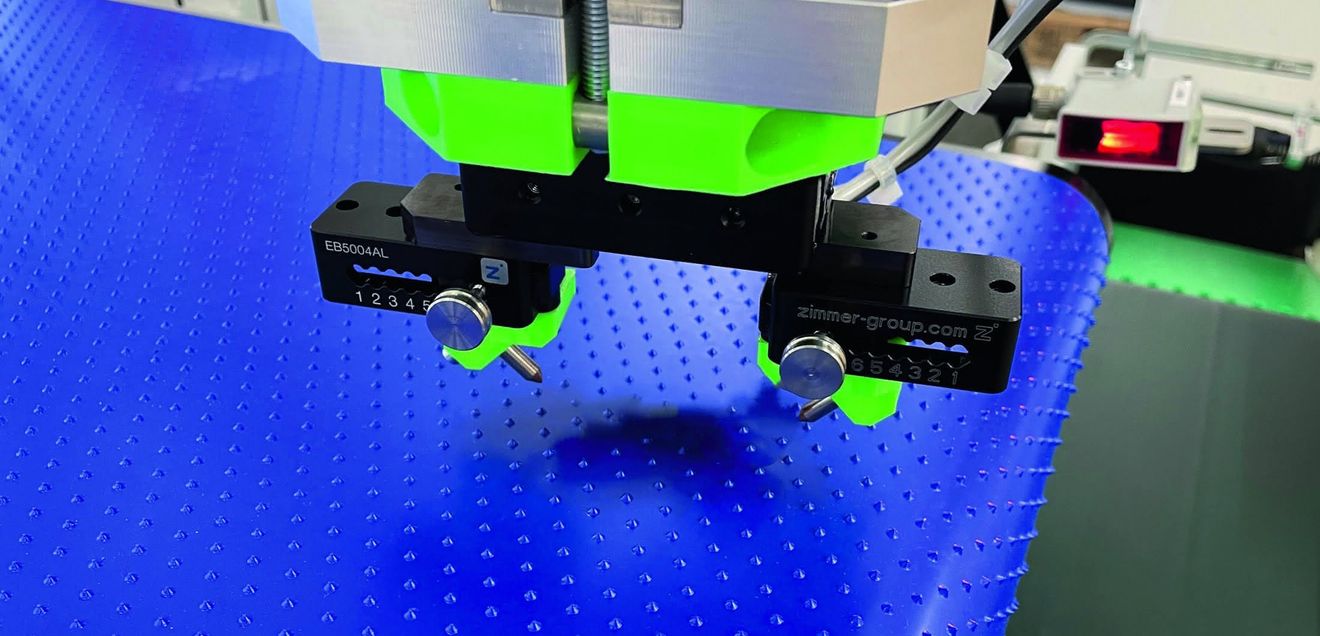
Removing a workpiece from the feeder and placing it in the appropriate holder for further processing is a monotonous work step. It is perfectly suited to automation - and yet is still often done by hand. Conventional pick-and-place systems are often associated with long changeover times when different workpieces need to be processed. Erfurt-based system integrator Seitec, in collaboration with drive specialist SEW-Eurodrive, has rethought this task area from the ground up. The result is a highly flexible handling solution that combines all the components of a pick-and-place system in a single, convenient user interface. The machine can process hundreds of very different workpieces with minimal changeover times. The IEC software module Movikit Production Line Control from SEW-Eurodrive was used to manage and track the workpieces in the machine. It enables workpieces to be transferred from one moving belt to another moving belt.
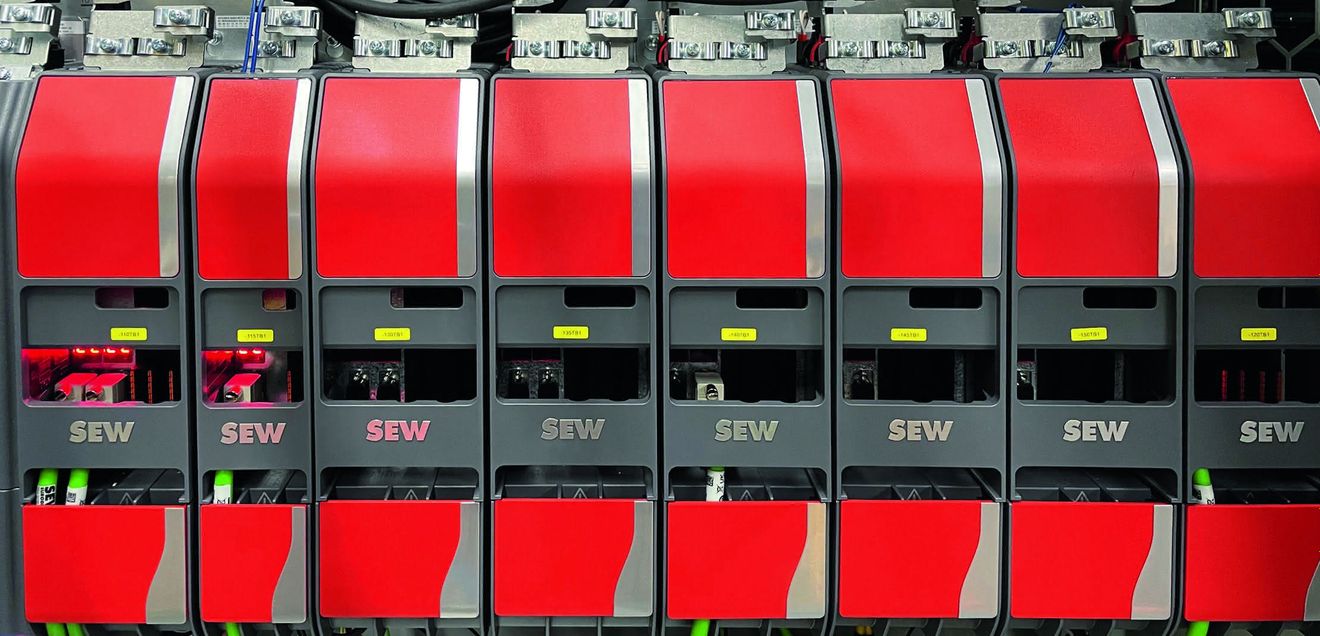
"The recipes are stored in the unit's control system," explains Daniel Pfeffer, Head of Operations at Seitec. With just a few touch gestures on the control panel, a machine operator can adjust the system to a new workpiece within seconds. If a gripper needs to be changed, the machine prompts this in the same interface and parks the central robot in the appropriate position. "This takes maybe a minute in total," emphasizes Pfeffer, who is also the project manager and developed the concept. "This saves an enormous amount of time compared to systems that require intervention in various operating units on the machine for adjustments - especially when handling small batch sizes."
The customer also wanted to be able to operate the camera via the visualization of the entire system. This means that neither a laptop nor software is required to run in the system with new parts or to teach in new contours.
Reduced complexity
The first example of this innovative complete solution Seibot - an acronym for Seitec and robot - was ordered by a medium-sized production company for the processing and manufacturing sector. The order was triggered by a not-so-rare problem: a partial system of the production line, which has only been in use for ten years, has already been discontinued by the manufacturer. The old machine can no longer be adapted to new requirements with reasonable effort and is therefore no longer future-proof. As a solution, Seitec and SEW-Eurodrive jointly developed a standardized interface between the robot controller with the Movikit Robotics software module and the higher-level system controller. This combination is suitable for all robot geometries from Scara to six-axis articulated robots. This has significantly reduced the complexity compared to conventional systems of this type. Daniel Pfeffer emphasizes: "The major advantage of this concept is that the position and dynamic values of the robot for the pick-and-place process can be set via the visualization of the higher-level control system." This allows machine setters or maintenance staff to optimize the production process at any time. A separate control panel or special software is no longer necessary. "The solution from Seitec also enables a significantly longer system service life," emphasizes Pfeffer. The reasons for this are its simple and modular design using standard industrial components and the consistent use of standard interfaces.
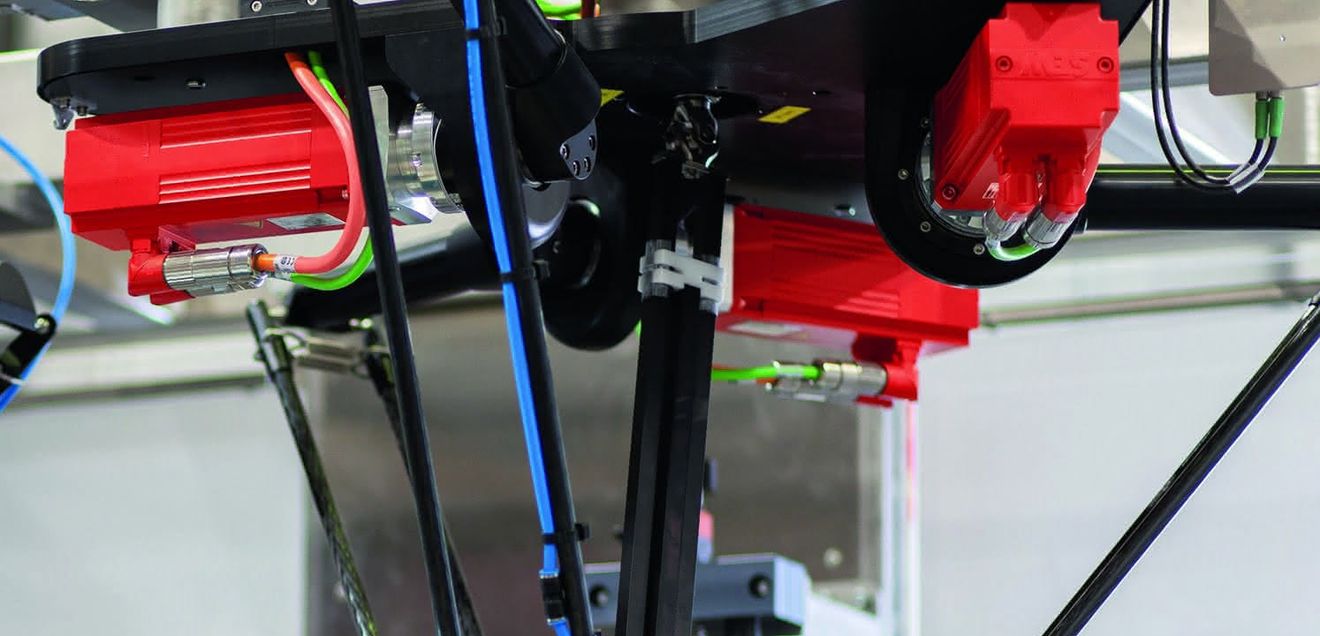
The heart of the system is currently a tripod robot with an additional rotary axis, which can be equipped with two different grippers as required. It is driven by four servomotors from the CMP series with PxG gearboxes in the P5 version for high dynamics. The workpieces are separated in advance. A camera, which is integrated into the overall system via Ethernet/IP, records the shape and position of currently around 130 different workpieces on the feed belt. In line with the latest technology, this no longer needs to be transparent, which simplifies handling and servicing. In addition, the pick belt and the place belt can be arranged at any angle to each other.
The system provides the standardized basis for the kinematics of the pick-and-place robot with four degrees of freedom. "We had to find a system for the extremely different geometries and sizes in order to separate the parts and then handle them correctly," explains Daniel Pfeffer. The customer's aim was to place several workpieces on a product carrier every second in preparation for the next work step. These objectives were achieved with the system.
Future-proof simplicity
"When a new workpiece is to be taught in, the system is configured in just a few minutes via the control panel using the intelligent UHX65 Movi-C controller from SEW-Eurodrive. The process is then saved as a new recipe," says Christopher Kühn, the second project manager for the new development. If the robot needs more degrees of freedom or a different camera at some point, each component can be easily changed thanks to the non-proprietary interfaces. They could then be integrated into the system with little effort using the kinematics data already available in the Movi-C controller. "Anything between two and six degrees of freedom is possible," adds Daniel Pfeffer. The feed belts with ten additional servomotors from SEW-Eurodrive are also controlled by the same controller, which in this way already has an internal image of the entire kinematics of the system. Because the robot and the belts form a system with the parts, the encoder information from the belts is received directly by the UHX controller. This means that the robot knows the encoder values and the positions of the belts. Up to ten robots, 2,000 products and 200 storage boxes can be managed.
Long-term availability and compatibility
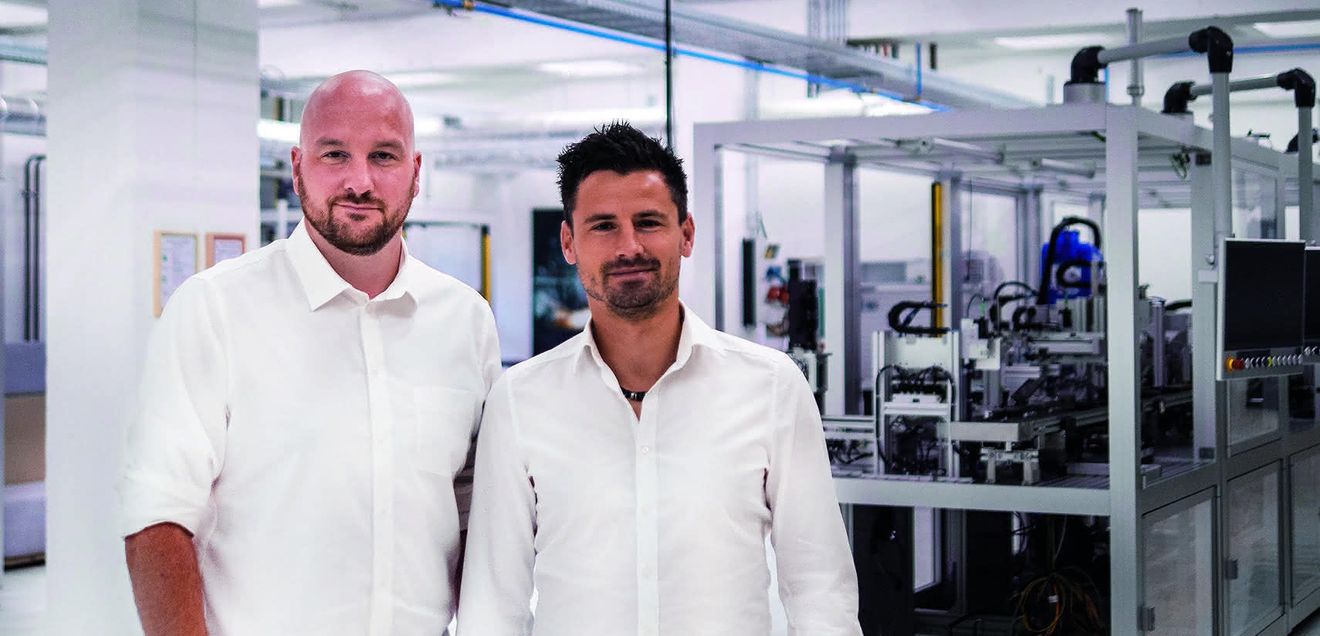
"SEW-Eurodrive's Erfurt technical office was involved in the development process right from the start," says its manager Frank Buchholz. "The long-term availability and compatibility of the components ensures a significantly longer service life for the handling unit." Seitec project manager Pfeffer adds: "Our concept could only be implemented with the possibilities of the Movi-C modular automation system." The developers emphasize the uncomplicated and rapid cooperation. This resulted in a lean and cost-effective overall solution that can be adapted for numerous pick-and-place requirements.
Thanks to the modular concept, Seitec can offer the robot as an individual product or as a complete solution. This includes engineering and customer-specific process adaptation, for example with individual feed systems. In the minimum expansion stage, a compact product solution with robot, controller and operating unit is also possible.


You might also be interested in
First Security Guideline available
The IO-Link community has published a new Security Deployment Guideline. This is intended to help users evaluate and implement security measures for the use of IO-Link technology.
 read more...
IO-Link Wireless is an international IEC standard
International standardization drives the worldwide use of the communication solution - and guarantees customers manufacturer-independent compatibility of all components.
read more...Transforming the paper industry towards climate neutrality
Together with partners from industry and research, Voith is developing a project for the optimization of energy and material flows in paper production. The aim of the research project is to develop a digital framework that enables effective process...
read more...Sensor and software development teams merged
Endress+Hauser opens innovation cluster
Endress+Hauser has inaugurated its new premises at the Fribourg Innovation Center (FRIZ). More than 70 employees of the Swiss group of companies specializing in measurement technology are working there on the development of new sensor technologies...
read more...Transport technology from the modular system
Many transport tasks can be realized with the help of linear technology. Pre-configured solutions are available to simplify the interaction between the linear unit, motor, gearbox and controller. This minimizes the effort required for research and...
read more...How production can benefit from AI
Together with AI technology, IIoT networking makes it possible to better control machine parameters and optimize quality with predictive quality. Downtimes and set-up times can also be further minimized. Cloud platforms also make these technologies...
read more...Sensor and software development
Endress+Hauser opens innovation cluster
Endress+Hauser has inaugurated its new premises at the Fribourg Innovation Center (FRIZ). More than 70 employees of the Swiss group of companies specializing in measurement technology are working there on the development of new sensor technologies...
read more...Production of astronomical instruments
Precision for the world's largest telescope
The powerful five-axis machining center G750 from Grob produces large and complex components for the astronomical instruments of the Extremely Large Telescope, ELT, which is scheduled to go into operation in 2028, with maximum stability and...
read more...MES in PV and battery production
No energy transition without MES
MES software contributes to more efficient production as it optimizes the use of resources and production output. An example from PV and battery production shows how an MES enables sustainability and efficiency in the energy transition.
read more...