

Optimize efficiencies
Sustainable industry starts with efficiency
Electrification and digitalization are key levers for improving efficiency in industry. Optimizing efficiency requires an intelligent and flexible approach that makes full use of the available technical possibilities.
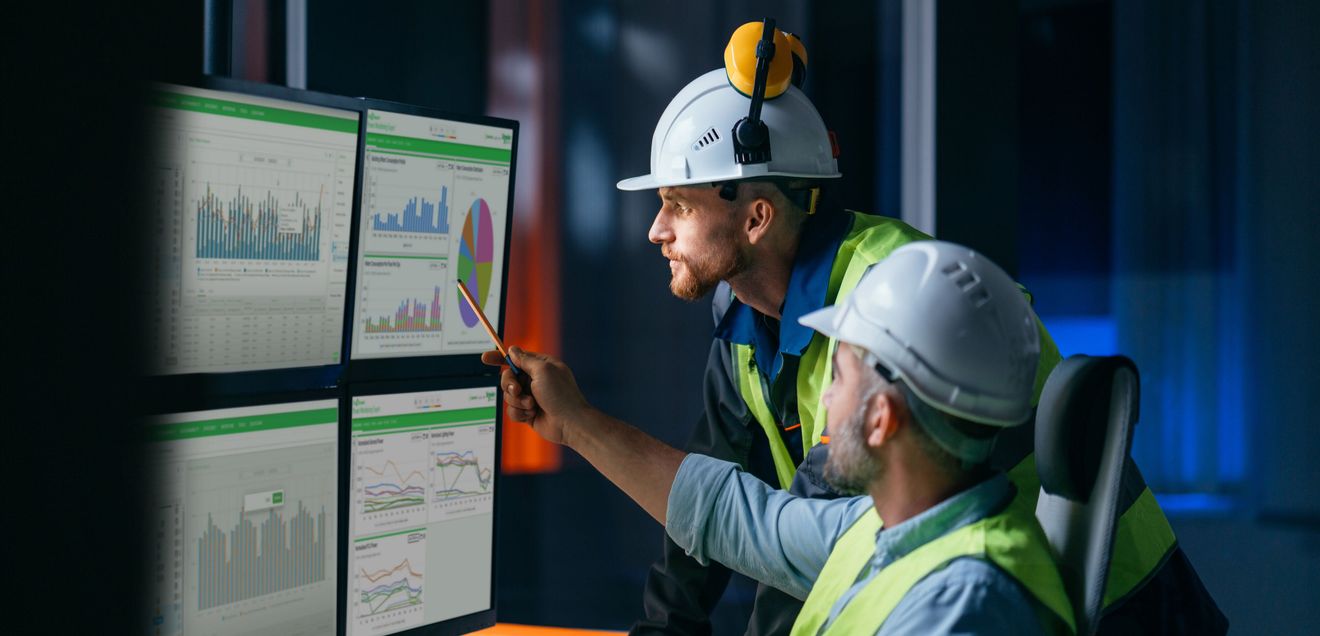
The transformation of industry towards greater sustainability and climate protection is one of the greatest challenges of our time. However, the first and perhaps most important step on this path is surprisingly simple: using energy more efficiently and thus reducing both energy consumption and costs in a targeted manner. This is where electrification and digitalization come into play, two technological drivers that reinforce each other and together unleash enormous energy efficiency potential. The electrification of industrial processes reduces the use of fossil fuels and significantly cuts greenhouse gas emissions. At the same time, digital solutions enable precise control and monitoring of energy consumption. Intelligent sensor technology, data-based analyses and automated processes ensure that energy is used exactly where it is needed and in the optimum quantity.
The complete conversion of systems and machines to an electrical energy supply is a complex and resource-intensive project that requires careful planning, technical expertise and investment. Sustainable innovations in the electrification and automation of industrial processes can already be implemented in small and manageable steps. Targeted individual measures can also bring about significant increases in efficiency and energy savings. For example, the electrification of certain sub-processes - such as the replacement of conventional drives with highly efficient electric motors or the use of electrical process heat - can make a measurable contribution to reducing energy consumption. In addition, the modernization of control and regulation technology helps to make processes more demand-oriented and resource-efficient.
The first step is to create transparency
The digital networking of generators, consumers and storage systems forms the basis for the efficient and flexible use of renewable energies in the electricity supply. By using intelligent systems, all energy flows are recorded and controlled in real time. This creates the necessary transparency about when, where and to what extent electricity is generated and consumed. This precise information makes it possible to use the naturally volatile energy generated in line with demand and distribute it with maximum efficiency, thereby exploiting the full potential of renewable sources. These principles can also be applied to industrial production facilities. Data transparency makes it possible to identify inefficient processes or unexpected energy losses. For example, it can be determined that the numerous electric drives of a complex packaging machine are not working as efficiently as expected in practice, despite their nominally high efficiency. This may be due to insufficient utilization, unfavourably set acceleration profiles or the lack of an intermediate circuit for recovering braking energy. Without granular, systematic recording and analysis of energy data, a lot of optimization potential remains untapped. Only those who specifically measure and evaluate can intervene, adapt processes and sustainably increase energy efficiency.
Recognizing and exploiting the potential of IoT
In the industrial environment, the Internet of Things (IoT) enables a more sustainable use of resources by creating transparency and highlighting optimization potential. For example, in order to produce flexibly and in line with demand in small batch sizes, systems are needed that can react quickly to orders and exchange data between software and hardware in real time. This means that only the minimum amount of resources and energy is consumed that is actually needed. Digital sustainability measures also help to increase reliability. This is particularly important in sectors such as the food industry, where perishable goods are processed. IoT-based systems allow maintenance to be planned in a predictive and targeted manner thanks to precise condition data. In addition, the use of augmented reality enables quick access to all important information on system parts, which makes fault localization much more efficient.
Digital technologies increase the efficiency of systems in two ways. They enable demand-driven and low-loss energy use, which also allows flexible adaptation to price fluctuations on the energy market. By shifting energy-intensive processes to times of low electricity prices, significant savings can be achieved. At the same time, they support employees and increase efficiency, as maintenance work can be carried out in a targeted and time-saving manner. In this context, however, it is increasingly important not to focus on short-term economic efficiency, but to recognize the benefits of sustainable corporate management holistically and make targeted use of them: After all, in addition to significant productivity gains and the positive impact on a company's owncarbon footprint, ecological sustainability also strengthens its reputation. This is a factor that is becoming increasingly important in terms of securing skilled workers, customer interests and access to attractive financing.
Ensuring the competitiveness of production
Electrification is a decisive factor for decarbonization and, in combination with modern automation technology, the most efficient way to secure and expand the competitiveness of the manufacturing industry. However, this requires an intelligent and flexible approach that makes full use of the technical possibilities and allows processes to be adapted to the dynamic conditions of the market. Only when efficiency is consistently increased in all areas will electrification and digitalization take full effect. The good news is that the technologies required for this have long been available.
Schneider Electric offers a comprehensive portfolio of industry-specific solutions to implement greater industrial electrification, automation and sustainability in all stages of the value chain, from planning to operation, intelligently, economically and sustainably.
Schneider Electric, http://www.se.com


You might also be interested in
When heat slows down production
Cooling concept for industrial halls with significantly reduced energy requirements
Infranorm is developing a cooling concept for industrial halls based on two-stage adiabatic cooling. According to the company, energy consumption can be reduced by up to 95 percent.
 read more...
Networked energy and automation solutions
Schneider Electric presents solutions for Industry 4.0 at Hannover Messe 2026: networked energy and automation technologies, AI-supported processes, modern control systems and strategies to combat skills shortages, safety risks and energy...
read more...Peak load management in forklift trucks
Intelligent energy management prevents expensive power peaks
Targeted and efficient energy management is becoming increasingly important for customers in the logistics sector: a large number of devices, different charging cycles and high electricity volumes mean that electricity is a critical cost factor for...
read more...AI is shaping logistics worldwide, supply chains are being restructured
The Agility Emerging Markets Logistics Index 2026 shows that artificial intelligence is being used almost everywhere in the logistics industry. At the same time, geopolitical uncertainties, tariffs and production relocations continue to drive the...
read more...New life for old machines
"When we talk about retrofitting, for us it's about giving a machine tool a second life that lasts just as long as the first," emphasizes Ralf Glatzeder, Head of the Reman department at Liebherr-Verzahntechnik in Kempten.
read more...Sustainability along the robot life cycle
Automation through the use of robots offers numerous advantages. One is often overlooked: Robots can make a valuable contribution to sustainability, for example by helping to reduce emissions. However, this requires the entire robot life cycle to be...
read more...Encoders increase the efficiency of servo...
Same performance with less energy
Electric motors in industrial applications are responsible for more than 40 percent of global electricity consumption. With encoders from Hengstler, the efficiency of drives can be significantly increased, resulting in a significant reduction in...
read more...Energy-efficient use of extraction and filter systems
How manufacturing companies can sustainably reduce their energy costs through clever and forward-looking system design.
read more...How AI and the cloud are challenging sustainability
The rapid rise of artificial intelligence is driving up the energy consumption of data centers and jeopardizing global sustainability goals. Schneider Electric presents six practical solutions to meet the new requirements.
read more...