

IT-OT convergence
The digital twin becomes a game changer
The digital twin opens up opportunities that will have a lasting impact on production. The technology has the potential to take products, services and supply chains to a new level.
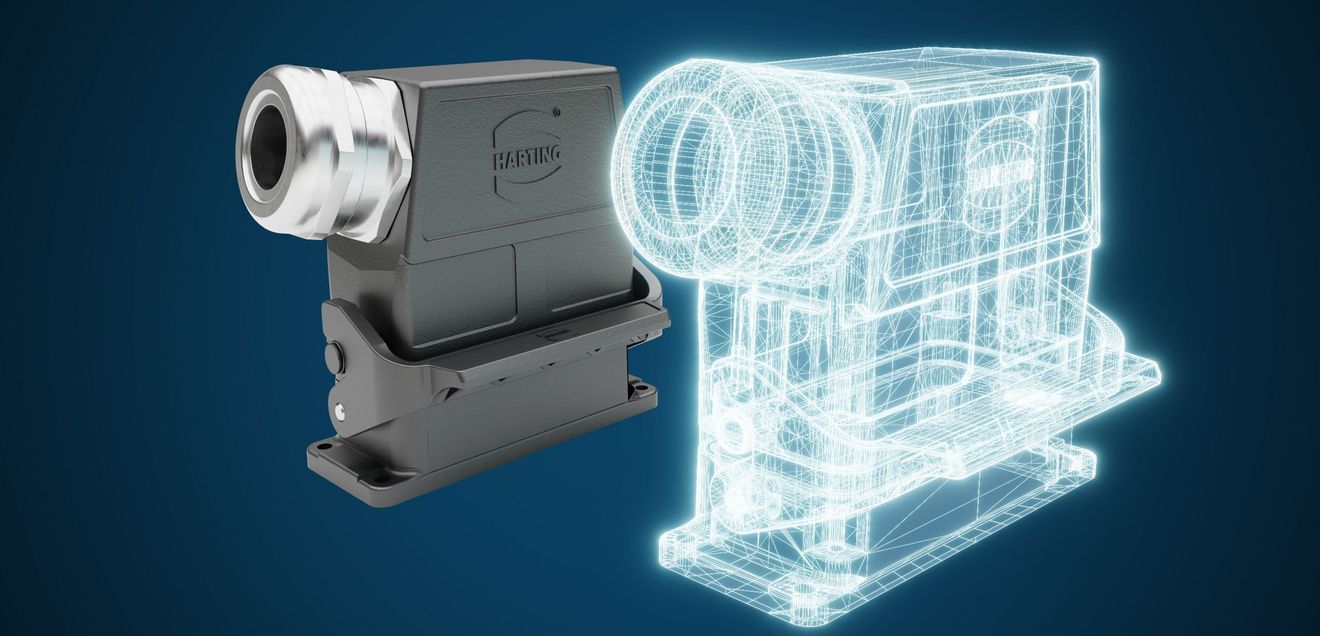
The digital twin (DTw) plays a central role in Industry 4.0. It links the physical and digital worlds and enables the consistent use of data across the entire life cycle of a product. It is therefore the symbol of the IT-OT convergence that has begun.
For data transfer to be interoperable and scalable, a common digital language (semantics) or standardization is required - ideally both. The Asset Administration Shell (AAS) offers a standardized metamodel for data modelling that can be used as a basis.
At the same time, the Industrial Digital Twin Association (IDTA) standardizes sub-models as templates, so-called SMTs (sub-model templates), and offers the possibility of integrating semantic elements into the concept via so-called semantic IDs. This allows DTw to develop its maximum effect. "Proprietary formats are therefore of little use," emphasizes Detlef Tenhagen from Harting. "Interoperability only becomes a reality with a standardized description. The more we load a digital twin with comprehensible information, the more it will develop into a complete simulation-capable model of reality." This requires a technical format that must be provided uniformly by everyone and can also be used by everyone, as is the case with the IDTA based on the basic standardization by IEC TC65/WG24.
Thanks to clearly defined submodels and standardized interfaces (API), the AAS enables seamless integration into existing IT systems such as ERP, MES, PLM or digital ecosystems. Machines, products, components and software can communicate with each other in a standardized way - even across company boundaries.
Digital twins pave the way for change
The modular structure of the DTw enables the provision of basic information in the form of these templates, such as technical data or manufacturer information, specific content such as maintenance instructions or recycling information, as well as dynamic data such as energy consumption orCO2 footprint. Companies can set up and expand the DTw as required. Particularly in light of the sustainable transformation of industrial production, it is important that the Digital Product Passport (DPP) can also be integrated into the AAS. "Over 80% of a product's environmental impact is decided at the concept stage, which requires a fundamental shift in the way we ideate and design," says Tony Hemmelgarn, President and CEO of Siemens Digital Industries Software. "To be effective, companies must evaluate the overall environmental impact of a product in addition to its features, cost and quality. By using modern technical solutions, companies can assess these aspects at the design and engineering stage and make informed decisions based on accurate, up-to-date data."
The transformation of production must take into account all variables that influence the environmental impact of a product. With topology optimization, generative engineering and additive manufacturing for digital tool twins, for example, material waste and energy consumption during production can be reduced. More efficient production lines can be planned using simulations and energy consumption can be optimized in advance. Predictive maintenance models, for example, allow companies to monitor a product throughout its entire life cycle and act proactively. "It is important to identify changes that have a practical impact on every point of the digitally networked data and information that is generated throughout the entire product life cycle," says Hemmelgarn. "These changes are stored in the digitally networked data and help companies to manufacture products not only faster, better and more profitably, but also more sustainably." Sustainability is not a retrofitted element in the life cycle of products, but an integral part of the entire digitalization process, which begins in the design and construction phase. As dynamic software models, the DTw enable real-time monitoring and can therefore improve process efficiency.
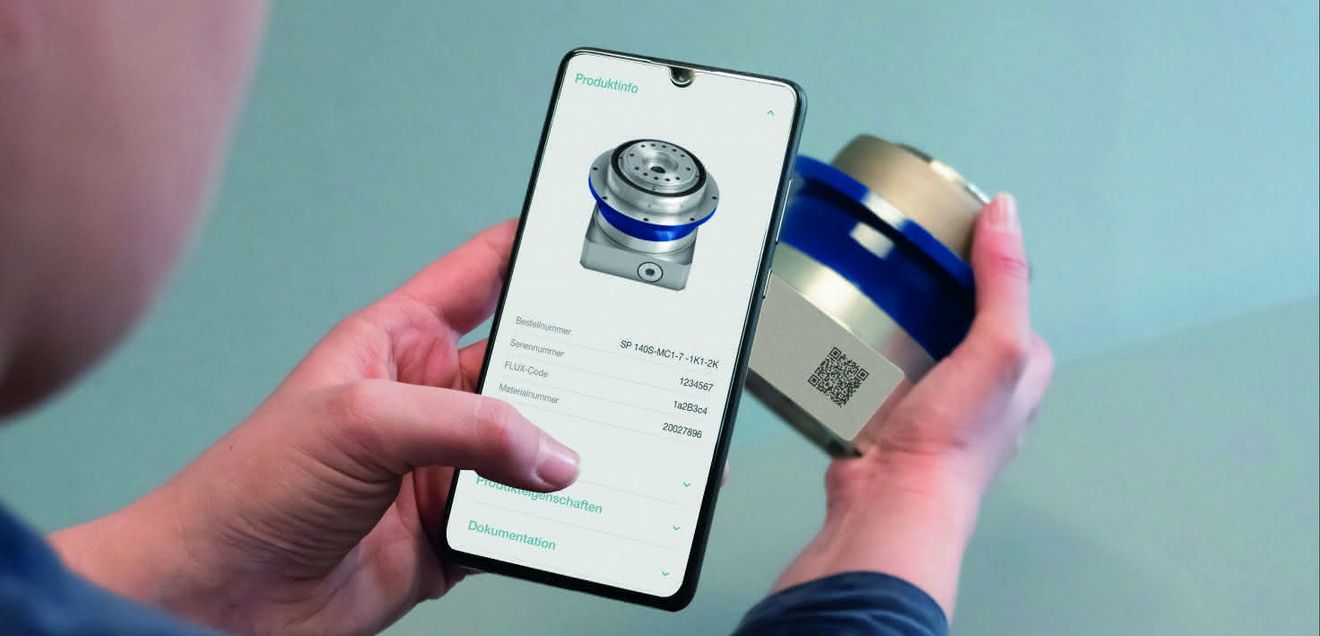
The usefulness of the DTw can also be seen in "simple" components, such as the SmEC (Smart Electrical Connector) from Harting. This allows the entire life cycle to be mapped and recycling optimized, including the reuse of individual components. During operation, the DTw also provides information, for example about the actual current flowing and the locking status. "It can be defined that the connector locks automatically as soon as it is energized," explains Detlef Tenhagen. "This prevents the connector from being pulled out in a critical state. In this way, we protect machines, people and products, and also prevent costly downtime."
AAS as the basis for new business models
The AAS is the technological basis on which all these applications can be built. It enables companies to efficiently fulfil regulatory obligations and at the same time implement new value-added services and data-driven business models. The Augsburg-based software company Xitaso sees the business added value of the DPP as a digital touchpoint between product, manufacturer and end user, for example through easy accessibility via QR code. Dr. Alwin Hoffmann is responsible for DTw and AAS at Xitaso: "By providing a QR code directly on the product, an access point for customers and service providers is possible at any time, throughout its entire life cycle." Hosting the DPP data in-house also makes it possible to analyze who accesses the DPP and when. "This can be used to provide targeted service offers, personalized information or preventive measures," Hoffmann continues. He lists a whole range of possible business models that are conceivable by expanding the DPP with submodels, including extended maintenance instructions, automated service requests, predictive maintenance or transparency about software components.
Remote operation in the application
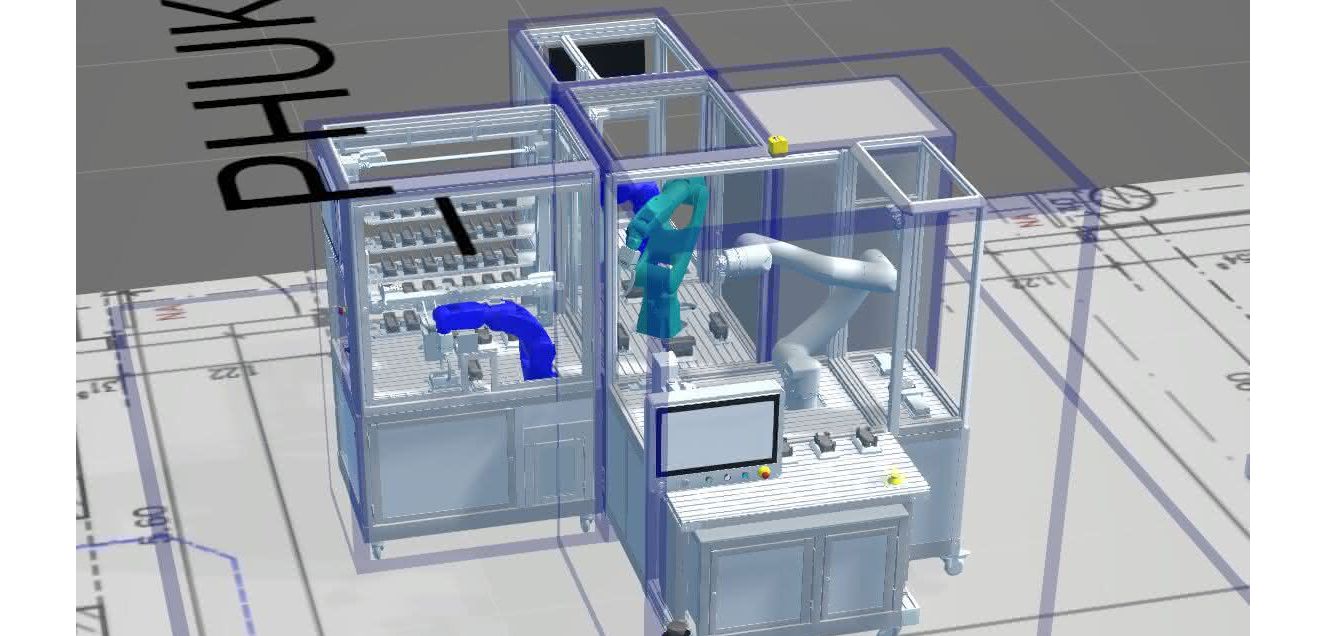
Together with Trumpf, Pascal Rübel, project manager for Factory-X at SmartFactory Kaiserslautern (SF), has implemented a use case on Autonomous & Remote Operations that addresses some of Hoffmann's topics. It allows remote access to the Trumpf laser module, which is integrated into the demonstrator ecosystem at SF and lasers components individually. "This means we have all the information available at all times and can intervene," explains Rübel. Thanks to interoperable machine description with a smart machine interface in OPC UA and AAS, an operator panel can be operated independently of the manufacturer. "An operator can keep an eye on several machines in different companies from anywhere," says Rübel. In addition, camera systems monitor the machines so that a technician can be guided through a repair process on site. However, the aim is to detect anomalies so proactively that nobody has to intervene. At the Hannover Messe, the use case was presented for the first time at the SF stand with the "Production Island_Phuket". "With our industry-oriented ecosystem, we can try out and demonstrate such use cases," says Rübel. "We are showing in practical terms what the future could look like so that SMEs can move in the right direction with new acquisitions or digitalization plans."
The DTw will put production on a new footing and generate new business models. In order to implement resource-conserving and low-energy production in the long term, certain reporting obligations will apply from 2027, which must be implemented using DPP. While large companies are already working with DPP and DTw, many SMEs are left behind and do not know what concrete steps they should take. They tend to see the DPP as a chore and do not recognize the strategic opportunity. DPP and DTw enable efficient processes, new business models and digital customer loyalty across the entire life cycle. Smart software is becoming a real game changer in production because it saves time, effort, resources and energy.


You might also be interested in
An industry that organizes itself
Agentic AI, digital twins and new manufacturing technologies in response to an industry in transition
At Hannover Messe 2026, Bosch will be showing how agentic AI, digital twins and new production technologies are transforming industry. The focus will be on efficiency, automation and battery recycling.
 read more...
Rohde & Schwarz and NVIDIA combine measurement technology with digital twin for AI-supported wireless networks
Rohde & Schwarz and NVIDIA present an AI-supported test system for 5G-Advanced and 6G at MWC 2026 Hardware-in-the-loop, ray tracing and a digital twin enable realistic radio tests in the lab.
read more...Performance up, costs down
A transparent overview of the devices actually installed is the prerequisite for targeted maintenance, forward-looking risk management and reliable investment planning. The dynamic analysis of the installed base creates this basis by creating...
read more...Increased efficiency through simulation...
Assembly lines optimized for automotive displays
Schnaithmann Maschinenbau has planned and implemented three assembly lines for the automated production of automotive displays. Together with Schnaithmann's customer, a German automotive supplier, various system concepts were simulated, validated...
read more...Digital twin meets product passport
Future-proof end-to-end solution at SPS 2025
At SPS, conplement and R. STAHL will present how the digital twin works end-to-end along the entire value chain: from creation and provision to productive use.
read more...Performance-aided design and AI
Closing the gap between product design, simulation and performance
Autodesk presents new perspectives for production at EMO in Hanover The focus is on innovative approaches that combine design, manufacturing and operating cycles for more efficient production and smarter products in a seamless digital thread.
read more...StarterSET compact and digital twin
Realize compact machines quickly
By simulating and testing applications before they are physically implemented, errors can be detected at an early stage. The packaging machine that SEW-Eurodrive is presenting at Automatica also underwent virtual commissioning using a digital twin.
read more...Virtual commissioning
SEW-Eurodrive offers comprehensive support for the commissioning of machines. With the "Digital Twin as a Service" service, applications can be simulated and tested before they are physically implemented and errors can be detected at an early stage....
read more...Shaping the future of the industry
Autonomous robots in industry are now very reliable and efficient. Modern hardware and software are required to make this possible.
read more...