

SPS 2025
Drive systems for modular machines
Modularization increases flexibility and efficiency in mechanical engineering, but places new demands on drive technology. The article compares centralized, decentralized and cabinet-less architectures and shows how flexible drive systems support modular machine concepts economically.
The trend towards modularization in mechanical and plant engineering is closely linked to changes in production. Smaller batch sizes, individualized products and shorter development cycles require machines that can be adapted quickly.
To this end, functions are divided into mechanical and logical modules - each of which is designed, manufactured and maintained independently. This creates flexible modular systems that shorten time-to-market and facilitate maintenance and modernization. The prerequisite is a clear decoupling of power supply, control and drive technology. Real-time capable fieldbus systems connect the modules, while scalable drive systems ensure efficient energy flow and high precision.
Architecture variants in drive technology
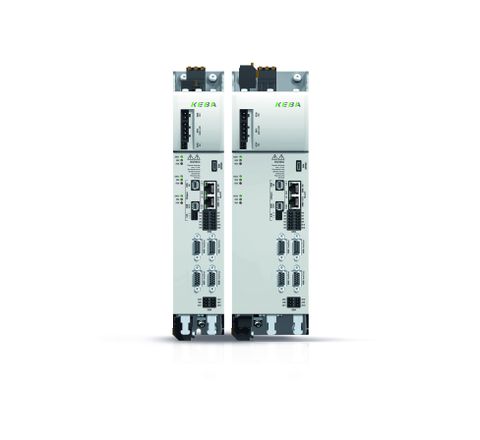
In classic machine concepts, all control and drive components are combined in a central control cabinet. This makes servicing and diagnostics easier, but requires more space and cooling capacity. Multi-axis systems such as KeDrive D3, which supplies several axes via a shared DC bus, are suitable for such architectures. This topology allows energy to be exchanged between axes and regenerative energy to be buffered or fed back into the grid - a plus for efficiency and resource conservation.
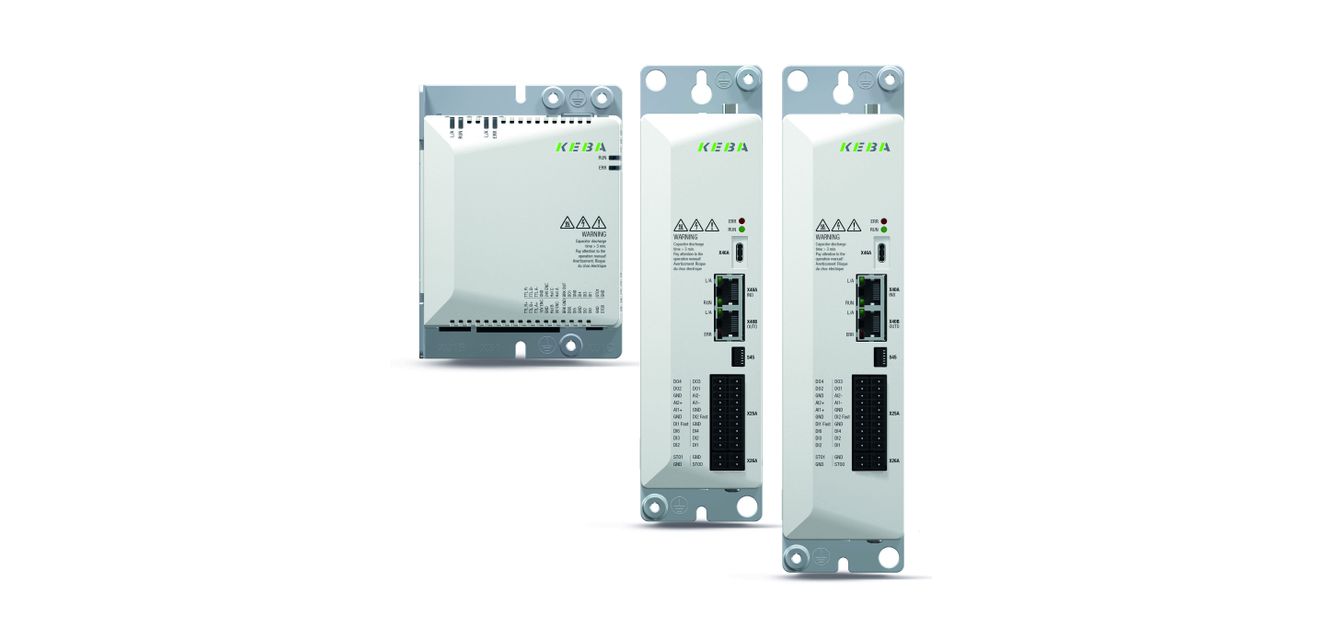
When using decentralized control cabinets, each machine module has its own drive unit. This enables parallel engineering and independent commissioning. Compact all-in-one drives such as KeDrive D3-AC or KeDrive D5 integrate mains filter, brake chopper and control electronics - ideal for modules with a small to medium number of axes. The advantage lies in the high layout flexibility, the disadvantage in slightly higher cabling and diagnostic costs.
The most consistent form of modular architecture completely dispenses with central control cabinets. Here, the control and power electronics are integrated directly in the module or on the motor - compact, protected (e.g. IP54) and space-saving. Due to thermal limits, the outputs are usually designed for smaller axes. Power is increasingly supplied via DC networks, often in the form of daisy-chain cabling, which combines power and communication in one cable.
Open DC systems are becoming increasingly important here. In the DC industry research project, a concept was created with which products from different manufacturers can be connected to a common DC bus. Keba has implemented connection and protection concepts in the KeDrive D3 system so that external drives can be seamlessly integrated. The following examples show how different machine architectures can be covered with a uniform platform - from central control cabinets to decentralized modules:
- In a labeling machine, KeDrive D3 takes over the synchronous operation of several axes
- In a sheet metal processing system, each module is operated with its own KeDrive D3 or D3-AC
- In assembly cells, KeDrive D5 drives provide compact, quickly scalable solutions
- Mobile transport systems use KeDrive D5 Micro, powered by battery voltage
Decision criteria for the right architecture
Platform strategy:
A standardized platform approach with consistent interfaces, identical safety functions (e.g. STO and SafeMotion) and standardized diagnostic software reduces engineering costs and simplifies maintenance and spare parts management.
Energy efficiency and sustainability:
A shared DC bus enables energy recovery, intermediate storage and peak load limitation - crucial for high efficiency and sustainability. In decentralized or mobile applications in particular, this ensures lower grid loads and higher system availability.
Security:
Safe movement monitoring, emergency stop functions and integration into safety control systems are mandatory. Modern systems offer all essential safety functions already integrated.
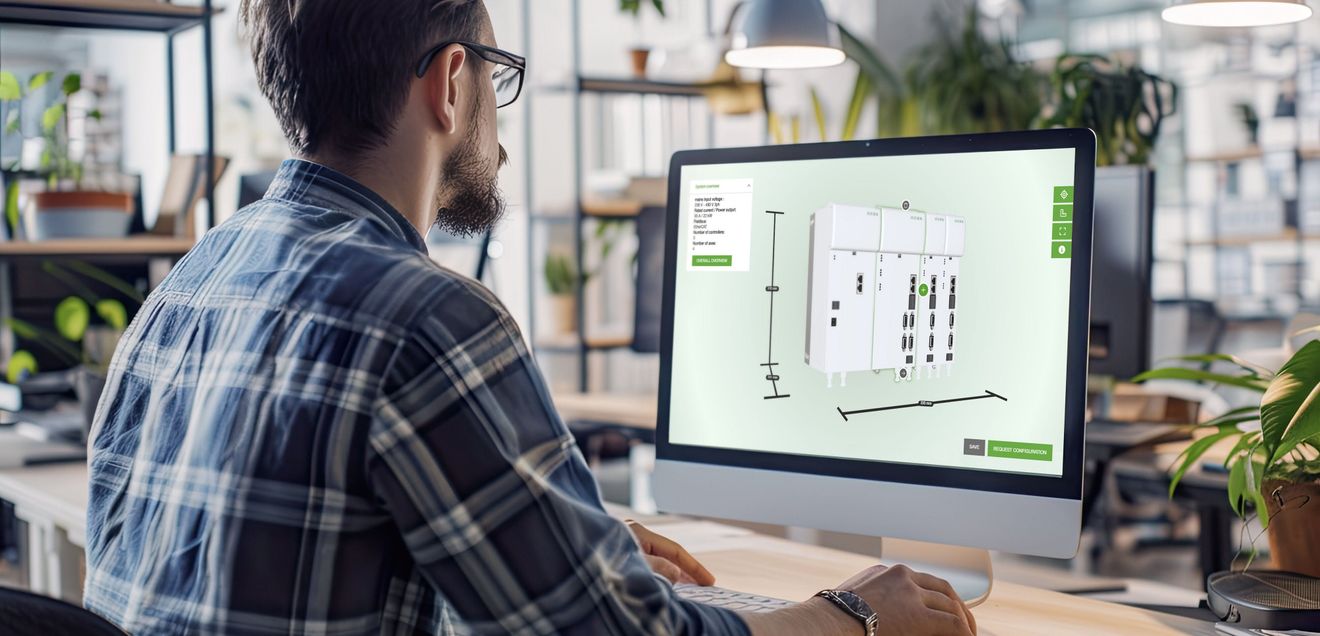
The large number of technical parameters makes the selection process complex. Software tools such as the KeDrive configurator support the correct combination of controllers, motors and accessories - including compatibility checks and automatic documentation.
The requirements of modern production systems make modular machine architectures indispensable. Choosing the right drive system is the key. It determines energy efficiency, scalability and cost-effectiveness. Whether centralized, decentralized or cabinet-free - the decisive factor is the ability to implement all variants on a common platform.
With solutions such as KeDrive D3, D3-AC and D5, Keba offers a scalable portfolio that enables machine builders to make their automation future-proof, efficient and modular. The future belongs to open DC systems that allow cross-manufacturer integration. This is the next step towards flexible, sustainable and intelligent machine automation.
SPS, Hall 7, Stand 470


You might also be interested in
ebm-papst is growing again thanks to AI and data centers
ebm-papst returned to a growth trajectory in fiscal year 2025/26. Air Technology, data center applications, and artificial intelligence are driving revenue and investment.
 read more...
SPE on the Verge of a Market Breakthrough
Single Pair Ethernet (SPE) has moved beyond the conceptual phase and is increasingly being implemented in industrial settings. The focus here is not only on higher data rates and simplified cabling, but above all on the issue of system integration...
read more...More than 900 exhibitors already registered
Around six months before the start of the trade fair, more than 900 companies have registered for SPS 2026 in Nuremberg. The trade fair focuses on industrial AI, cyber security and digital transformation.
read more...Virtual PLCs in practice: How vPLCs make production systems more flexible and scalable
The increasing networking of IT and OT is fundamentally changing industrial automation. The IT/OT Integration Summit shows how modern technologies can make production environments more efficient, flexible and future-proof. The event will focus on...
read more...Sales growth in a turbulent market environment
Thanks to innovations and a focus on strategic industrial markets, Sick was able to moderately increase its sales in the 2025 financial year. In a turbulent market environment, the company was able to maintain its position and gain market share with...
read more...Siemens presents new AI agent
Siemens is launching 'Eigen Engineering Agent', an AI for automation technology. The solution is integrated into the TIA Portal, has been tested with over 100 companies and is designed to significantly accelerate engineering processes.
read more...Schaeffler keeps sales almost stable
Schaeffler generated revenue of EUR 23.5 billion in 2025 and increased EBIT before special items to EUR 936 million. At 266 million euros, free cash flow was significantly above the prior year and forecast. Net income remained negative due to high...
read more...Advancing artificial intelligence together
Helukabel is stepping up its activities in the field of artificial intelligence and is now a member of the IPAI. The innovation and collaboration platform for companies, research facilities, institutions and administration has set itself the goal of...
read more...New impetus for ifm sales
Two new positions were filled at ifm at the start of 2026: Markus Wolf becomes Managing Director Sales Germany, Sven Quant takes over the position of Central Managing Director in the Process Sensors division within the ifm Group.
read more...