
RFID-based track-and-trace system
Digitally sorted, sustainably developed
Around 90,000 tons of packaging waste are separated into 13 different waste streams at Veolia's highly automated sorting plant in Ochtendung, Rhineland-Palatinate. To test the sortability of new packaging under real conditions, Circpack relies on an RFID-based track-and-trace system from Turck Vilant Systems.
Packaging waste, which has been collected by the dual systems in Germany since 1993, ends up in waste sorting plants such as the one in Ochtendung near Koblenz. The waste disposal company Veolia sorts 90,000 tons of packaging waste every year in this highly automated sorting plant. Packaging that citizens dispose of in yellow bags and garbage cans is separated into a total of 13 different material streams, including the main streams of polypropylene (PP), polyethylene (PE) and polyethylene terephthalate (PET), both as film and solid packaging, as well as metal and paper.
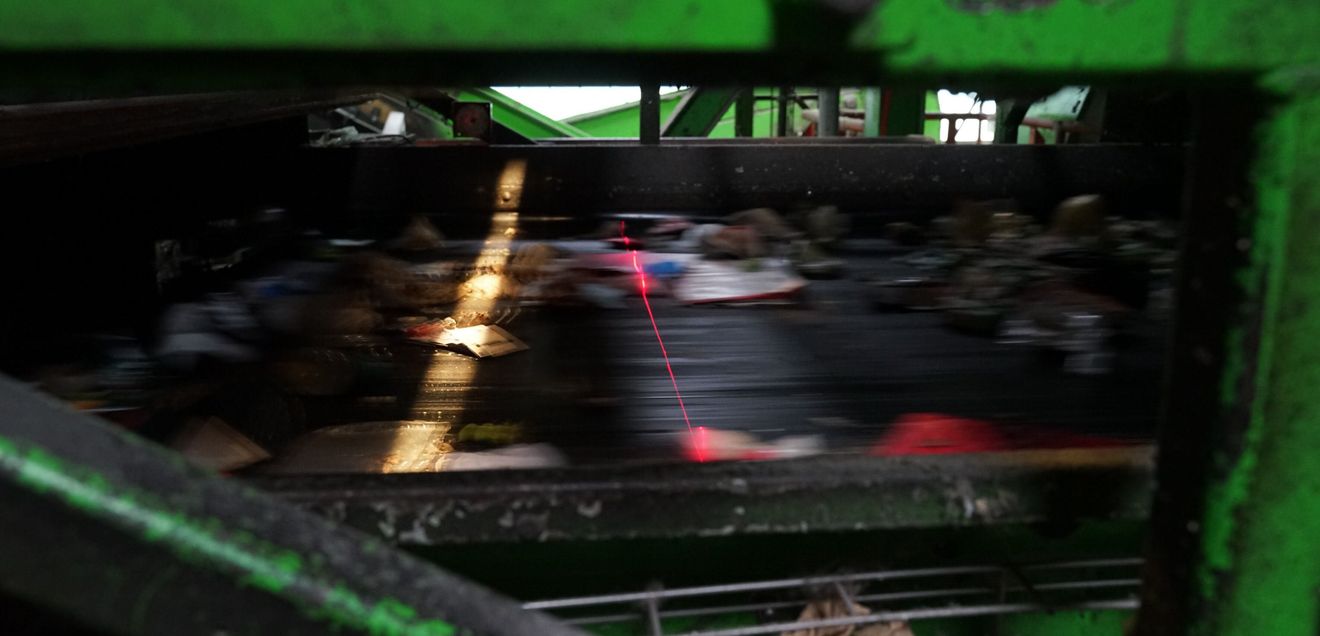
In the first sorting step, rotating screen drums separate packaging parts from the main stream based on their size. At the end, all the material that falls through the last 3 x 3 centimeter screen openings is not sorted any further and is sent for thermal recycling, i.e. incineration. In the further sorting process, near-field infrared sensors (NIR) detect different types of plastic and fiber packaging. Magnets and eddy current separators remove ferrous and non-ferrous metals, and so-called air separators remove light films by suction.
Circpack by Veolia wants to steadily increase the proportion of recyclable packaging. The Packaging and Packaging Waste Regulation (PPWR) has been in force since February 2025, which aims to reduce the volume of waste with various measures - on the one hand through recyclable materials and on the other through waste avoidance by making reuse mandatory in certain areas.
Automated RFID-supported tests improve informative value
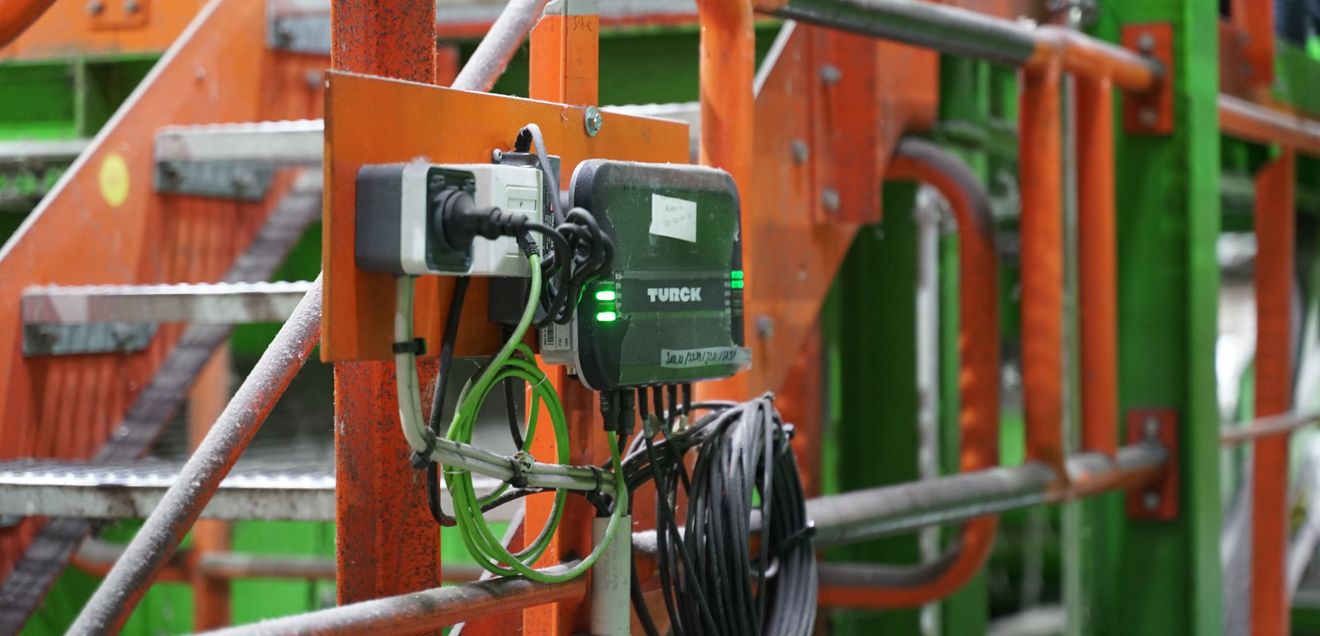
David Wardle was looking for a solution that would allow the packaging to be automatically tracked through the sorting system and thus provide increasingly reliable data. His idea was to use RFID. "I had the idea, but not the technology," recalls Wardle. "So we were looking for a partner who was not only familiar with RFID, but could also make this technology work reliably in a harsh environment like a sorting plant." Through contact with Avery Dennison, Circpack came to Turck Vilant Systems and was quickly convinced. Together, they developed a set-up that today consists of nine readers and 32 antennas distributed across the entire sorting plant.
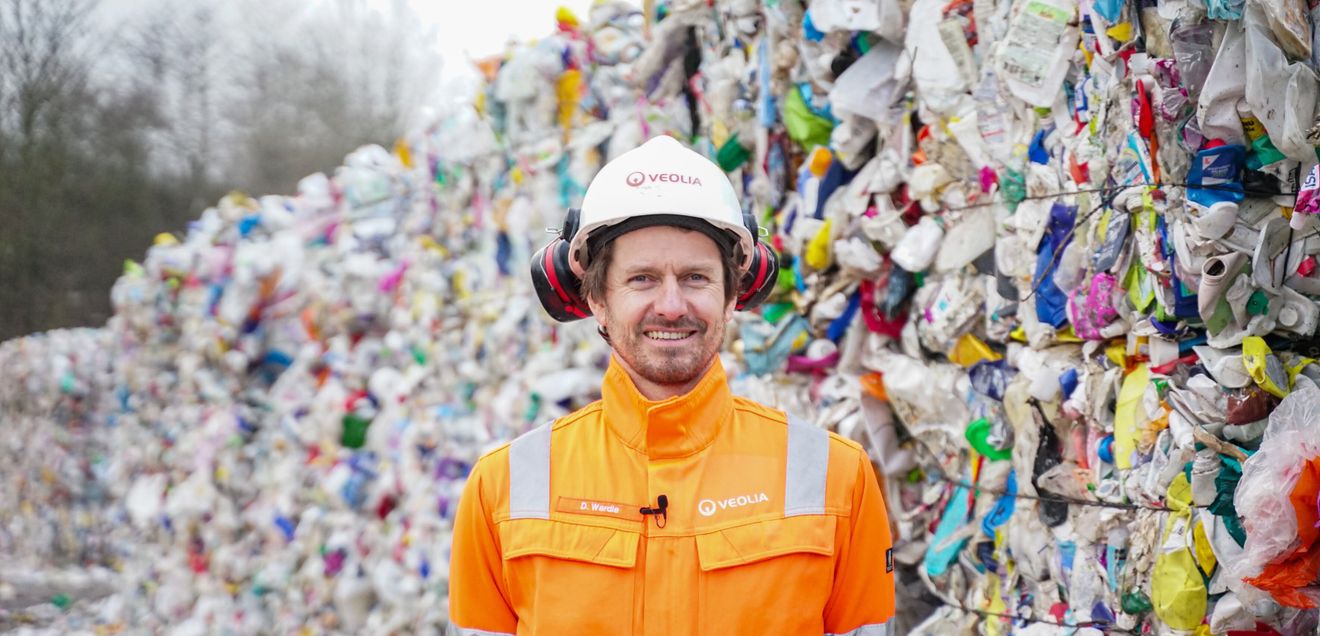
For Circpack's customers - mainly major brand manufacturers - the system is a ground-breaking innovation. It demonstrates their commitment to improving the recyclability of packaging. The results of the tests are incorporated into certifications, for example from RecyClass. They help manufacturers to improve their packaging - and to meet legal requirements.
Scaling and further development
The system in Ochtendung is unique so far, but that is set to change. "We want to roll it out - in other plants, in other countries," says the environmental engineer. "And we want to develop it further - with optimized tags, with greater reading accuracy, with more automation. In future, manufacturers will have to prove that their packaging is recyclable and, above all, sortable. Our system provides this proof - objectively, comprehensively and reliably."
What began as an idea is now a functioning test system under real conditions - and a showcase project for the entire industry. "We have proven that technological innovations can pave the way to a more circular economy," summarizes Circpack's test specialist David Wardle. "In Turck, we have found a partner that not only delivers, but thinks along with us and uses technology to make real change possible."


You might also be interested in
Autopilot for AGVs
To optimize material logistics for assembly, KEB Automation uses RFID technology on the conveyor line and AGVs. The solution from Turck supports the automation of logistics processes and enables end-to-end transparency in the material flow of...
 read more...
Logimat 2025: FID tunnel solution for...
Flexible data collection
Turck has prepared three RFID and intralogistics solutions for Logimat.
read more...Technologies for precise data and analytics
From June 9 to 11, 2026, Sensor+Test once again brought together trade visitors from the fields of sensor technology, measurement, and testing in Nuremberg. With its focus on these core technologies and the wide range of application areas, the trade...
read more...From sensor to intelligent system
Sensors, measurement technology and artificial intelligence are merging to form intelligent systems. From June 9 to 11, 2026, Sensor+Test in Nuremberg will showcase the most important trends in a changing industry.
read more...Measurement software with integrated calibration wizard
The WinControl measurement software from Ahlborn is designed for the acquisition and processing of measurement data with Almemo measuring devices and offers functions for complex calibration tasks. A graphical user interface and context-sensitive...
read more...How measured values are turned into decisions
Systems constantly generate measured values - but many of them disappear into systems that nobody actively uses. The problem is not the amount of data, but how it is collected. Only when information is available without detours and converges in a...
read more...Laser sensor technology optimizes photo book production
There are countless occasions and events that people like to capture as memories in photo books. In many cases, the machines on which they are produced come from the Swiss company Imaging Solutions. For demanding detection and measurement tasks...
read more...Quality inspection with fast measurement workflows
Hexagon's Stationary Division presents Maestro, a next-generation coordinate measuring machine (CMM) that transforms quality inspection with fast, networked measurement workflows. The solution has been developed from the ground up with the...
read more...Dr. Volker Frey becomes CTO
On May 1, 2026, there were personnel changes in the top management of the ifm group of companies. Dr. Volker Frey succeeds Benno Kathan as CTO, who has retired.
read more...