
Helukabel at the SPS
More endurance in the chain
In highly automated systems, cables in cable carrier systems are subject to enormous loads. Tight bending radii, vibrations and aggressive ambient conditions challenge the material and design. Only specially designed drag chain cables ensure long-term reliability, process stability and low downtimes.
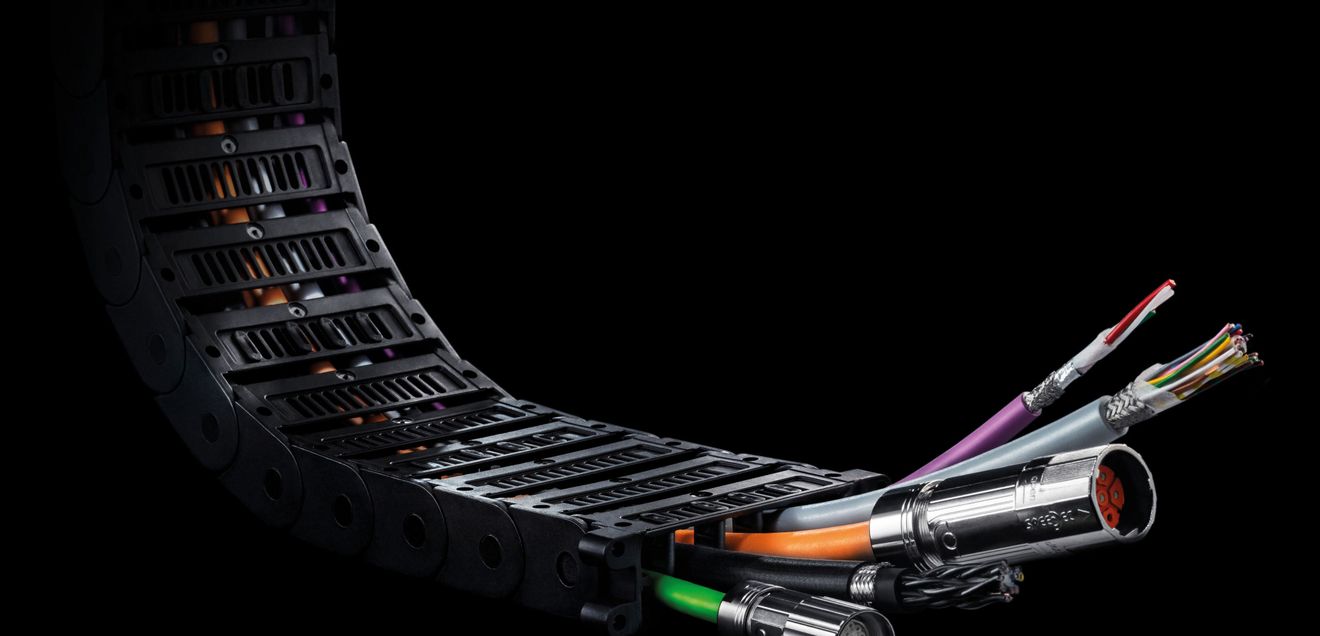
In highly automated production environments, downtime is one of the biggest cost drivers. Every unplanned interruption can not only lead to production delays, but can also result in costly consequential damage - for example due to damaged workpieces, downtime of subsequent processes or costly repair work. In moving applications in particular, such as machine tools, gantry systems, industrial robots or handling units, electrical cables are under constant strain. Energy guiding chains perform a dual function here: they guide and protect cables, hoses and lines by accompanying them safely through highly dynamic movement profiles. However, the system is only as strong as its weakest link, and unsuitable cables are often the first to give way. Only if the cables used are consistently designed to meet the specific requirements of energy supply chains can a permanently reliable function be ensured.
Modern machine and system concepts require ever more compact designs with increasing power density. The available installation space for cables and wires is therefore becoming increasingly limited. The chains are becoming narrower and flatter, the bending radii smaller and the number of cables carried is increasing. What's more, in many industrial environments, the systems are subject to additional stresses. Moisture, oils, coolants, abrasive particles or strong temperature fluctuations are often part of everyday life and require all system components to be extremely resistant. At the same time, the increasing integration of sensors, actuators and intelligent drive systems increases the complexity of signal transmission. All in all, this results in a scenario in which only highly flexible, abrasion-resistant and chemical-resistant cables can survive in the long term. If you want to be on the safe side, you need specialized drag chain cables that are mechanically and electrically designed for continuous movement.
Success factors for long-lasting drag chain cables
The service life of a cable in the chain is not a product of chance. It results from the perfect interaction of individual components, especially these five:
Copper veins:
The cores are at the heart of every electrical cable. In cable drag chains, stranded conductors are used almost exclusively - i.e. conductors made of many fine copper wires, typically of conductor class 6. This particularly fine-stranded design enables high flexibility and is significantly more resistant to repeated bending stress than coarser strands. The quality of the core insulation also plays a key role. It must be abrasion-resistant, temperature-resistant and electrically resilient in order to protect the core permanently.
Stranding:
The way in which the individual cores are arranged within the cable has a significant influence on their bending capacity. A short lay length is particularly suitable for stranding, i.e. a tight twist of the cores around a central, tensile element. This ensures an even distribution of the tensile and compressive forces acting on the cable with every movement. Bundle stranding is recommended for very high loads. Here, several groups of cores are combined into bundles that wind together around the cable core. This design increases the service life, even if it requires a little more installation space.
Shielding:
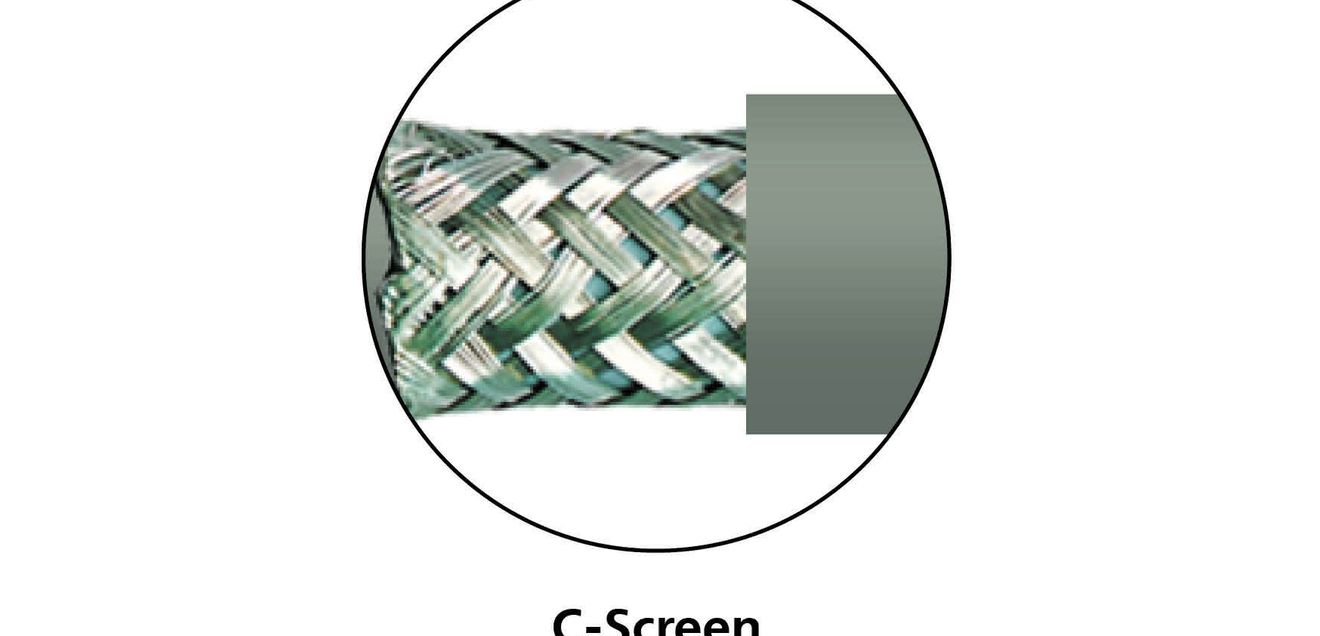
In increasingly digitalized industrial environments, electromagnetic compatibility is a decisive factor. Effective shielding is necessary to prevent interference from neighboring cables or devices. The C-shield has proven itself here - a tightly braided metal mesh that is particularly resistant to bending. The braiding angle should be as flat as possible in order to optimally adapt to the movements of the cable.
Jacket material:
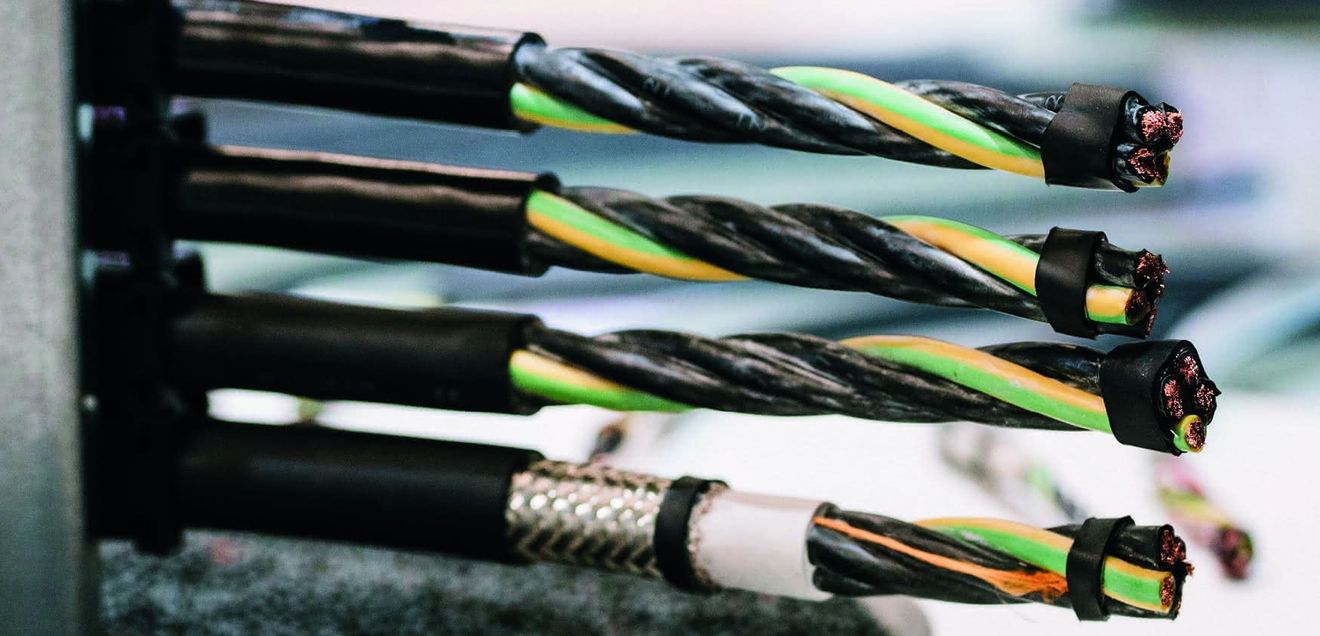
The outer sheath of a cable protects against abrasion, chemicals, oils and thermal influences. Materials such as PUR and TPE have proven particularly effective here. They offer high abrasion resistance and are also available in halogen-free and flame-retardant versions. Gusset-filling extrusion is particularly suitable for drag chain cables. The jacket is applied under pressure so that the plastic fills all gaps and firmly encloses the cores. This significantly increases the mechanical stability, but makes stripping more difficult - a challenge that Helukabel solves with an integrated ripcord, for example.
Standards and tests:
In addition to mechanical load capacity, cables must also comply with all relevant standards - whether DIN VDE, EN or UL. However, traditional standardization does not take sufficient account of the application in cable carriers. This is why manufacturers' own test procedures are crucial. Helukabel tests its cables under real conditions for millions of bending cycles, chemical influences and thermal loads. This ensures that the products can actually withstand the tough requirements in the field.
Systems thinking ensures process stability
An often underestimated success factor is the coordination of all system components. Cables that are optimally matched to the chain used minimize friction, vibrations and therefore wear, and they reduce potential sources of error. Manufacturers such as Helukabel, who develop and produce both cable drag chains and the associated cables, offer system solutions from a single source that can be individually configured and, if required, delivered pre-assembled and ready for connection.
Production managers, maintenance engineers and machine developers benefit from a well-founded selection of the right drag chain cable - tailored to the specific requirements. A holistic approach not only saves follow-up costs due to breakdowns or maintenance, but also increases planning reliability. Those who also rely on pre-assembled system solutions speed up installation and reduce the error rate in the field.
SPS, Hall 2, Stand 230/231


You might also be interested in
ebm-papst is growing again thanks to AI and data centers
ebm-papst returned to a growth trajectory in fiscal year 2025/26. Air Technology, data center applications, and artificial intelligence are driving revenue and investment.
 read more...
SPE on the Verge of a Market Breakthrough
Single Pair Ethernet (SPE) has moved beyond the conceptual phase and is increasingly being implemented in industrial settings. The focus here is not only on higher data rates and simplified cabling, but above all on the issue of system integration...
read more...More than 900 exhibitors already registered
Around six months before the start of the trade fair, more than 900 companies have registered for SPS 2026 in Nuremberg. The trade fair focuses on industrial AI, cyber security and digital transformation.
read more...Virtual PLCs in practice: How vPLCs make production systems more flexible and scalable
The increasing networking of IT and OT is fundamentally changing industrial automation. The IT/OT Integration Summit shows how modern technologies can make production environments more efficient, flexible and future-proof. The event will focus on...
read more...Sales growth in a turbulent market environment
Thanks to innovations and a focus on strategic industrial markets, Sick was able to moderately increase its sales in the 2025 financial year. In a turbulent market environment, the company was able to maintain its position and gain market share with...
read more...Siemens presents new AI agent
Siemens is launching 'Eigen Engineering Agent', an AI for automation technology. The solution is integrated into the TIA Portal, has been tested with over 100 companies and is designed to significantly accelerate engineering processes.
read more...Schaeffler keeps sales almost stable
Schaeffler generated revenue of EUR 23.5 billion in 2025 and increased EBIT before special items to EUR 936 million. At 266 million euros, free cash flow was significantly above the prior year and forecast. Net income remained negative due to high...
read more...Advancing artificial intelligence together
Helukabel is stepping up its activities in the field of artificial intelligence and is now a member of the IPAI. The innovation and collaboration platform for companies, research facilities, institutions and administration has set itself the goal of...
read more...New impetus for ifm sales
Two new positions were filled at ifm at the start of 2026: Markus Wolf becomes Managing Director Sales Germany, Sven Quant takes over the position of Central Managing Director in the Process Sensors division within the ifm Group.
read more...