

Hangcha
Advantages of Li-ion batteries for forklifts
Lithium-ion batteries have long since established themselves in cell phones and tablets. Electric forklift trucks are a different story: the classic lead-acid battery still dominates here. However, the modern alternative has numerous advantages.
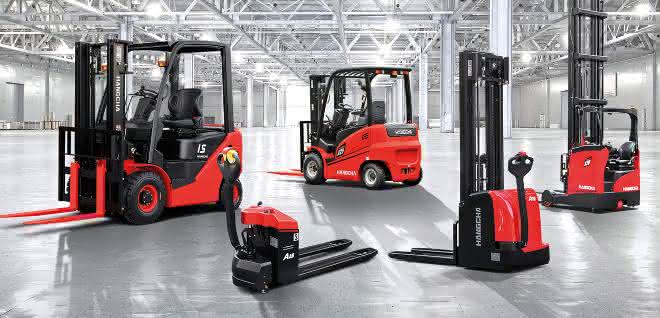
The properties of lithium-ion batteries sound fascinating. Their energy density is around four times higher than that of lead batteries. And they can be "refueled" in a very short time. Just twenty minutes, for example, results in a charge of around 25 percent; and after two hours, such a power storage unit is fully charged. They can also be charged or almost completely drained in between - without affecting their service life. In terms of efficiency, the new type of battery is also impressive: a lead-acid battery only provides around 70 percent of the electricity originally used; the modern equivalent, on the other hand, makes around 93 percent usable. This leads to significantly lower energy costs.
General recommendation impossible
Li-ion rechargeable batteries also have a much longer service life. Self-discharge hardly plays a role. In addition, the advanced storage technology eliminates the time-consuming refilling of water, battery changes and maintenance and cleaning measures. However, the new energy systems also have disadvantages. For one thing, in contrast to lead batteries, they have a disappointingly low recycling rate.
On the other hand, their purchase price is many times higher than that of a corresponding conventional energy storage system. A general overall cost comparison of the two battery types remains illusory: "You have to analyze each case on an application-specific basis," summarizes Thomas Schmehl. The Managing Director of Burger Hub- und Transportmittel does concede that lithium-ion batteries are most likely to pay for themselves in multi-shift operation. But even then, the right solution is not automatically determined.
Better to rent Li-ion batteries
The general importer of Hangcha machines knows: "Li-ion doesn't stand a chance in practice without an appropriate time window for interim charging. No matter how favorable the cost calculation is." On the other hand, the innovative traction batteries are convincing even in applications where the lead solution would be more cost-effective. As an example, the engineer cites "smaller devices in ramp operation whose lead batteries are never serviced and therefore often fail".
If lithium-ion batteries were rented rather than bought, the technology would pay off - perhaps not in terms of life cycle costs, but certainly from an availability perspective. The trendy power storage systems are also highly attractive in sensitive working environments, particularly in the pharmaceutical and food industries: contamination from battery gases and acids is simply not possible.
New forklift creations
The characteristics of the high-tech batteries also make it possible to design new industrial truck variants. Hangcha's new products include the CBD12 low lift truck. This lifting device for the so-called "last mile" weighs 180 kilograms less than a similarly powerful lead model. And allows the delivery driver to transport substantially more freight with the same payload.
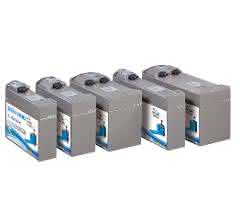
Schmehl now offers all electrically powered Hangcha models with an optional lithium-ion battery. The intralogistics specialist from Herborn has brought the Münsterland-based supplier Benning on board. The family-owned company relies on lithium iron phosphate cells. For chemical reasons, these modules are a particularly safe design. Each storage unit is characterized by a service life of around 3,000 cycles and an intelligent battery management system. as


You might also be interested in
Source of raw materials instead of hazardous waste
With the increasing use of lithium-ion batteries in industry, for example in driverless transport systems or as an emergency power supply for control systems, the volume of used batteries is also growing - and with it the challenge of recovering...
 read more...
Intelligent clutches
In many cases, a torque transducer is oversized for measuring torque and speed. A new intelligent clutch from R+W could be an alternative: it enables measurement data to be recorded directly in the drivetrain, measurements to be taken with high...
read more...Music of the future
The Blechexpo and Schweisstec trade fair duo took place in Stuttgart at the beginning of November. Like other industries, sheet metal workers and welding technicians have mixed feelings about the future.
read more...Early warning through interactive warning vest
The interactive warning vest from Linde Material Handling protects pedestrians in storage and production areas from approaching industrial trucks at an early stage with a tactile, audible and visible warning function.
read more...When is maintenance due?
The Brady inspection timer can save lives by clearly indicating when machines, equipment and tools need to be serviced. The LED indicators are clearly visible to operators and maintenance technicians, even from a distance.
read more...For one-hand installation
Desoutter is launching a one-handed angle screwdriver for the assembly of critical screw connections. With a length of around 30 centimetres and a weight of one kilogram, the transducer-supported EABS facilitates assembly processes.
read more...Process-accurate screw connections in series production
The power tool manufacturer Fein has launched three versions of the ASM 18 mid-handle screwdriver. They are identical in shape, but differ in terms of their torque output.
read more...Getting to the clamping point
Hermos Schaltanlagen in Mistelgau works with Desoutter screwdriving tools in production. Using the ergonomic cordless screwdrivers from the Elit series, the employees tighten the sensitive connections to the exact torque specified by the customer.
read more...1,400 variants, one line
I4.0 assembly line. With an assembly line from Bosch Rexroth, SFB manufactures hydraulic valves 20 percent more productively. A digital assistance system guides the workers through the entire assembly process, reduces errors and increases...
read more...