

Straight pull closure from Fortner
Steel for biathlon rifles: on the podium with Steeltec
Whether for the Norwegian record-breaking world champion Ole Einar Bjørndalen or the German double Olympic champion Laura Dahlmeier: speed counts in biathlon, both on the cross-country ski trail and at the shooting range. The success story of this winter sport is closely linked to an idea by master gunsmith Peter Fortner from Upper Bavaria.
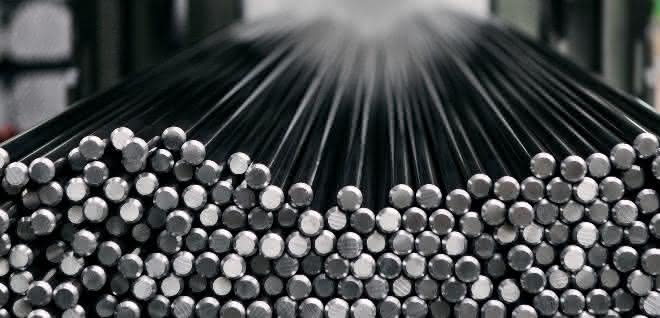
It was the modern straight-pull bolt that he invented that made fast repeating and reloading of the rifle possible. At international competitions, almost all athletes rely on the Fortner system, which is primarily installed in the models of the renowned sporting and hunting rifle manufacturer J.G. Anschütz. Fortner has been using special bright steel from Steeltec, a Schmolz + Bickenbach Group company, for more than 30 years to ensure that the breech parts can withstand the enormous stresses and strains of biathlon.
Gold, silver, bronze: biathlete Peter Angerer returned home from the 1984 Winter Olympics in Sarajevo with three medals - but lamented the outdated technology of German rifles in international comparison. In order to reload, the athletes had to reach around awkwardly, flip the bolt up, pull it back, push it forward and flip it down again - a time-consuming and unsteady procedure in a competition in which speed and a steady hand lead to victory. Through a mutual friend, the Olympian got to know master gunsmith Peter Fortner from Rohrdorf in Upper Bavaria - and arranged for him to be commissioned by the German Ski Association to find a better system.
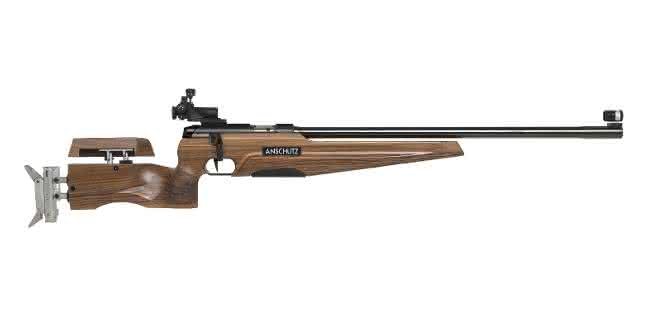
All Olympic medals for shooters with the Fortner clasp
Fortner developed a system that allows winter sports enthusiasts to fire their rifles quickly and easily: After a shot, the biathlete pulls back the bolt handle on the side of the rifle with their index finger, releasing the empty cartridge case from the chamber. He then pushes the bolt forward again to the starting position with his thumb. A new cartridge is fed from the magazine into the chamber. The gun is ready for the next shot. Meanwhile, the rifle rests against the shoulder in the firing position. In 1984, Fortner patented his revolutionary straight-pull bolt and founded his company for hunting and sporting rifle technology. The system was used for the first time in competitions the following winter. Then as now, the renowned Ulm-based hunting and sporting rifle manufacturer J.G. Anschütz GmbH & Co. KG uses the Fortner bolt in many of its models - for example in the Anschütz 1727F, which is popular among hunters, and in the 1927F sporting model. Fortner puts the breech system's market share in international biathlon competitions at around 95% and adds: "At the 2017/2018 Winter Olympics, 100% of the biathlon medals went to athletes with rifles with a Fortner breech."
High strength required without heat treatment
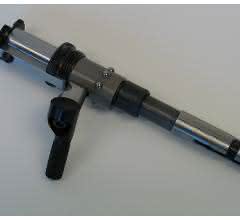
According to Peter Fortner's estimate, a biathlete fires around 15,000 shots per year, in addition to numerous dry rounds without a cartridge inserted. The sporting rifle is exposed to an enormous amount of stress. In winter, the surfaces also have to withstand the cold weather as well as moisture and hand perspiration. "Anyone who buys a sporting rifle wants to use it for at least 25 years," says Fortner from experience. "Our locks have to be correspondingly durable, which is why we need resistant and durable steel." The high strength required for this can usually be achieved with heat treatment. However, this in turn entails the risk of material distortion - which is not only to be avoided for accuracy in biathlon, but also entails costly post-processing. To avoid this complex problem, Fortner relies on special bright steel from bright steel supplier Steeltec in Emmenbrücke, Switzerland, for its rifle breeches.
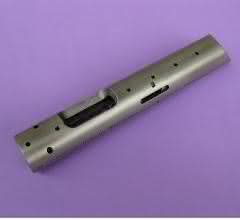
Fortner uses the high-strength and higher-strength special steels ETG 100 and HSX Z12 as well as the case-hardening steel ESP 65 from Steeltec for efficient production. Fortner manufactures the rear part of the bolt, which locks the bolt, from ETG 100. The firearms supplier uses HSX Z12 and ESP 65 for the larger part of the bolt action system, the receiver, in which the entire bolt unit is guided. It closes off the chamber to the rear, where the actual explosion takes place during firing. These parts of the rifle are subjected to immense stress in biathlon, especially due to the extraordinarily high number of shots. The material from which the breech parts are made must therefore be extremely strong. High precision is also important. This is because any distortion impairs the ease of movement of the entire system.
Special steel saves costs
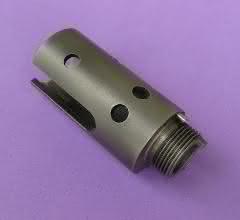
The steel grades from Steeltec already offer the required tensile strength as supplied - for ETG 100 it is between 960 and 1100 megapascals, for HSX Z12 between 950 and 1200 megapascals. Unlike when conventional heat-treated steel is used, the components no longer need to be heat-treated after production. This also eliminates the need for post-processing steps, such as dressing, grinding and deburring. Fortner nitrides the locking parts for sufficient rust protection - a simple heat treatment without the risk of distortion. "Our special steels are high-strength or higher-strength, but are still easy to machine. Because no heat treatment and corresponding post-processing are required, Fortner saves costs, time and logistical effort in production," says Account Manager Wolfgang Birke from Steeltec, summarizing the advantages. Fortner also uses ESP 65 case-hardening steel for the system sleeves. Heat treatment is still necessary for this machining-optimized steel. However, according to the company, very high strengths can be achieved. The property quality remains the same across batches and the case-hardening steel guarantees a high level of process reliability.
Initially, Fortner used materials that were more difficult to machine, such as 1.7131 (16MnCr5) and the heat-treatable steels 1.7225 and 1.7227 (45CrMo4 and 45CrMoS4 respectively). The weapons specialist came across Steeltec as a problem solver more than 30 years ago via the southern German steel supplier Günther + Schramm. The company supplies the special bright steel as bar material with a diameter of 32 mm. Fortner cuts the bars into 200 mm long blanks and then turns and mills them into the desired shapes. Other types of steel are out of the question for the company: "We tested alternatives with the same properties once and immediately decided against them. We noticed a slight distortion even during nitriding," recalls the master gunsmith.
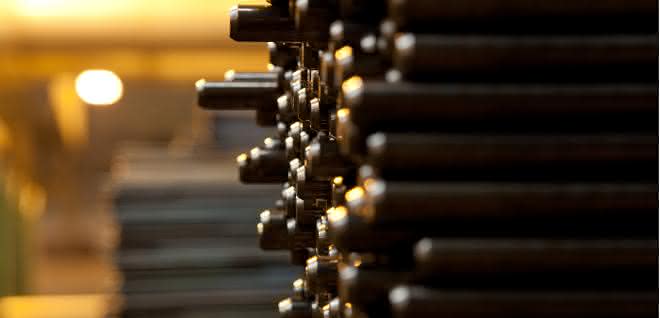
Precision, reliability and speed - what biathletes need in competition is what Steeltec also offers Fortner for the production of its revolutionary straight pull closure. The collaboration has proven its worth in international competition - and Steeltec's high-strength and higher-strength steels are regularly on the winners' podium in winter.


You might also be interested in
Prevent damage and save energy
CG Drives & Automation presents a new range of Emotron TSA soft starters from 5.5 to 1000 kW (16-960 A and 200-690 V). This includes the new sizes TSA 5 and 6 for high power applications (470-960 A).
 read more...
Software protection in a networked world
Wibu-Systems is involved in the development of a pioneering scalable protection model for the cloud.
read more...Robot cell compensates for shortage of skilled workers
Over the past two decades, Engelmann Schweißtechnik has established itself as a welding technology dealer and service provider in the Sauerland region.
read more...Machine safety and PPE
RS Components is focusing on the topic of occupational safety on its website in a new section with offers and practical tips. The distributor supplies products from all areas of safety, such as personal protective equipment, occupational safety,...
read more...Applications in the field of renewable energies
With the expansion of the DILH power contactor series, Eaton has added two devices for special applications to its portfolio, which are specially designed for switching resistive or weakly inductive loads.
read more...Robots help with the production of rapid tests
The Thuringian company Senova relies on Omron robotics and Kraus Maschinenbau for the development and production of urgently needed rapid coronavirus antibody tests.
read more...Single-phase growth
From 2020, the EQ electric chain hoist line from Kito will be joined by the single-phase EQS. It is designed for a 230-volt power supply and offers load capacities of 500 or 1,000 kilograms.
read more...Thermoformed protective elements
Seal and protect with plastic
Plastics specialist Pöppelmann will be showcasing the company's focus on greater sustainability and innovative solutions for sealing and protecting technical components at the K plastics trade fair in October.
read more...Soft starter or frequency inverter?
The efficient operation of electric motors is becoming increasingly important. In addition to smooth operation, environmental regulations and energy costs also play a role. Project planners and engineers have to decide on the best technology for...
read more...