

Laser smoke extraction system
Air filtration during material processing
Laser cutting produces smoke and dust that can damage machines and endanger the health of employees. A powerful and reliable laser fume extraction system is therefore of crucial importance.
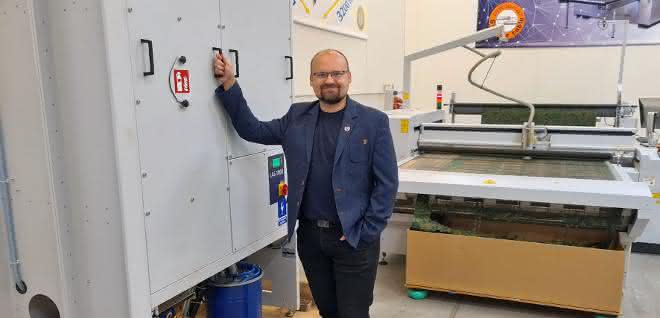
Eurolaser is one of the best-known players on the international market for laser processing systems. For Dipl.-Ing. Matthias Kluczinski, who founded the company in 1994, the primary goal was to establish laser technology for material processing. This plan has been realized, as evidenced by continuous growth and the establishment of a worldwide sales and service structure.
As an authorized partner, Eurolaser Polska is responsible for sales and support of the systems in Poland. Today, Eurolaser manufacturesCO2 laser machines for cutting, engraving and marking. "Our powerful laser systems are designed for use in both industry and trade. The modular design with high-quality components guarantees high quality for the most demanding applications," says Mariusz Deptuch, CEO of Eurolaser Polska, based in Częstochowa. "TheCO2 laser is the heart of our laser systems. It makes a decisive contribution to the efficiency and precision of laser processing," continues Deptuch. The sealedCO2 lasers used at Eurolaser Polska are virtually maintenance-free, durable and offer laser powers of up to 650 W. The large-format laser cutter is designed for processing five material groups. These are acrylic and other plastics, wood, foils, textiles and composite materials.
Eurolaser Polska's core competence lies in the provision and sale of laser processing solutions to numerous customers in Poland. At the same time, the company offers services in its application center, including laser cutting tests of special materials, laser cutting and quality tests, prototype cutting and prototype series as well as production support for existing customers.
Eliminate airborne pollutants
Laser processing produces undesirable by-products such as laser smoke and dust. The energy input during processing triggers pyrolysis and oxidation processes. They release a harmful mixture of aerosols, gases and nanoparticles. The latter are particularly dangerous as they cross the lung-blood barrier when inhaled and enter the nervous system. However, machines and products can also be contaminated or even damaged by laser smoke, which forms firmly adhering layers of dirt. For this reason, Eurolaser has decided to use a laser fume extraction system to keep the air clean.
More than 15 years ago, the company entered into a cooperation with ULT as a supplier of extraction and filter systems. It was therefore logical for Eurolaser Polska to continue this cooperation in Poland. Deptuch says: "ULT is a long-standing technical partner of Eurolaser, so choosing ULT as a partner was a natural and obvious step for us. The knowledge and experience jointly developed by our partners guarantee the highest quality and functionality of the air filter solutions we use for our laser systems."
In 2020, Eurolaser Polska decided to use the newly developed ULT LAS 800 system for laser fume extraction in conjunction with a Eurolaser L-1200 200 W laser system with conveyor belt for cutting textiles directly from the roll.
"We were looking for a very flexible extraction system for laser fumes, as the range of materials to be processed, known as technical textiles, is very broad. We cut different types of materials and their sandwich combinations, which in turn generate different types of laser emissions. Laser fumes must be removed quickly and effectively so that production equipment and products are not contaminated and the health of our operators is protected," explains Deptuch.
Eurolaser Polska offers its solutions in various sectors, such as the automotive industry. In this sector, applications for cutting nylon for airbags or spacer materials for seating systems have been implemented. For upholstery applications, Eurolaser cuts materials such as PE/PES/foams in sandwich combinations. "The most difficult application in this market sector is cutting different types of carpets where we have combinations or core materials such as ABS/PET with foam or fiber layers," describes Mariusz Deptuch. "Another special task is the cutting of sound insulation materials with a thickness of more than 10 mm, which generates a lot of laser smoke. Without efficient filtration, this would very quickly contaminate the laser optics and hinder the operation of the mechanical parts in the laser system."
Another challenge is services for the military industry, where lasers are most commonly used to cut materials such as Cordura, Velcro, Kevlar, aramid and various types of laminates. The biggest challenge for effective laser smoke filtration here is the combination of synthetic and mineral materials. A new group of materials currently appearing in laser applications are laminates and composites. In the case of laminates, these are mainly combinations of plastics and, in the case of composites, materials based on different types of fibers.
"The laser smoke produced when cutting these different materials is very diverse and contains sticky particles as well as gases and aerosols. We were therefore looking for a solution that would protect the filters in the long term and extend their service life. Even after more than 2,000 operating hours, the LAS 800 extraction system is still very suitable for such applications and meets all our requirements and needs."
The perfect solution for Eurolaser
Eurolaser Polska opted for the LAS 800 as a compact and flexible extraction system for use with small and medium-sized laser systems for cutting, marking and welding. The many upgrade and expansion options of the laser fume filter system were further decisive factors for the use of the system. For example, the L-1200 conveyor system is used for laser cutting various technical textiles. The filter aid dosing unit included in the LAS 800 helps to prevent filter blockages caused by sticky smoke particles, which leads to considerable cost savings when changing filters.
Mariusz Deptuch concludes: "Another great element is an additional Hepa H14 filter with a downstream sorption filter made of activated carbon. Thanks to the use of these filter modules, the purified air is fed back into the production room. We do not have to build any additional ventilation shafts and save energy for heating. After twelve months of using the LAS 800, we can recommend this device to anyone, even very demanding users, for their laser applications."


You might also be interested in
Filtration and sound attenuation in circuits
In liquid or air circuits, filter housings and silencers protect measuring devices, ensure particle-free vacuum and pneumatic systems, keep cooling circuits clean and reduce noise.
 read more...
KSS ultrafine filtration for grinding oils
Modular concept for pure oil
In order to grind economically, reliably and with the highest quality, extremely clean grinding oils are required. Filter manufacturer Vomat offers the metalworking industry high-performance and customized concepts for the filtration of cooling...
read more...Up to 95 percent less flue gas thanks to direct extraction
The requirements for occupational safety measures and safety technology are also constantly increasing in welding technology. The Technical Rules for Hazardous Substances (TRGS) stipulate that welding fumes and harmful substances must be extracted...
read more...Everything accurate in switch cabinet construction
To ensure smooth work processes, tools for processing enclosures and housings must function flawlessly and reliably. Häwa rounds off its punching range with the Multi-Press 500.
read more...Cooling and temperature control units
Hygienic packaging sells safely
In few industries are the requirements for hygiene in the production process as strict as in the food sector - the health of consumers has top priority. This results in enormous challenges for all machines and components involved, especially in...
read more...Efficient and sustainable
Rotary screw compressors are the reliable backbone of industrial compressed air generation. The innovative CSD/CSDX series from Kaeser Kompressoren with its numerous features produces them efficiently and saves energy costs. This also reduces theCO2...
read more...Healthy air during welding
Welding produces fumes and gases that are hazardous to health. Extraction is necessary to comply with the occupational exposure limits and is even mandatory when welding high-alloy steels.
read more...Wire mesh filters in medical technology
In hardly any other industrial development sector are the demands placed on products as high as in medical technology. After all, human lives depend on the performance and reliable quality of medical devices.
read more...Energy efficiency and sustainability in the smallest of spaces
With the StingR ultra-fine filter system, Lehmann-UMT has created a solution for the energy-efficient and precise treatment of fluids during tool grinding for extended tool life and high tool quality.
read more...