
Artificial intelligence
Companies can only remain competitive with AI
Altair is a provider of computational intelligence, convergent software and cloud solutions in the fields of simulation, HPC, data analysis and AI. In an interview with Thomas Vorberg, VP Technical Operations EMEA, Altair, Annina Schopen found out to what extent artificial intelligence supports product development and what challenges - but also what solutions - there can be when implementing AI.
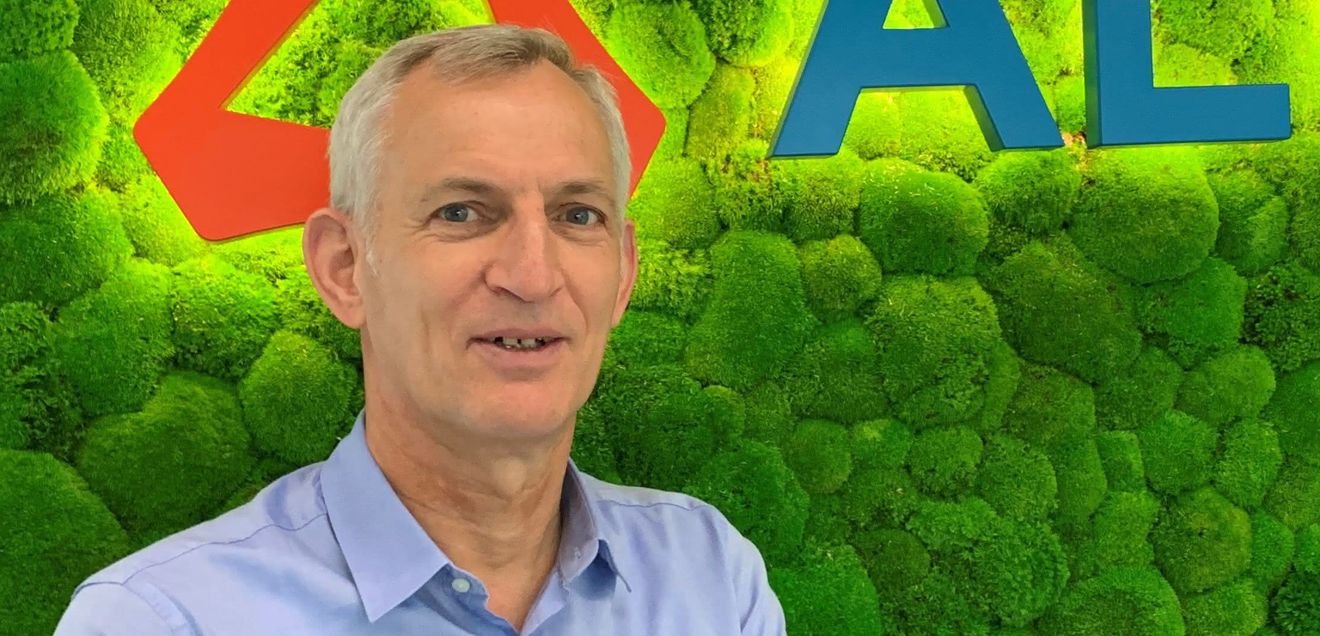
Artificial intelligence has become increasingly important in recent years, and the Hannover Messe is also focusing on this topic. Altair, for example, also supports its customers with AI-supported product development. What is already possible here?
There is a whole range of fields of application for artificial intelligence in product development: this starts with model creation, which is made more efficient by AI, and extends to the prediction of physical behavior without the need for new computationally intensive, time-consuming simulations. Examples include more efficient modeling processes: Algorithms can translate geometries into values. This allows them to be compared, edited and divided into groups and classes, which simplifies model organization. Multidisciplinary design exploration should also be mentioned. Another use case is the recognition of physical behaviour and the optimization of desired behaviour. Another example is the mapping of complex system behavior for real-time capable digital twins.
What are the benefits for customers?
You can develop faster and more innovatively, because AI algorithms can uncover complex correlations better and faster and thus accelerate decision-making.
What challenges arise when integrating AI into the product development process and how are they overcome?
When companies start a data science project, they usually have to overcome several challenges at once, which is why the majority of these projects do not lead to success. There are three main reasons for this, as a global study by Altair shows: firstly, there are organizational hurdles, such as the creation of friction between departments and teams - or the difficulty of finding data analysis experts. In addition, companies are often slowed down in the application of artificial intelligence by technological obstacles due to inadequate infrastructure. Last but not least, there are also financial obstacles that arise because budgets and resources are too tight or project profitability is too narrowly defined. There are solutions for all these hurdles. For example, organizational and technological friction can be avoided by empowering the domain experts - the employees in the company - to apply data analysis methods themselves. With our low-code, no-code solution Altair Rapidminer, AI methods can even be easily integrated into engineering, so that domain experts in all areas of the company can collect data and create machine learning applications themselves. Thanks to this democratization, we create a direct transfer of knowledge in the companies. Financial friction losses can be avoided, for example, by ensuring that AI technologies are scalable and can grow with the company when selecting them. Last but not least, it is important to identify the best AI use case in the company in advance with the help of feasibility and value creation studies.
How are AI models trained and validated to provide relevant insights into product behavior and potential improvements?
The selection of the appropriate AI method depends on the objective, with each data analysis project following the same pattern, starting with the data. The individual steps for the Altair romAI toolbox are as follows, for example: First, the data is prepared, i.e. the raw data is filtered and correlations between the variables are determined. Then static or dynamic modeling can take place and inputs, results or optional state variables for dynamic models are defined. In the results evaluation, you can evaluate the generated model against targets, predictions, hyperplanes, time and instance evaluations. The Altair Twin Activate model implementation enables reuse, accelerating multidisciplinary analysis and providing digital twins.
How do you see the future of AI in product development? Are there certain areas that you are particularly excited about?
The most exciting question is how AI methods will become widely established in product development. Above all, how quickly companies will adopt the tools. After all, only those companies that integrate AI methods into their processes will remain competitive.
Can design problems also be solved by AI or with the help of machine learning?
Yes, AI does not replace human creativity, but it does help to identify patterns of behavior that would be impossible to discover without AI given the wealth of knowledge and to resolve conflicting goals. This allows developers to intuitively process hundreds of simulation results - and also evaluate the manufacturability of different variants.
Are there any application examples?
At the Altair booth, you will discover several application examples where companies are using AI technologies to lower manufacturing costs, reduce weight or implement new performance requirements - including an application from the automotive industry that is also transferable to other industries. Using an optimization process for megacasting components, we will show how AI methods help to identify and optimize the desired component behavior and thus make it possible to design the most complex components with a variety of requirements in a production-oriented and efficient manner. In short: lightweight construction, functional requirements and manufacturability in harmony through AI-supported generative design.
What advantages does simulation-driven design offer in terms of reducing costs, speeding up the development process and improving product quality?
The earlier decisions can be made in the development process, the fewer expensive, time-consuming changes have to be made later. This reduces costs, improves product quality and enables an early market launch.
And the most important question at the end: Will you be presenting your digital twin expertise again at the trade fair stand using a real coffee experience?
Short answer: Yes - Altair once again has probably the best, but definitely the most sustainable coffee at the trade fair! It's not us who say that, but Maurizio Tursini from the Cimbali Group: "With digital twin technology, we make each cup of coffee more sustainable." Want to know more? Then visit us at our stand. Coffee that uses 20 percent less energy is not only good for your conscience, it also tastes particularly good. It's not just the digital twin that contributes to this, but also the sustainably produced coffee from Fagiolo.
Hall 17, Stand D25


You might also be interested in
Record funding for accelerated development of a physical AI platform
Neura Robotics has announced a Series C funding round worth up to $1.4 billion. This will help the company accelerate its mission to build the world’s leading physical AI platform.
 read more...
Vertiv and Nvidia link physical infrastructure with digital twins
Digital twins instead of a flood of documents: Vertiv integrates 'SmartRun' into 'Nvidia Omniverse DSX' to accelerate the planning and implementation of AI factories.
read more...Ionos and Q.ANT cooperate on AI
Ionos and Q.ANT want to jointly advance photonic processor technologies for AI and high-performance computers. The aim of the partnership is to build energy-efficient and sovereign AI infrastructures in Europe.
read more...Siemens uses humanoid robots in its plant
Humanoid robots working in factories has long been considered a vision of the future. Siemens, Nvidia and the British start-up Humanoid have now brought this moment a little closer - with a tangible practical test under real conditions.
read more...AI 'CheckMate' optimizes industrial processes
With 'CheckMate', the University of Klagenfurt has developed an AI system that independently creates algorithms for complex combinatorics and optimization problems. The technology is designed to make industrial planning and logistics processes more...
read more...Machine Vision" conference in Baden-Baden
The VDI conference "Machine Vision - From Inspection to Smart Revolution" on June 17-18, 2026 in Baden-Baden will provide a comprehensive practical insight into current applications of machine vision. One focus will be on the use of AI and the use...
read more...European companies prioritize security over growth
With the integration of artificial intelligence (AI) into business-critical processes, European companies are shifting their priorities. Instead of pure innovation projects, the focus is increasingly on security, governance and scalability.
read more...Infineon Startup Challenge 2026
Focus on humanoid robotics
Infineon brings together young deep-tech companies worldwide to drive innovation in humanoid robotics. The focus is on hardware and system solutions from sensor technology to motor control. Applications are still possible until May 27, 2026.
read more...Open automation ecosystems: How collaboration becomes a competitive advantage
How can collaboration between IT, OT and mechanical engineering become a real competitive advantage? Hans Michael Krause shows how open automation ecosystems are advancing brownfield integration, AI and cyber resilience in practice.
read more...