

Study on the energy transition
Germany is falling behind
A recent study shows that the Nordic countries are among the best positioned when it comes to preparing for the energy transition, while countries such as the UK and Germany are lagging behind.
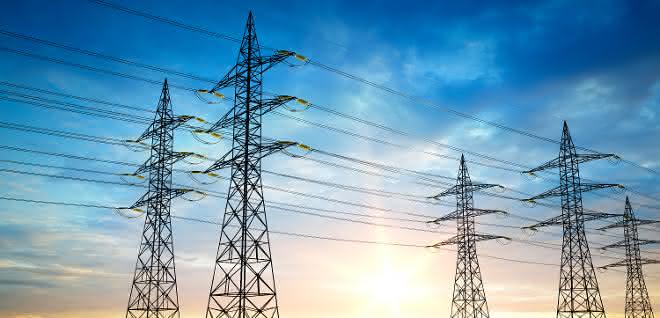
The Energy Transition Readiness Index (ETRI) 2022 was compiled by the Association for Renewable Energy and Clean Technology (REA) and supported by Eaton and Eversheds Sutherland. The report assesses and compares the readiness for the energy transition of the electricity markets of 13 European countries.
Germany and the United Kingdom as well as Ireland, Italy, Poland, Spain and Switzerland received a 3 in the progress ranking, the lowest score in this year's report. Due to the fact that other countries have improved more strongly while Germany has tended to stagnate, Germany also occupies last place in the overall ranking. With a progress ranking of 5, Finland performs best in the ETRI 2022, while Denmark, Norway and Sweden were rated 4. France and the Netherlands also received this rating.
The ETRI's recommendations for action include:
- Quantify and plan future flexibility needs
- Prioritize and accelerate reforms of the flexibility market
- Urgent removal of current barriers to investment
A recent European industry study suggests that the use of demand-side flexibility resources could lead to annual cost savings of up to €300 per customer in 2030, as well as annual greenhouse gas emissions savings of 37.5 million tons. A similar study in the UK found that annual savings of up to £600 per customer could be achieved by 2050.
All countries are very ambitious in achieving their climate targets, but the countries at the top of the ranking have flexibility markets that enable fair, transparent and easy access, while the countries at the bottom of the ranking struggle with investment barriers such as delays in grid access and unfavorable flexibility markets. These barriers need to be urgently addressed if the benefits are to be realized. Many countries face a huge flexibility challenge and swift action is needed to achieve the energy transition goals.
Dirk Kaisers, EMEA Distributed Energy Segment Leader at Eaton, comments: "As a global energy management company, we are seeing businesses around the world accelerate the pace towards net zero emissions, spurred on by the energy crisis to explore technologies such as renewable energy generation, energy storage systems and the energy flexibility benefits of charging infrastructure. Governments need to match the burgeoning enthusiasm of businesses with policies to create fair, transparent and accessible markets that secure private investment in the energy transition. As the ETRI report shows, the Nordic countries are leading the way. Other countries, including Germany, need to catch up."
Dr. Nina Skorupska CBE, Chief Executive of the Association for Renewable Energy and Clean Technology (REA), says: "As ETRI 2022 makes clear, despite impressive progress in countries like Finland, the warm words of many governments in Europe are not matched by action when it comes to preparing for the energy transition. We need clear action now to remove the barriers facing our industry: proper long-term planning, prioritization and acceleration of market reforms, and urgent removal of current barriers to investment - all of which are urgently needed to put us on the right track. I do not underestimate the challenge ahead, but the cost of nations moving too slowly in preparing for the energy transition is simply too high. We are in the midst of a severe energy crisis, but governments will face even bigger problems in the future if they don't act now. "
Werner Brickwedde, Partner and Head of M&A at Eversheds Sutherland, explains: "Germany has made really good progress in the field of renewable energies and has even taken on a pioneering role in some areas. This path must now be pursued consistently in order to achieve the self-imposed target of covering at least 80 percent of gross electricity consumption from renewable energies by 2030. Their share must therefore almost double within less than ten years. However, this also requires major investments in flexible renewable energies - also to ensure energy security and simply to make energy more affordable for consumers. In order for such investments to be made, we need a faster introduction and implementation of regulatory frameworks that promote access to flexible energy. Implementing the recommendations set out in this index could make a difference.


You might also be interested in
From the repair to the turnkey system
Tsubaki Kabelschlepp GmbH and Kabelschlepp GmbH-Hünsborn will be supported by a joint service department in future. For both product areas - i.e. cable carrier systems and guideway protection and conveyor systems - they will receive installation,...
 read more...
Energy from storage
To increase energy efficiency, fittings manufacturer Hawle is using energy storage in a power and energy management solution for the new high-bay warehouse, which reduces the power requirements of the storage and retrieval machines by a factor of 7...
read more...Partner for the energy transition
Every Hannover Messe traditionally has a partner country. Last year it was Indonesia, this year it is Norway.
read more...Cables for harsh environments
Chains, cables and assemblies: The Helukabel Group will be exhibiting durable drag chain cables with a robust TPE sheath and the new stainless steel version of the tried-and-tested SLE cable drag chain in Hanover.
read more...Convenient charging of AGVs
Enersys, provider of energy storage solutions for industrial applications, has announced the launch of its Nexsys Air Wireless Charger.
read more...Energy 4.0 - driver of decarbonization
The energy industry is the key driver for the industrial transformation towards climate neutrality. The focus here is on the expansion of renewable energies, the decarbonization of heating, the conversion to smart grids, sector coupling with other...
read more...Wireless charger for AGV
EnerSys has introduced the NexSys Air wireless charger. Designed for a wide range of automated guided vehicles (AGVs), the wireless charger offers an advanced, space-saving design to automate the charging process and eliminate maintenance tasks....
read more...Covered for the worst-case scenario
Production companies must protect themselves against power failures - otherwise there is a risk of enormous costs and also the danger of plant downtime.
read more...Electrical connection technology
Cables and wires for industrial automation
Heukabel offers system solutions for cable routing from a single source. The subsidiary EKD Systems specializes in tailor-made cable drag chains made of steel, stainless steel and plastic, which are used in moving machines and systems as well as in...
read more...