
Bicycle technology under load
Systematic test procedures for bicycles
Since the 1990s, everything at the Zedler-Institut in Ludwigsburg has revolved around bicycle safety. The institute tests bicycle components and prototypes and develops its own testing machines, which are used in the laboratories of major bicycle brands worldwide. For around 15 years, Zedler's engineers have also been using standard and operating parts from norelem in the design of their bicycle testing systems.
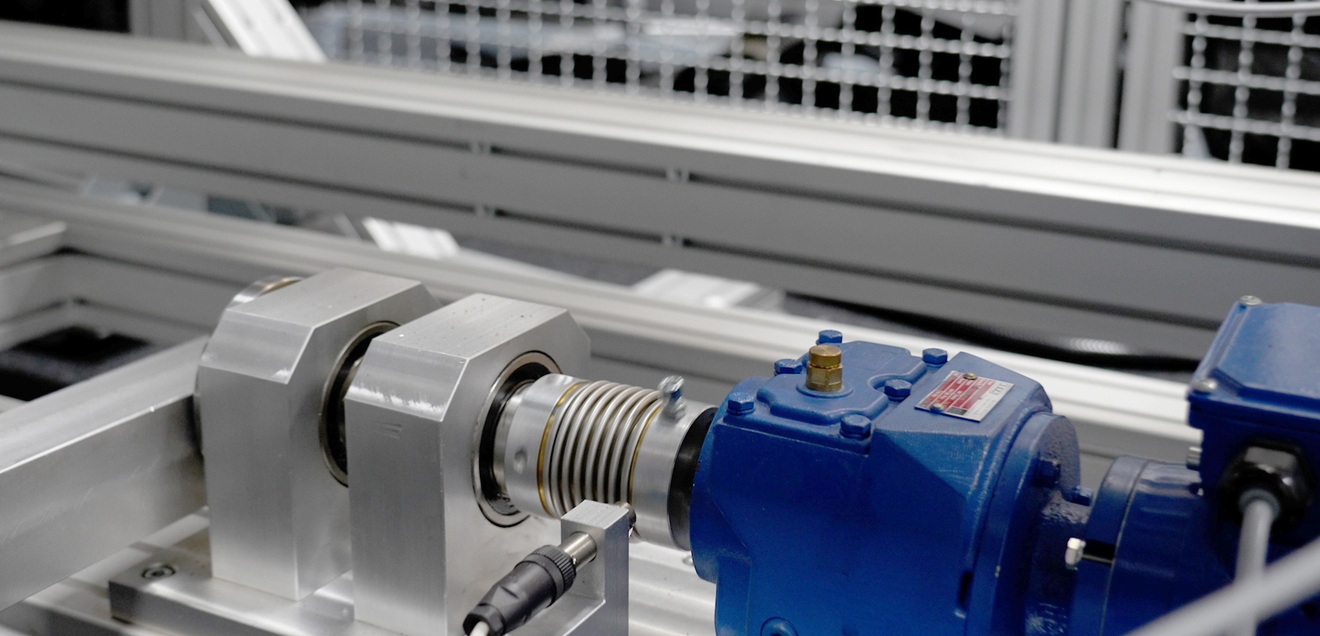
Zedler - Institut für Fahrradtechnik und -Sicherheit GmbH, based in Ludwigsburg, is part of the Zedler Group and has specialized in the development and construction of testing systems for bicycles and e-bikes since 1994. In the company's own test laboratory, bicycles and components such as frames, handlebars, saddles or luggage racks are tested for operational stability - both on behalf of manufacturers and dealers for prototype testing and for insurance companies and courts as part of expert reports in the event of accidents or damage.
In addition to carrying out tests, the company develops and produces its own testing machines, which are used in the test laboratories of leading bicycle manufacturers worldwide. The institute also produces standard-compliant operating instructions and manuals for bicycles and e-bikes. With four dynamic laboratories and around 50 fatigue testing systems as well as a consistently sustainable corporate orientation, Zedler GmbH is now a globally recognized partner for quality and safety in bicycle technology. "We are a classic hidden champion with customers from all over the world, although we are primarily known in the bicycle industry," says Dirk Zedler, founder, testing expert and expert of Zedler-Institut.
Not all wheels are the same - special requirements for testing systems
Bicycles and pedelecs are on the move, often on a daily basis and on changing surfaces. Bicycle frames range from very compact folding bikes with small 16-inch wheels to cargo bikes with a wheelbase of up to 2.15 m and wheels of different sizes at the front and rear to tandems for two riders. What's more:
City bikes often have a low bottom bracket so that you can comfortably put your feet on the ground when stopping at traffic lights.
Mountain bikes (e.g. Enduro), on the other hand, need a lot of ground clearance so that the pedals do not touch down so easily off-road, even if the suspension compresses.
In order to be able to precisely reproduce different geometries, wheelbases and bottom bracket heights, test systems must therefore be highly adjustable and at the same time very rigid and durable, as they have to transfer precise forces to a wide variety of bicycle frames over many years.
Customized testing technology at the highest level
To ensure that a frame can withstand these continuous loads over many years, there is a classic test in bicycle technology: the bottom bracket fatigue (BBF) test. The bottom bracket is one of the most heavily stressed areas on a bicycle and the point at which the pedals are connected to the frame via the cranks. Every pedal stroke generates alternating torques, bending and torsional forces that add up over a long period of time. Without sufficient stability, cracks could form that ultimately lead to breakage or failure.
In his test laboratory, Zedler simulates the forces that a person generates when pedaling, the so-called "pedaling forces". The bicycle frame with the bottom bracket installed is repeatedly subjected to artificial loads. This makes it possible to determine how many of these load changes (cycles) it can withstand before the first signs of damage such as hairline cracks, cracking or play in the bearing appear. The BBF system developed by Zedler is characterized by its special adaptability to different bicycle types and its durable design. As soon as all parameters have been adjusted, the test system reproduces the pedal load that a rider applies to the frame over the course of the bicycle's life within around 24 hours.
The institute works exclusively with test systems developed in-house, such as the "Performance" test machines. They measure the driving characteristics and also the properties of individual components and provide reliable results on driving stability, driving safety and comfort under comparable conditions. Statements can also be made about the consistently high quality of a production batch.
Powerful machines, reliable components
When building the testing machines, Zedler does not rely solely on its in-house expertise, but also relies on partners such as norelem and its extensive portfolio of standard and operating parts for mechanical and plant engineering, or in other words: Here you will find a lot of ideas and solutions that inspire Zedler again and again.
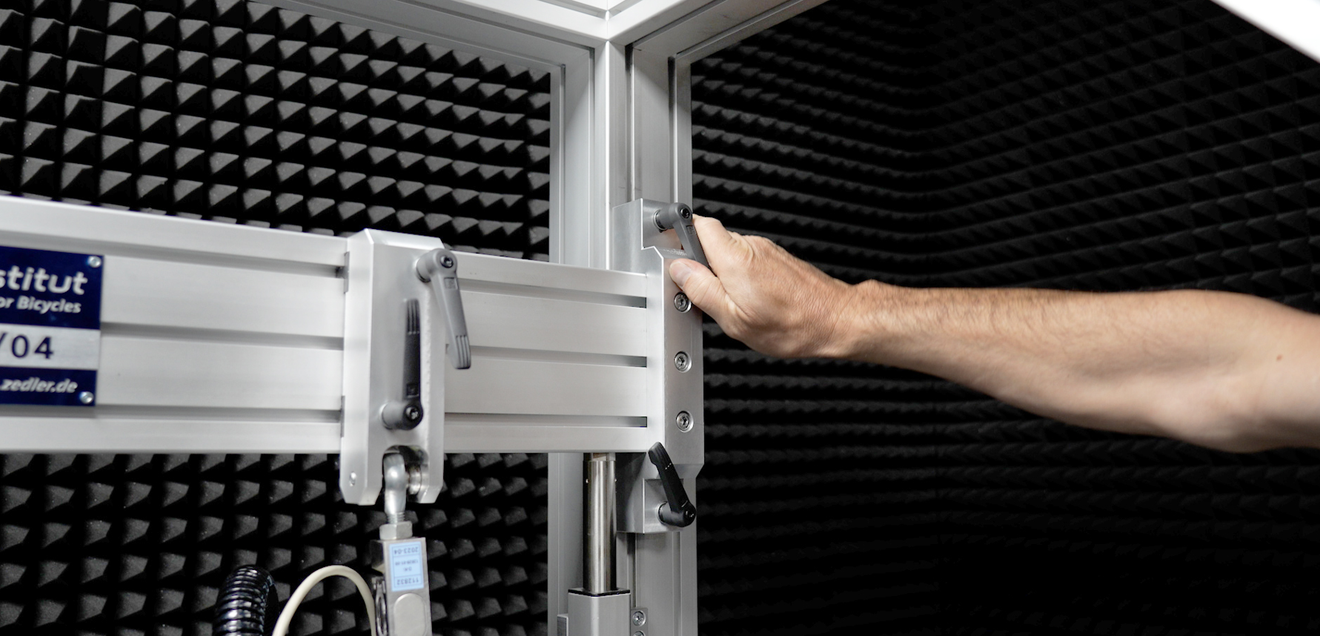
Norelem is an internationally active company based in Markgröningen near Stuttgart, which has been supplying high-quality standard components and system solutions for mechanical and plant engineering for over 60 years. The product range comprises more than 130,000 standard and operating parts, including aluminum profiles, joints, control elements and clamping technology as well as measuring and testing technology.
Components from norelem are regularly used for the design of Zedler testing machines, as company founder Dirk Zedler describes: "We started out very small and ordered clamping levers from norelem, a classic from the range of standard parts. And now there are more and more, including entire systems such as linear guides with the corresponding brakes." The individually manufactured testing machines are thus created in an "intelligent interplay of norelem profile guide rails, guide carriages, clamping elements for profile guide rails, special components manufactured by us, profiles including accessories from a common aluminum profile manufacturer and norelem small parts, such as clamping levers, various types of rod ends, fitting screws and more."
Zedler has found that the use of norelem standard parts significantly extends the service life of the testing machines and achieves greater precision. As a result, the test results are also increasingly accurate and reliable.
No signs of fatigue: How to keep getting better
When you enter the Zedler-Institut, you inevitably end up on the so-called Walk of Fail: 30 meters of broken bicycle components are lined up - parts that have not failed on the testing machines, but out in the field, on the road or in the terrain. "And that's exactly what we learn from," explains Dirk Zedler, "to make our testing machines and testing procedures even more robust and improve them further."
The company has been relying on its partnership with norelem for 15 years now: "We have been working with norelem for so long because the large selection means we are always finding new approaches that we can use to optimize our systems."
The collaboration goes far beyond simply supplying components. What Zedler particularly appreciates about the standard parts experts is "their reliability, delivery reliability and the whole package. We have had some less than positive experiences with parts from internet exchanges in our expertise division for the bicycle industry. That's why we deliberately avoid such sources and rely on the safety and quality of norelem."
And the supplier's enthusiasm is also palpable. "The cooperation with the Zedler team is something special for us," emphasizes Dirk Langenohl, Key Account Manager at norelem. "It's inspiring to see how our standard parts are used in highly complex testing machines - and how this ultimately results in greater safety for cyclists all over the world."
It is clear to both companies that the cooperation will continue. Zedler is constantly growing, continuously developing new testing systems and supporting more and more manufacturers. "Every time we build a new system, we learn something new from the portfolio - and that inspires us in the other direction. Our partnership with norelem is becoming more and more intensive," says Dirk Zedler, looking to the future.


You might also be interested in
Business climate in the automotive industry rises slightly in May
German car manufacturers are somewhat more optimistic about the coming months. The latest ifo survey provides new insights into the situation of the German automotive industry.
 read more...
Triton Partners takes over Flender
Global investment firm Carlyle has signed an agreement to sell Flender, a provider of mechanical drive technology, to Triton Fund 6, advised by Triton. The terms of the transaction were not disclosed and is expected to close in the fourth quarter of...
read more...DSEI Germany grows to four halls
"Unprecedented demand from the industry"
Nine months before its premiere, the originally planned halls of DSEI Germany are already fully booked. The trade fair is responding with a fourth hall and is expanding to a total of 100,000 square meters of exhibition space. This corresponds to...
read more...Ionos and Q.ANT cooperate on AI
Ionos and Q.ANT want to jointly advance photonic processor technologies for AI and high-performance computers. The aim of the partnership is to build energy-efficient and sovereign AI infrastructures in Europe.
read more...AI automation specialist reorganizes...
Generation change at Insiders Technologies
After almost 30 years at the helm, Werner Weiss is handing over the management of Insiders Technologies. Andree Albrecht takes over the management after a transition phase.
read more...Why the crisis continues
How deep is Germany's chemical industry really in crisis in 2026? After a weak start to the year, burdened by the conflict in the Middle East, high energy costs and global competitive pressure, the German Chemical Industry Association (VCI) paints a...
read more...Freudenberg takes over cleaning specialist Nilfisk
The acquisition of Nilfisk by Freudenberg Home and Cleaning Solutions creates a broad-based provider of professional cleaning solutions.
read more...Stratasys takes over MarkForged
Stratasys is acquiring MarkForged from Nano Dimension for USD 42.5 million, thereby expanding its portfolio in the field of fiber-reinforced composites. The acquisition also strengthens the company's software and materials expertise in industrial 3D...
read more...Schaeffler reaches for the stars
Why an automotive supplier also wants to build satellites in the future
Schaeffler enters the space industry together with US aerospace company Spire Global. Plans include satellite hardware, European supply chains and industrial manufacturing for New Space.
read more...