

Schneider Electric at the SPS
Focus on the integrative IoT approach
At the SPS 2023 trade fair, Schneider Electric will be demonstrating the corporate sustainability effect in Hall 1, Stand 540, and in Hall 6, Stand 230. And will show how digital IoT technologies can be used to make production smarter, more climate-friendly and more economical.
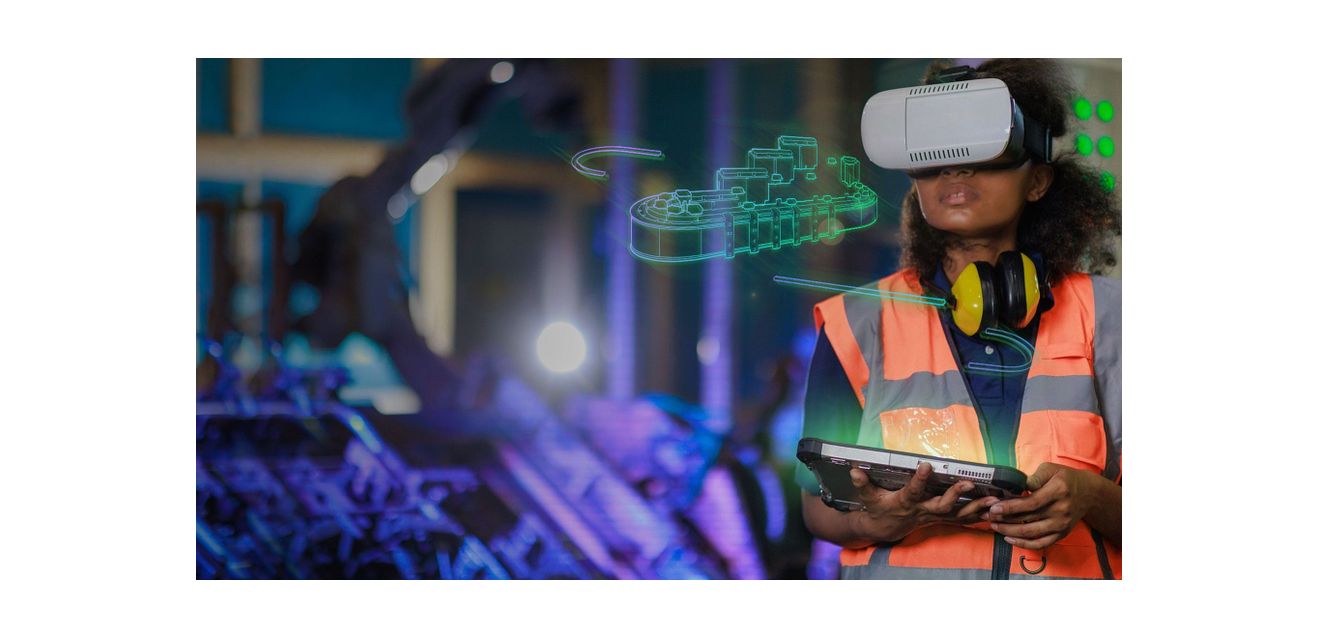
Tech group Schneider Electric will be represented at this year's SPS trade fair with innovations from the fields of drive and control technology, robotics, power distribution, software and services. In line with its business model, which is fully tailored to sustainable management, the company, which has around 4,700 employees in Germany, will be presenting its solutions on aCO2-neutral stand. All of the technologies on display are representative of the systemic and integrative IoT approach that Schneider Electric is pursuing in terms of digital transformation. This is characterized by the consistent merging of traditionally separate segments such as energy distribution, automation and software. Data on output volumes, cycle times, cleaning cycles or deliveries can thus be linked to energy consumption orCO2 emissions at a glance and evaluated in a consolidated manner. This enables industrial companies to operate in a more climate-friendly and profitable way.
Live demonstration on the circular economy
Schneider Electric is even demonstrating how this can be implemented in concrete terms with a showcase that is being shown to the public for the first time. The machine, which was developed in collaboration with KIT, will be dismantling semiconductors from discarded electrical appliances live at the trade fair stand. Technically, this contribution to an industry characterized by sustainability and a circular economy is made possible by a combination of AI image recognition and state-of-the-art robotics. The AI recognizes the chips and guides the robotics.
"We now urgently need to find answers to the current economic developments," warns Jessica Bethune, who recently became head of Schneider Electric's industrial business in Germany, Austria and Switzerland. "And there are so many promising approaches, especially in the areas of automation and digitalization. But they are not yet being used across the board. And that's where I see us as manufacturers as having a clear duty. It is our task to increase the attractiveness of our solutions, particularly with regard to interoperability and scalability. This is the only way we can break away from traditional sector thinking and develop truly practical solutions whose functionality is tailored to the actual requirements of our customers."
Establishing an integrated view
In terms of Schneider Electric's solution portfolio, this means, for example, that the company is working with its Aveva, Etap and ProLeiT brands to develop software applications that enable an integrated view of process events and energy flows. Aveva's manufacturer-independent Data Hub and the LMS Life line monitoring system play a key role here. In order to further simplify the integration of OT and IT in particular, the tech group is relying on a completely manufacturer-independent automation approach without proprietary systems. This means that hardware and software are no longer tied to each other in a manufacturer-specific way, but instead automated applications can be modeled in a software layer that is completely decoupled from the hardware. The Runtime Execution Engine from Universal Automation is used for this purpose. This manufacturer-independent approach considerably simplifies interoperability and data exchange. It also creates completely new engineering freedom for the development of more sustainable and energy-efficient systems.
Flexibility is a sustainability characteristic
When it comes to making machines and systems both more economical and more sustainable, flexibility also plays a decisive role. Large amounts of energy and resources can be saved in many factory halls if even the smallest batch sizes can be produced profitably. Schneider Electric has developed its multi-carrier solution for such demand-oriented and quickly convertible production. Here, objects can be transported between the process stations with individual cycle times and maximum precision. A changeover to new production patterns and object formats is also possible at the touch of a button.
Another highlight from the field of robotics is the new collaborative robot from Schneider Electric. As upstream and downstream process steps can also be automated, the Lexium Cobot can be used to further increase the level of automation of machines and systems - for both new and existing machines. Collaborative robots are an important addition, especially in times of a shortage of skilled workers.
A question of efficiency
One area where Schneider Electric's integrative approach pays off in particular is energy efficiency. At the SPS trade fair, Schneider Electric will be demonstrating how it is usually possible to significantly improve the efficiency of automated systems with digital technologies that are easy to retrofit. "It's often not about turning everything upside down," says Jessica Bethune. "But many things can simply be made smarter and better. A holistic approach based on digital networking in particular often offers incredible synergy effects. Exploiting these is a very low-hanging fruit in most companies." Among other things, the company will be exhibiting measuring devices and panel servers at its stand, which can be used to easily increase the transparency of energy flows in order to identify inefficiencies. New solutions for a reliable power supply and ensuring the highest grid quality will also be presented.


You might also be interested in
DSEI Germany grows to four halls
"Unprecedented demand from the industry"
Nine months before its premiere, the originally planned halls of DSEI Germany are already fully booked. The trade fair is responding with a fourth hall and is expanding to a total of 100,000 square meters of exhibition space. This corresponds to...
 read more...
More than 900 exhibitors already registered
Around six months before the start of the trade fair, more than 900 companies have registered for SPS 2026 in Nuremberg. The trade fair focuses on industrial AI, cyber security and digital transformation.
read more...Thinking loops in the system
Grinding is often used for high-precision component production or demanding surfaces. The combination of machine, measuring technology, expertise and tools is becoming increasingly important for this. Targeted developments for specific applications,...
read more...Trade fair for grinding technology
GrindingHub 2026 reports full halls and focuses on new dialog formats
GrindingHub 2026 will take place from May 5 to 8 in Stuttgart and is fully booked: 460 exhibitors from 28 countries will showcase innovations in grinding technology. New forum, start-up hub and joint stands provide impetus for practice and exchange.
read more...Interview with Jumo Managing Director Dimitrios Charisiadis
Ahead of Hannover Messe 2026, Dimitrios Charisiadis, Managing Director of Jumo, talks about the company's return after a seven-year break, the strategic importance of the trade fair and the technological focus of this year's appearance.
read more...Lectures and information stand at the IFK 2026
Software and cloud solutions for fluid technology
Fluidon, service provider and developer of software solutions for the fluid engineering world, will be represented as an exhibitor and speaker in the lecture program at the 15th International Fluid Engineering Colloquium (IFK), which will take place...
read more...Formnext 2026 puts UK and key industries in the spotlight
Formnext 2026 will focus on the United Kingdom as the official partner country. At the same time, the leading trade fair for additive manufacturing is further expanding its involvement in key user industries, including orthopaedics, aerospace and...
read more...Beckhoff at the Light + Building 2026
Interdisciplinary building automation
At Light + Building from March 8 to 13, Beckhoff will be demonstrating PC-based control as a universal lever for sustainable building automation. Visitors can experience on site how the integration of all systems on an open platform can lower...
read more...High demand for SPS Guangzhou
SPS - Smart Production Solutions Guangzhou has recorded a high level of exhibitor participation just a few months before the start of the trade fair. The trade fair showcases new solutions for automation, robotics and industrial digitalization.
read more...