
New parts from old powder
3D printing with recycled material at BMW
The BMW Group is increasingly focusing on recycling in 3D printing and is developing its own material cycles for this purpose. At the Additive Manufacturing Campus, new aids and tools are created from used powder and components - sustainable, efficient and usable worldwide.
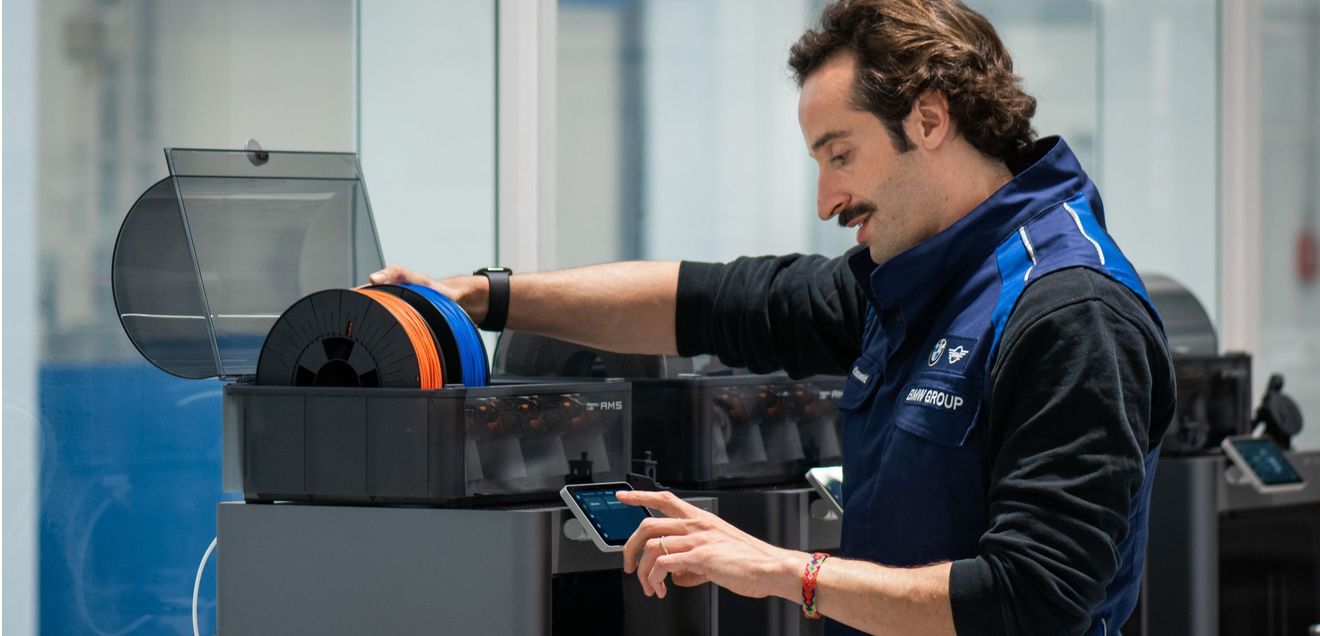
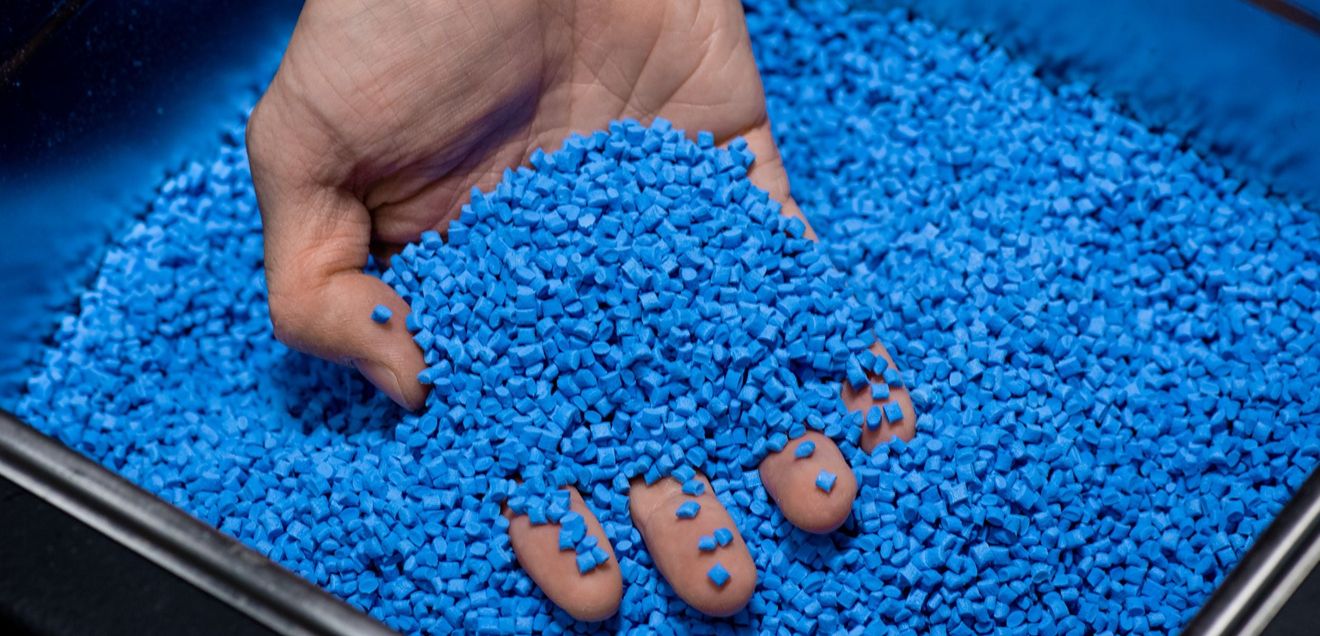
The BMW Group is increasingly focusing on recycling in 3D printing: used powder and components from the additive manufacturing process are no longer disposed of but recycled. The material is processed into plastic wire (filament) or granulate and then used for new printing processes - for example to manufacture production aids and tools. The recycled filament is wound onto spools and used at the Additive Manufacturing Campus in Oberschleissheim and at other locations in the global BMW production network. In addition to filament for the Fused Filament Fabrication (FFF) process, the Campus also provides granulate for Fused Granulate Fabrication (FGF) technology - ideal for larger applications in the construction of auxiliary equipment. A closed material cycle that not only conserves resources, but also makes additive manufacturing even more sustainable.
"I have been involved in this project from the very beginning and am very pleased that we have now come so far from initial ideas and trials at start-up level that we are now able to manufacture highly resilient components with recycled filament in large quantities and at any desired BMW Group production site. It is an exciting task to be able to keep developing and testing new processes. The use of used powder and disused 3D printed components is an important building block for a functioning and efficient circular economy," says Paul Victor Osswald, Project Manager Advanced Development Plastics, who has been involved in the development since 2018.
First steps as early as 2018
The first foundations for today's 3D printing cycle at the BMW Group were laid back in 2018. As part of the BMW Start-up Accelerator, the BottleUp innovation project focused on obtaining printing material for 3D printing applications by recycling PET beverage bottles. One year later, the first industrial waste was recycled into filament on a pilot basis and in 2021, Paul Victor Osswald's team successfully printed the first holders and production aids from their own recycled filament.
The Additive Manufacturing Campus in Oberschleissheim, where the BMW Group has bundled production, research and training in the field of additive manufacturing under one roof, now supplies various locations in the BMW Group production network worldwide with printed components. Each year, up to 12 tons of used powder can be recycled into filament and granulate and can then be reused for the production of production aids in the plants and for pre-development projects at the Additive Manufacturing Campus. The use of these components reduces costs, increases process efficiency and product quality and improves the ergonomics of employees in the plants.
The BMW Group's Additive Manufacturing Campus is driving the spread of its own recycled filament and supporting other plants with expertise, printer recommendations and tried-and-tested parameters. Together with experienced locations, suitable 3D printers are tested and optimally adapted to the recycled material. This enables new plants to achieve high-quality printing results quickly and efficiently. The campus also offers comprehensive training courses - from basic knowledge to special training for use in the production environment. A growing network promotes cross-location exchange, from which the new 3D printing area at the Hungarian plant in Debrecen is already benefiting.
Printed components for a wide range of applications
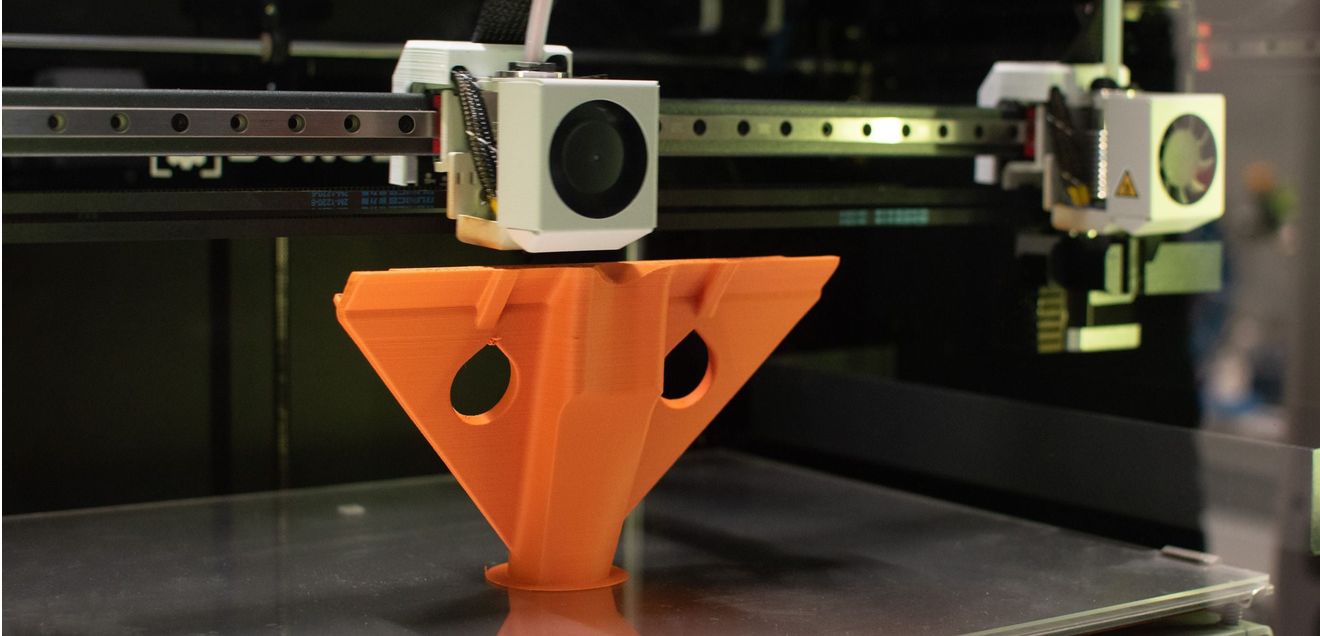
The use of 3D printing in the BMW Group's production plants is steadily increasing. There are now printers in every BMW Group plant, which are used to produce several hundred thousand components locally every year. The areas of application are diverse - from ergonomic and occupational safety solutions for employees to scratch protection, assembly aids and special operating resources to gauges, templates, special tools and tool organization. Mold nests, pre-assembly fixtures and even complete grippers are also produced using 3D printing.
A specific component used in the marriage of chassis and bodywork is produced using 3D printing at the BMW Group plant in Munich. At the BMW Motorrad plant in Berlin, 3D-printed support blocks are used to apply the decals to the motorcycle trim parts. And employees at the BMW Group plant in Dingolfing, for example, have developed their own assembly aid to prevent screws from being lost during assembly in the vehicles. Using 3D printing, a magnetic screw holder has been created that can be mounted on various cordless screwdrivers and enables the screws to be carried safely.


You might also be interested in
UltiMaker Doubles Speed in Industrial 3D Printing
With the Factor 4 Plus, UltiMaker is introducing a new version of its industrial desktop 3D printing platform, which operates at up to twice the print speed of the standard model. The platform is designed for use in manufacturing and defense...
 read more...
Stratasys takes over MarkForged
Stratasys is acquiring MarkForged from Nano Dimension for USD 42.5 million, thereby expanding its portfolio in the field of fiber-reinforced composites. The acquisition also strengthens the company's software and materials expertise in industrial 3D...
read more...Timo Göbel, Head of BMW Additive Manufacturing
"Clearly on course for broad industrialization"
The BMW Group's Additive Manufacturing Campus (AMC) is setting the course for the next stage of industrialization. Under the leadership of Timo Göbel, additive manufacturing is being further integrated into all stages of the vehicle life cycle. In...
read more...Real-time control to make recycling materials economical
The Fraunhofer IAPT is researching AI-based closed-loop processes for industrial 3D printing with recycled plastics. The aim is to achieve less waste, greater process stability and profitable printer farms.
read more...Forum Solutions 4AMIndustry shows ways into industrial application
Additive manufacturing has developed dynamically in recent years and has long outgrown its status as a purely innovative technology in many industries. Nevertheless, companies still face the challenge of integrating AM into their production...
read more...Alliance aims to drive forward industrial 3D printing
Machine components, electrostatically shielded transport containers, large components for the automotive, rail and aviation industries or specific medical products straight from the printer - the potential applications of additive manufacturing are...
read more...Photonic microchips with 3D connector
How a 3D system makes photonic chips industrially viable
A research team from Heidelberg is developing a 3D-printed "connector" for photonic microchips. The solution promises a low-loss, standardized coupling of glass fibre and chip - and could fundamentally simplify the production of photonic integrated...
read more...Stratasys simplifies post-processing for 3D printing
Stratasys has launched a partner program for post-processing solutions to facilitate the creation of end-to-end AM workflows. The first partner is PostProcess Technologies, whose automated systems for FDM, PolyJet, SLA and P3 can now be purchased...
read more...Formnext 2026 puts UK and key industries in the spotlight
Formnext 2026 will focus on the United Kingdom as the official partner country. At the same time, the leading trade fair for additive manufacturing is further expanding its involvement in key user industries, including orthopaedics, aerospace and...
read more...