

Between financing and participation
More companies with more capital
Borrow money? Sell shares? If you need capital, you can choose in many cases. With this choice, however, the entrepreneur also decides what leeway the company will have in the coming years and what risks it will take. In this interview, Dr. Hannspeter Schubert explains what the decision for the form of capital means and what external investors pay particular attention to.

Dr. Schubert, when a company is looking for capital, what are the main issues?
That varies greatly. I have had many different capital requests on the table, from succession situations to capital for product development, expansion of production capacities and internationalization to restructuring cases. Every company needs a financing strategy tailored to its specific needs. External factors such as the market and competition, current financial resources, the condition of the machinery, supply chains or the cost situation play an important role here. However, emotional factors such as family traditions, the personality of the founder and the relationship to his company or the individual willingness to take risks also play a role.
With the current interest rates, going to the bank is the easiest way.
It is true that credit conditions are more attractive today than ever before - at least supposedly. Some entrepreneurial investment decisions that would not have been made in the past can now be realized. What remains is the risk of high debt burdens and corresponding repayment obligations. However, it is not possible for banks to initiate extensive review processes, take default risks or even consider future potential. The reason for this is simple and easy to name: low margins. This is why banks include side agreements on future cash flow or the debt ratio in the loan agreement, which can sometimes lead to risk surcharges or loan terminations. You should scrutinize and review such clauses very critically.
So more of a venture capitalist than a bank?
It depends. If you finance yourself through a bank, you commit to repaying a certain installment every month - regardless of the company's current economic situation. If you take equity on board, you get a partner who takes a risk and whose success depends to a large extent on the development of the company. As a result, the partner is generally more committed and will also have a say if necessary. This can be very helpful for a partner with specific know-how and a good network. But it also leads to conflicts if views on the future strategy differ. And it also means that if the company is doing badly, the money stays in the company. If the company flourishes, the equity partner participates in its success.
What does this mean for the traditional house bank system?
The traditional role of banks as the most important provider of capital has long been replaced by a variety of different providers and forms of capital. The trend is moving away from the traditional house bank principle. The financial crisis has shown that you should no longer commit yourself to just one institution. Do not make your company dependent on the business policy of a single bank. Every provider of capital pursues its own objectives - including the bank. That is why it is important to ask about the specific focus of financing and the appropriate financial products. Hardly any bank today offers products for the complete financing needs of a company. If you want to remain independent as a company, finance yourself via suitable partners. And never fully exhaust the limits of such a banking relationship.
What exactly do you mean by specific financing priorities?
Instead of traditional bank loans, there are now a variety of special products. Short or long-term financing plays a role, as does the use of the required funds. You might finance a fleet of vehicles with an equipment financier or a leasing provider, a new office building via a real estate bank, pension reserves together with a pension fund and you might increase your liquidity by selling your receivables to a factoring provider. A single current account with a house bank is certainly simpler, but in all probability also more expensive and less advantageous in terms of contracts.
When does equity make sense?
Usually when you have an increased risk, i.e. when you need capital for typical entrepreneurial risks, such as developing a new product or entering a new market. And when you need a partner who can help you not only with capital, but also with know-how and a network. In other words, the path from investment to profit is often much rockier and longer than expected. Therefore: Break down the financing requirements in your company. What do you need for which purposes? Analyze very carefully and look for the best possible financing for each point. And run through cash flow plans and worst-case scenarios. Such an analysis is also very helpful for potential equity providers. Your corporate strategy should form the basis for the financing concept. And not the other way around.
What do private equity companies pay particular attention to in investment offers?
Here, too, you should take a close look. There are various forms of private equity. There are minority or majority shareholdings, companies with operational involvement as well as pure capital investors. Institutions that tend to be low-risk and geared towards profit-independent returns are set up completely differently to family offices from an entrepreneurial environment. Ultimately, three points are decisive: the origin of the money, the strategic expectations and the entrepreneurial understanding.
When is it worth investing in a company?
In some situations, natural persons are simply no longer in a position to take on the higher financing risk. This is often the case with succession planning, restructuring or growth financing. However, institutional investment companies are also rather reluctant in these cases. This is why an entrepreneurial private equity firm is in the best position to act as a financier and partner.
What are the most important steps in restructuring a company?
I have always worked with the following strategy in my career and have done very well with it: At the beginning, the focus is completely on the company, you try to understand the processes and work out the problem areas. This phase is about getting a feel for whether the management is correctly positioned. PE firms have specialists for this step who deal with these aspects on a daily basis. This is followed by the final stage of financing: a forward-looking restructuring or an adjustment or renewal of the business model. This ultimately determines success or failure.
What are the consequences of assuming risk?
This initially depends on the chosen form of financing. The capital can flow in as debt or equity. In the case of equity capital, this means that the group of shareholders is expanded and the new shareholder receives the same rights. As a rule, however, the existing articles of association are also adapted at this point. The background to this is usually the financial investors' expectations regarding further company developments, with classic points of friction forming at the boundary between historical power interests and future return expectations or strategic realignments. It is important that all parties are aware of the ownership structure and its consequences - and this must be done in advance.
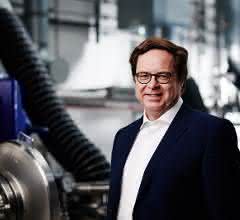
Dr. Hannspeter Schubert (58) was a board member of the listed Munich industrial holding company "Blue Cap" for almost 15 years and as such successfully invested in medium-sized companies. Dr. Schubert has solved both succession situations and restructuring cases. What they all had in common was the implementation of a suitable financing strategy. Today, Dr. Schubert runs a family office with the company "Southern Blue" and invests with a focus on ethical corporate governance, social responsibility and respect for nature.


You might also be interested in
Intelligent brownfield networking
Many industrial companies are struggling with established plant structures and proprietary interfaces. Stefan Klaus' presentation will show in a practical way how brownfield environments can be efficiently networked with open technologies and made...
 read more...
Factory-X in practice
How can set-up processes in highly variant production be automated efficiently? Markus Benndorff from soffico shows how Factory-X, industrial data rooms and modular architectures create new possibilities for flexible production concepts.
read more...Mechanical engineering | Case study
Cordless in brush production
The machine manufacturer Wöhler Bohemia is integrating wireless HMI panels from Keba into its brush production systems. The background to this is the need for flexibility, robotics integration and new market strategies.
read more...International product approvals as a strategic competitive advantage in the global market
Which certificates are valid worldwide? Christian Latte, Head of Technical Compliance and Approval Officer at Hummel AG, explains this in an interview. He provides insights into product approvals and explains why early approval strategies shorten...
read more...Foundry modernizes plant park with continuous wire belt shot blasting system
The Spanish foundry Funosa is modernizing its equipment fleet with an RDGE 1250 wire belt continuous shot blasting machine from Rösler. Focus: sand removal from heavy iron castings, energy efficiency, ease of maintenance and ESG strategy.
read more...How bridging steps, stairs and catwalks are changing processes in production and logistics
At Logimat 2026, Munk Günzburger Steigtechnik will be showcasing modular bridging steps, stairs, platform and walkway systems for production, warehousing and logistics. With online configurators, distances can be efficiently shortened, processes...
read more...Drilling cycles optimized
A new replaceable head drill from Walter can reduce machining time in series production thanks to its patented interface and screwless design.
read more...Production, metalworking, robots
Precise 5-axis machining
The new Kern Fortis HD five-axis machining center will provide manufacturing companies with high precision requirements with a new machine from 2026.
read more...Agentless remote access to industrial plants
TeamViewer is expanding its Tensor enterprise platform to include "Agentless Access", enabling secure remote access to industrial systems without the need for local software installation.
read more...