

Perimeter protection
Holistic high-security solutions
Companies are exposed to a wide variety of threats. They range from the theft of material and intellectual property, vandalism and sabotage to terrorism and extremism. Effective perimeter protection is a key element in blocking these threats.
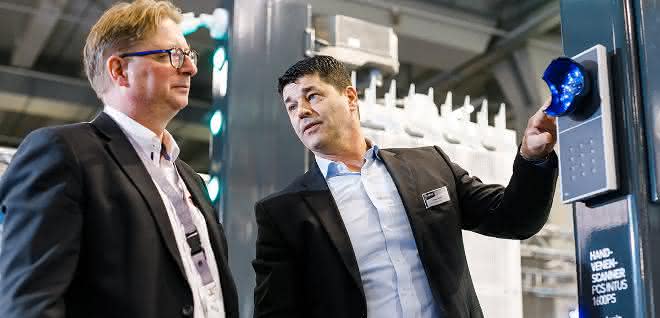
This includes comprehensive access control, perimeter security and drone defense as well as surveillance, for example of border fences or high-security areas. In order to protect themselves effectively, sustainably and efficiently, companies need a holistic security concept that is tailored to their individual requirements. All measures should be interconnected and complement each other.
Prevent in good time
Companies and institutions are targeted by petty criminals and organized crime. The perpetrators gain access to premises and facilities in order to damage or sabotage them, steal material and immaterial goods or carry out acts of violence. Some attacks are even carried out by secret services or political organizations. In some cases, legislators have already reacted to the heightened threat situation in recent years and defined or tightened binding minimum requirements for the security level of companies and institutions in certain sectors. This applies in particular to critical infrastructures such as energy, gas and water suppliers, public safety organizations and emergency services. However, the rest of the economy and the public sector should not wait until damage has already occurred before taking action.
How to protect yourself effectively
The good news is that such human hazards can be significantly reduced with three coordinated packages of measures that prevent unauthorized physical access to the premises. The important thing here is that physical and electronic components form a symbiotic relationship.
1. effective access controls
On the one hand, this ensures that only authorized persons enter the premises from outside. On the other hand, particularly sensitive areas within the company can be additionally protected in this way - against strangers but also against employees who are not authorized to access them.
2. barriers against forced entry
Companies should create these on several levels. Firstly, the site as a whole should be protected, for example with a fence or wall along the perimeter, which can be combined with security lighting and a burglar alarm system. In addition, certain buildings or the key infrastructure should be additionally shielded, for example with appropriate security gates, access barriers or bollards within the site. This makes it even more difficult and delays intrusion if attackers are able to overcome the first hurdle and gives the company the opportunity to react appropriately.
3. surveillance with video technology and alarm devices
Here, it is crucial that the individual, high-performance solutions, for example for license plate recognition or video surveillance, are networked with each other and with the company's IT via interfaces. Furthermore, it is useful for smooth day-to-day operations if the security systems can be controlled via a mobile call or app.
In order for these measures to be fully effective, companies and organizations should consider the following tips:
Customizing instead of a one-fits-all concept
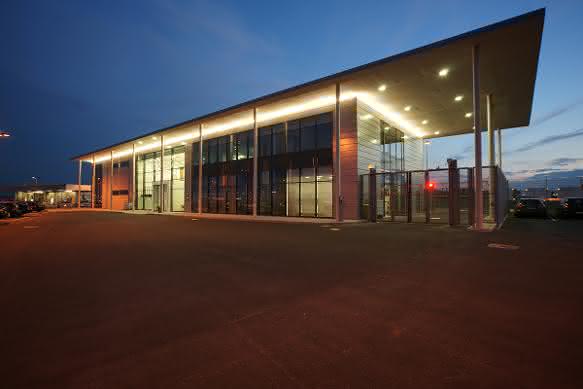
The threat scenarios vary from company to company. In addition, each site has its own local conditions. They play a decisive role in the selection of suitable security systems. For these reasons, standard solutions do not help. Instead, security concepts are required that optimally meet the individual conditions. In order to develop these, you need to start with a thorough analysis of the current situation. The following questions need to be clarified first:
- What legal requirements need to be met?
- Risk analysis: Which threat scenarios are conceivable? Who are possible attackers? What is the probability of a particular scenario occurring?
- What are the local particularities? For example, if the site can be reached from the water and this natural barrier is not sufficient protection against intrusion, then the quay wall should be secured using electronic sensors.
- What are the climatic conditions like? While the technology for Scandinavia, for example, requires heating elements, constructions for the Middle East have to be able to cope with sandstorms.
- Are there any sources of interference with video surveillance and electronic sensors? These could be plants and animals on the site, difficult lighting conditions or even vibrations caused by a nearby road or heavy truck traffic.
- Which people are mainly on the site? Is it an industrial plant or a public facility? If, for example, the aim is to protect a high-security area, it is often important that the design blends in with the respective surroundings, in addition to using materials that are resistant to penetration and bullets.
The long-term consequences are included in the calculation of profitability
The aim is to estimate the expected damage for the most likely incidents. It is also important to determine the cost-benefit ratio. On the one hand, consequential damage such as loss of image or customer migration should also be taken into account. On the other hand, there may be positive additional effects that need to be taken into account. A practical example from the food industry: by replacing the barriers at the entrance with a modern gate system, the producer was able to be audited as a known consignor and now benefits from simplified customs clearance.
Combining stand-alone solutions into a holistic security system
Mechanical and electronic protective measures must be deeply integrated with each other via interfaces. Only in this way can the systems interact and react without delays and there are no security gaps. Alarm systems such as fire alarm systems or gas detectors must trigger an alarm immediately in the event of danger - on site, on the computers and mobile devices of staff, in the security control center and, if necessary, also to the fire department or police. This requires them to communicate with the other systems in real time. This could be the access control system of the affected area, for example, which then immediately opens the escape routes. Or a production management system that performs an emergency shutdown for certain systems. Surveillance systems, including video surveillance, sensor technology, motion and intrusion detectors, should also not end at the plant security monitors. In the event of irregularities, they must immediately inform those responsible, possibly also outside the company - such as external security guards. What's more, the company must be able to configure them if further measures are to be taken automatically. It is conceivable that if unauthorized access is suspected, the doors to particularly sensitive areas could lock or additionally request a password.
Use technically mature systems with a high degree of automation
After all, not every mouse that scurries across the premises should trigger an alarm. However, even after the initial installation of modern devices and systems, further fine-tuning or seasonal adjustments are often necessary. Possible reasons include changes in weather conditions or plant growth. The advantages of automated processes are obvious: they run faster than manual activities and free employees from routine tasks. A digital gatekeeper, for example, or license plate recognition using innovative video systems relieve the burden on security staff. The technology is also less prone to error than humans, for example in stressful situations, and is virtually impossible to manipulate and incorruptible. And let's not forget sustainability. In order to make the security system fit for the future, technological developments of the individual components should be planned for as far as possible from the outset and later software adaptations and technical extensions should be permitted.
Check feasibility at an early stage.
Another important point is feasibility, which should be checked during the planning phase by means of appropriate feasibility studies. The most effective safety concept is worthless if it cannot be implemented. A practical example: if the local temperatures are extremely low - for example in Siberia or Alaska - only steels whose material strength does not change adversely under these conditions should be selected. However, it is not enough for this type of steel to exist; it must also be available on the market in sufficient quantities and in accordance with the time specifications.
Installing redundancies and smart maintenance.
Even the best technology does not guarantee absolute freedom from errors. This is why it makes sense to protect against particularly high risks in two ways. Redundant data exchange throughout the entire security system is recommended, for example via data line and radio. In this way, functionality is still guaranteed if one of the two transmission options fails. Another must is the automatic and permanent status monitoring of the safety equipment and its functionality, from the mechanical processes and sensor performance to the electronic control system, for example in the form of an emergency stop. Monitoring should be able to take place via secure cloud-based remote access. In this way, it is possible to detect immediately - and without being on site - if systems such as gates, barriers, bollards or turnstiles are defective and to take remedial action at an early stage. Another advantage is the intelligent monitoring of maintenance intervals: instead of fixed periods, they are based on actual usage data, such as how busy an access system is. Optimum after-sales service also includes the statistical evaluation of all automatically logged events. This forms the basis for rationalization measures and further technological developments.
Systems are becoming more intelligent
It is foreseeable that solutions with artificial intelligence (AI) will also become increasingly important in perimeter protection. For example, AI in video surveillance enables the early detection of fires. Further advances in object recognition and classification can be expected in the near future. There are currently technological developments that will enable access systems to automatically recognize certain types of vehicles, such as emergency and police vehicles or fire departments, and grant access without delay. Biometric recognition systems are also gaining ground in access control, which will have to interact well with physical security devices. However, it is unlikely that the threats to companies, institutions and public facilities outlined above will disappear. Comprehensive perimeter protection supported by intelligent technologies is therefore essential in the long term.
Michael Simon, Managing Partner of Zabag Security Engineering


You might also be interested in
Predictive maintenance in retrofit
Predictive maintenance pays off. This is because early detection of impending failures means that systems can be serviced in a targeted manner before production downtime occurs. But how complex is it to integrate such a maintenance concept into an...
 read more...
Maintenance instead of replacement
The circular economy starts with the machinery
Sustainability in industry starts with machines, says our guest author from Deguma: How maintenance, modernization and the 5R strategy save resources, energy and CO₂.
read more...3D printing for unplanned requirements
The material fails and the machine suddenly stops? Then you need to take the right measures to be able to resume production quickly. Material failure in the form of faulty components or material wear in the frame are a risk for any production.
read more...High demands in terms of safety, application and robustness
Demanding work in the electrical trade and energy supply as well as smooth processes in production require innovative and customized measurement technology that scores points for safety, ease of use and resilience.
read more...Car meets e-bike: riding with lubrication-free polymer bearings
Studies show that the proportion of pedestrian and bicycle traffic is increasing in urban areas. With the JetBike, JetBike GmbH from Braunschweig presents a mixture of e-bike and car and relies on lubrication-free polymer bearings from Igus.
read more...Hydraulic hub for more efficient servicing
Bosch Rexroth presents a digital toolbox for service and maintenance. With a comprehensive range of digital services, the Hydraulic Hub simplifies and accelerates the service and maintenance of hydraulic products and increases machine availability.
read more...Arnold Umformtechnik expands after-sales...
Faster help with VR glasses
Arnold Umformtechnik is expanding the after-sales service for its machines to include digital remote services. The focus is on data security, simple operation and clear processes.
read more...147,000 euros per hour: high costs for German companies due to unplanned downtime
According to the "Value of Reliability" study, 67% of industrial companies in Germany experience unplanned downtime at least once a month. This costs the German economy 147,000 euros per hour. Nevertheless, reactive maintenance concepts are not...
read more...Maintenance starts with a maintenance planner
Legal requirements stipulate that machines and systems must be serviced regularly. The maintenance work serves to ensure occupational safety and economic efficiency.
read more...