

Operation of ultrasonic welding devices
Ultrasound separates and connects
Welding and cut-off welding with ultrasound have proven themselves in many industries as economical and gentle processes with a high quality approach. Ultrasonic frequencies in the range between 20 and 35 kHz are used for cutting and welding. They are generated by a piezo converter, which sets a sonotrode into a high-frequency oscillation that is particularly effective in resonance and at the same time requires little power. This results in either clean cuts or high-strength joints with low thermal stress on the product and environment. In the latter case, the acoustic vibrations also cause the molecules of the parts to be joined to vibrate, which generates heat at the contact points that "breaks up" the material boundaries and fuses the materials together.
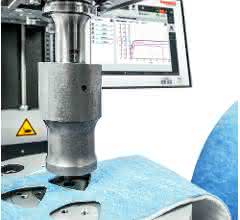
Ultrasonic technology also offers numerous other advantages, which is why it can often replace established processing technologies as a more economical alternative. Ultrasonic welding does not require any adhesive, as is the case with cut-off welding. There is no material loss, no chips and no combustion gases as with laser cutting. The cut edges are smooth and clean, making reworking unnecessary. In most cases, ultrasonic processes are also quiet, which means that noise protection measures are not required for many applications.
In practice, the ultrasonic machining process has also proven to be reliable and safe, as the process only depends on a few parameters that are set and monitored for the specific application. This is now very easy to do. The ultrasonic specialist Telsonic now offers the new TelsoFlex control software as well as a new 12" touch panel. Ultrasonic systems from the USP and TSP series can thus be operated intuitively and easily integrated into Industry 4.0 environments.
Simple network connection for Industry 4.0
The control software monitors the entire welding process and displays the status graphically on the touch panel's high-resolution display. The operator can see all relevant information at a glance, such as quantities or limit values. With just a few clicks, they can also adjust welding parameters, define multi-stage welding modes or set up the peripherals, i.e. anvil, film transport, sound insulation, workpiece detection, clamping or stop. The display is also easy to operate with gloves. Various counters for the number of pieces, stack or batch size also ensure the correct production quantity.
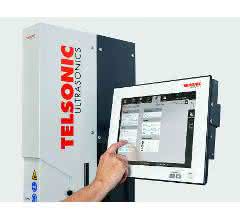
However, the screen content of the panel can also be transferred to a workstation outside of production and operated from there. OPC UA then secures the network connection between the welding systems or automation lines and workstations outside of production. The user sees the real-time data from production, can access welding results and - for traceability purposes, for example - can save the data individually prepared on network drives or other storage media. Data records can also be loaded manually or automatically into production if required. Several welding systems can also access the same data records.
User and rights management can be adapted to your own requirements. Different authorization levels can be created for operation, set-up or maintenance, for example. The software has a modular structure, making it suitable for both individual workstations and automation lines, and can be adapted to the respective application. This ensures future viability for plastic welding, cut-off welding and metal welding applications. Integrated support options also offer a high degree of security if rapid assistance is required.
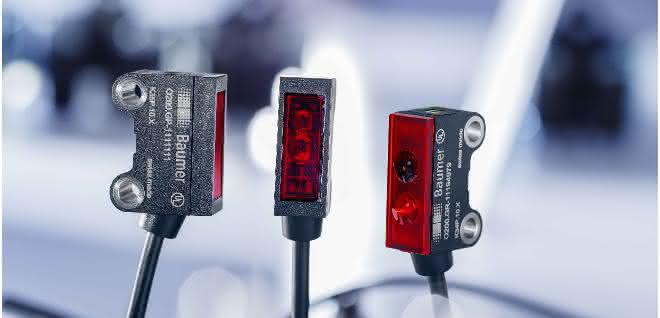
The first users are already impressed by the performance of the new control software. Sensor specialist Baumer, for example, has purchased another ultrasonic welding press that works with the TelsoFlex control software for the production of a new optical sensor series. Production is now starting and the future production volume will be several hundred thousand units.
Quality control and traceability in production
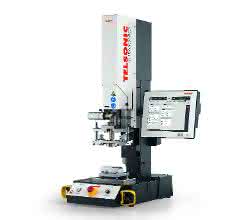
All sensors in the new series are welded with the same sonotrode. However, they differ in height, which is why different workpiece holders and welding parameters are required. The parameters for the different workpieces are stored as welding jobs in the ERP software and are automatically loaded onto the welding press for each workpiece. Its sensor system ensures that the parameter set and workpiece match, i.e. that the correct workpiece is in the fixture. Incorrect welds can thus be ruled out. "The older welding presses, where workpieces and welding jobs are loaded manually, are more prone to errors," says Stephan Kröller, Process Engineer at Baumer.
The welding results can be evaluated at any time for quality control of the optical sensors, and traceability is also guaranteed. "For this purpose, we have defined a target folder in the network in which all welding results are automatically saved and which can be accessed from anywhere," continues Köller. "This is much more convenient than reading out the data for further processing via USB stick."
There are also plans for the future. Kröller would like to connect several welding presses to the network. The status of the individual systems can then be viewed from a central location. This option is also already planned in the control software.
Christian Huber, Telsonic, and Ellen-Christine Reiff, M.A., Redaktionsbüro Stutensee / am


You might also be interested in
Predictive maintenance in retrofit
Predictive maintenance pays off. This is because early detection of impending failures means that systems can be serviced in a targeted manner before production downtime occurs. But how complex is it to integrate such a maintenance concept into an...
 read more...
Maintenance instead of replacement
The circular economy starts with the machinery
Sustainability in industry starts with machines, says our guest author from Deguma: How maintenance, modernization and the 5R strategy save resources, energy and CO₂.
read more...3D printing for unplanned requirements
The material fails and the machine suddenly stops? Then you need to take the right measures to be able to resume production quickly. Material failure in the form of faulty components or material wear in the frame are a risk for any production.
read more...High demands in terms of safety, application and robustness
Demanding work in the electrical trade and energy supply as well as smooth processes in production require innovative and customized measurement technology that scores points for safety, ease of use and resilience.
read more...Car meets e-bike: riding with lubrication-free polymer bearings
Studies show that the proportion of pedestrian and bicycle traffic is increasing in urban areas. With the JetBike, JetBike GmbH from Braunschweig presents a mixture of e-bike and car and relies on lubrication-free polymer bearings from Igus.
read more...Hydraulic hub for more efficient servicing
Bosch Rexroth presents a digital toolbox for service and maintenance. With a comprehensive range of digital services, the Hydraulic Hub simplifies and accelerates the service and maintenance of hydraulic products and increases machine availability.
read more...Arnold Umformtechnik expands after-sales...
Faster help with VR glasses
Arnold Umformtechnik is expanding the after-sales service for its machines to include digital remote services. The focus is on data security, simple operation and clear processes.
read more...147,000 euros per hour: high costs for German companies due to unplanned downtime
According to the "Value of Reliability" study, 67% of industrial companies in Germany experience unplanned downtime at least once a month. This costs the German economy 147,000 euros per hour. Nevertheless, reactive maintenance concepts are not...
read more...Maintenance starts with a maintenance planner
Legal requirements stipulate that machines and systems must be serviced regularly. The maintenance work serves to ensure occupational safety and economic efficiency.
read more...