

Linear technology
Straight to the service of health
Linear technology in the clean room. Mechanical components such as linear guides, telescopic rails and linear axes must be carefully selected in medical technology and healthcare. Comfort, hygiene, precision and durability play an important role here. Rollon offers an adapted portfolio and customized system solutions.
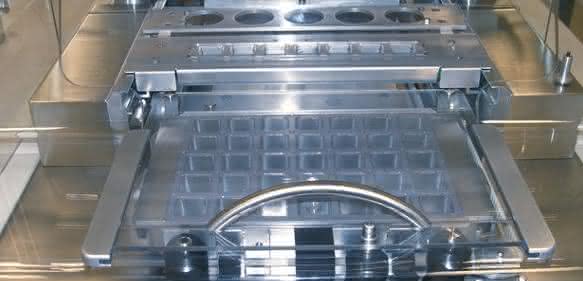
Medical technology has two basic requirements. Firstly, the level of hygiene: rooms and equipment must always be clean, whereby frequent washing with cleaning agents can lead to premature wear of mechanical components. This impairs the operation and service life of the components. Secondly, all machines and equipment must be stable and work precisely from the first to the last day to ensure reliable results.
Rollon supplies a comprehensive range of linear guides, telescopic rails and linear axes; suitable components are available for various medical technology applications. The range of applications extends from more robust devices such as operating beds or dental treatment chairs to diagnostic systems such as X-ray machines, MRI and CT scanners, which require stability and precision. Depending on their size, Rollon linear axes can be used in rather delicate but high-precision laboratory robots, in fully automated medicine storage systems for large pharmacies, in dental milling machines or 3D printers for medical prostheses.
The use of linear technology in automated laboratory equipment is exemplified by a compact production system in a clean room, which was designed for the fully automated production of stem cells. It performs sample preparation, dosing and processing. Via a short channel, loaded microtiter plates are conveyed into an adjacent incubator to be cleaned and analyzed later - back in the clean room. In order to achieve maximum flexibility within the system, all handling steps are carried out by a centrally arranged six-axis articulated arm robot and a multi-axis system consisting of four linear axes from the Rollon Actuator Line.
Two parallel ELM50SPs from the Actuator Line with a total length of 900 millimetres, coupled via a connecting shaft, are used as X-axes. They achieve a stroke of 585 millimetres in the application. The longer Y-axis is an ELM65SP with a stroke of 1,590 millimetres and an overall length of 2,104 millimetres. In the Z-axis, the Smart series is used in the form of an S-Smart 50SP, which has a stroke of 320 millimetres and is 700 millimetres long. The entire multi-axis system operates inside the sterile chamber under hygienic conditions.
3D printer for biological material
A 3D printer for biological material can also be built using linear axes from the Actuator Line. At the heart of this laboratory robot is a high-precision linear axis, which is attached to two carriers and forms a portal. Grippers, tools or even print heads can be attached to the slider of the linear axis. A TH90 linear axis with ball screw drive from the Precision System product family is ideally suited. The decisive factor for the TH90 is its high positioning and repeat accuracy, which is within five micrometers. The TH90 also generates a low starting torque, is compact and achieves a high travel speed of up to 1.4 meters per second.
The linear axes of the TH series are torsion-resistant. The thrust force is transmitted using highly efficient ball screw drives, which are available in various precision classes and thread pitches. Linear motion is provided by two or four preloaded linear carriages with ball cage technology, which are mounted on two precisely aligned rails. The linear units also have separate lubrication channels for the recirculating ball bearing guides and the ball screw to ensure reliable lubrication.
Clean and individualized medication
In competition with discount chains and internet pharmacies, blister packaging is an attractive additional service for pharmacies. A weekly volume of 50 to 500 blister packs can best be handled with a semi-automatic solution: The medication is inserted and the blister removed manually, while the movement during filling and sealing is automatic. The Compact Rail roller guide is ideal for the uniform automatic movement of the blister carriage when placing and sealing the blister film. Lubricants must not be used in the pharmaceutical packaging process, which is why the linear guide must above all be grease-free. This can only be achieved with a roller guide. Precision is also an important point to ensure that the film is precisely sealed onto the weekly blisters. Compact Rail fulfills both criteria. With a travel distance of 600 millimetres and a capacity of 500 pieces per week, an annual mileage of more than 30 kilometers is required, which the robust guides can handle. For a corresponding customer application, Rollon supplied size 18 Compact Rail in a combination of T and U profile, which acts as a fixed bearing/floating bearing and thus compensates for parallelism.
Loading wheelchairs
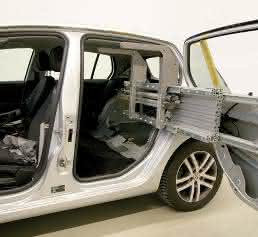
Linear technology from Rollon can also help to support people with disabilities, for example with body conversions that enable wheelchairs to be loaded automatically. Telescopic rails have proven themselves very well here due to their quality and high load capacities. A partial extension from the Telescopic Rail ASN series can be used to load a wheelchair, for example. A support structure is attached to the rear car door, which is installed upside down for better handling. The entire loading process is fully automatic. as


You might also be interested in
Lifting oven grates
Bharat Forge CDP is a supplier of forged chassis and engine components as well as non-automotive systems. Since 2020, the company has been working with Kito-ER2 electric chain hoists to lift furnace grates in the production hall.
 read more...
Mobile and intelligent handling solutions
Scaglia Indeva has been developing and producing industrial manipulators and handling solutions for more than half a century. The company will be presenting its latest products for logistics at LogiMat.
read more...Mink at the Hannover Messe 2023
Transportation on brushes
Technical brushes from Mink are suitable for the gentle transportation of sensitive workpieces. According to the manufacturer, the adaptability of the brushes to different surfaces ensures part quality and avoids rejects.
read more...Partial automation in wood processing
Rescue from the staff shortage
The Schnurr company in Nordrach in the Black Forest has been processing wood for almost 170 years. Today, the company is a sought-after partner when it comes to individual wooden packaging or sawn and planed wood.
read more...Products for better ergonomics
At Intec, Scaglia Indeva will be presenting innovative ergonomic products for intralogistics. The focus is on products for better ergonomics, smoother work processes and protection of employees against overload.
read more...New pallet roller for the warehouse
Conveyor technology specialist Rulmeca is expanding its range of conveyor rollers for pallets and other heavy goods with the XPS series.
read more...Individual energy management
When a Festoon cable carrier system for a crane system with a travel distance of 30 meters was to be replaced, Tsubaki Kabelschlepp designed a complete package consisting of chain and cables, guide channel including substructure and an individual...
read more...Plan and manage maintenance
The health and safety regulations and statutory inspection guidelines for operating equipment in companies are strict and extensive. As a result, it is not easy to keep track of all inspection regulations and periods in day-to-day operations.
read more...Fully automated conveyor system for battery systems
With a fully automated and flexibly expandable conveyor system for truck loading, a manufacturer of battery systems in the electric automotive industry is meeting the increasing demand.
read more...