

IoT platforms
The engine for IIoT projects
The Internet of Things makes it possible to save time and costs and develop new data-based business models, especially in industry. However, bringing IoT projects from the whiteboard into practice is still a major challenge. However, some application examples show how IoT projects can be implemented quickly and easily with the help of IoT platforms.

According to the "Internet of Things 2018" study by Computerwoche and CIO, 47% of respondents rate the relevance of IoT as very high or high. Some companies have already tested IoT concepts in a proof of concept, but have not yet put them into practice. They now face the challenge of putting their concepts into practice and scaling them up - without disrupting ongoing operations. To do this, old machines often first have to be made internet-enabled. With an IoT platform, this step - namely integrating existing systems - can be taken quickly. It offers simple integration into existing systems and processes and can be tailored to the respective requirements. More than half of German companies have already recognized the importance of IoT platforms: 57% of those surveyed consider them to be the most important technology in relation to the Internet of Things. However, only 22 percent have deployed such a platform to date. How platforms help to get IoT projects on the road quickly is shown by the areas of application of IoT in the manufacturing sector.
Potential and application scenarios for IoT in industry
The Industrial Internet of Things creates the conditions for an expanded form of networked production and therefore offers new potential for holistic process optimization. Although production plants are already largely networked within classic system architectures, IIoT goes beyond networking production machines: it connects the operational technology (OT) of the production line with the company's IT. If production, logistics, purchasing and sales have the same database, the entire value chain can be mapped digitally and new opportunities arise: By digitally recording their value-based goods, companies can monitor them and increase overall equipment effectiveness. If production lines at different sites are networked, a production manager can monitor the clones remotely from the main site at the same time. Quality checks and maintenance are no longer carried out manually as before, but automatically - with the help of condition monitoring, predictive maintenance and maintenance execution: with condition monitoring, institutions use data to monitor the condition of production machines in order to manually control maintenance intervals. Predictive maintenance enables predictive maintenance through the use of intelligent algorithms. Machine data can be used to determine when maintenance is required so that employees can carry it out in good time before problems occur. Maintenance execution then triggers the maintenance process automatically. The following use cases describe how some of these scenarios have been successfully implemented in practice.
Example 1: Quality assurance in electrical wire production
Schwering & Hasse Elektrodraht produces over 50,000 tons of wire every year, which is used in industry and other sectors. Quality assurance plays a major role for the wire manufacturer, as the electrical wire is coated with a fine insulating layer. If this deviates slightly from the specification, the entire wire becomes unusable. In order to optimize quality control, the wire manufacturer wanted to make its production transparent and introduce an early warning system that would promptly detect deviations from the standard. Software AG 's Apama Streaming Analytics platform makes it possible to analyze quality factors in real time and compare them with relevant, historical production data. For example, if a wire becomes warmer than intended when the insulating layer is applied, this can cause quality defects. The system sounds an alarm so that the company can rectify the fault immediately. With the Apama-based solution, Schwering & Hasse has been able to increase quality assurance and is now in a position to bring new products to market more quickly, as the quality of production is continuously monitored and the risk of defects has been reduced.
Example 2: Predictive maintenance of steam generators
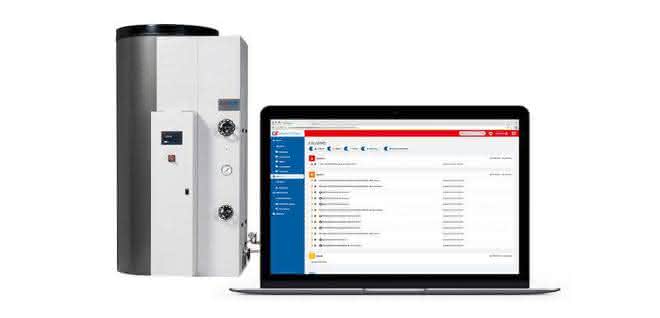
The Krefeld-based company Certuss produces low-noise, reliable steam generators for continuous operation. As the steam generators are integrated into complex processes, malfunctions can affect the entire production result and cause lengthy downtimes. To ensure smooth operation, the manufacturer has set up a predictive maintenance service. It monitors 60 parameters for each appliance in real time, including pressure, temperature, combustion status and water level. By analyzing the data, Certuss can make fault predictions with detailed diagnoses. The manufacturer is thus able to recognize at an early stage when he needs to send out a service technician. This enables them to avoid faults, minimize downtime and increase customer satisfaction. The steam generators can be precisely adjusted to the required steam volume via remote configuration. This saves energy costs. Certuss built its solution on the Cumulocity IoT platform and configured it according to its requirements.
A proof of concept alone is not enough
Use cases such as Schwering & Hase, Certuss and the "Internet of Things 2018" study demonstrate the success of IoT projects. Almost a fifth of the study participants saw the added value immediately, more than 40% after three months at the latest and the rest after one year. Only those industrial companies that implement their IoT projects in practice after a proof of concept will benefit from the possibilities of the IoT - and can only increase their efficiency, save costs and hold their own against the competition in the market.
Werner Rieche, President DACH of Software AG / ag


You might also be interested in
Predictive maintenance in retrofit
Predictive maintenance pays off. This is because early detection of impending failures means that systems can be serviced in a targeted manner before production downtime occurs. But how complex is it to integrate such a maintenance concept into an...
 read more...
Maintenance instead of replacement
The circular economy starts with the machinery
Sustainability in industry starts with machines, says our guest author from Deguma: How maintenance, modernization and the 5R strategy save resources, energy and CO₂.
read more...3D printing for unplanned requirements
The material fails and the machine suddenly stops? Then you need to take the right measures to be able to resume production quickly. Material failure in the form of faulty components or material wear in the frame are a risk for any production.
read more...High demands in terms of safety, application and robustness
Demanding work in the electrical trade and energy supply as well as smooth processes in production require innovative and customized measurement technology that scores points for safety, ease of use and resilience.
read more...Car meets e-bike: riding with lubrication-free polymer bearings
Studies show that the proportion of pedestrian and bicycle traffic is increasing in urban areas. With the JetBike, JetBike GmbH from Braunschweig presents a mixture of e-bike and car and relies on lubrication-free polymer bearings from Igus.
read more...Hydraulic hub for more efficient servicing
Bosch Rexroth presents a digital toolbox for service and maintenance. With a comprehensive range of digital services, the Hydraulic Hub simplifies and accelerates the service and maintenance of hydraulic products and increases machine availability.
read more...Arnold Umformtechnik expands after-sales...
Faster help with VR glasses
Arnold Umformtechnik is expanding the after-sales service for its machines to include digital remote services. The focus is on data security, simple operation and clear processes.
read more...147,000 euros per hour: high costs for German companies due to unplanned downtime
According to the "Value of Reliability" study, 67% of industrial companies in Germany experience unplanned downtime at least once a month. This costs the German economy 147,000 euros per hour. Nevertheless, reactive maintenance concepts are not...
read more...Maintenance starts with a maintenance planner
Legal requirements stipulate that machines and systems must be serviced regularly. The maintenance work serves to ensure occupational safety and economic efficiency.
read more...