

Interview with Felix Thun-Hohenstein, 3M
Back to the future
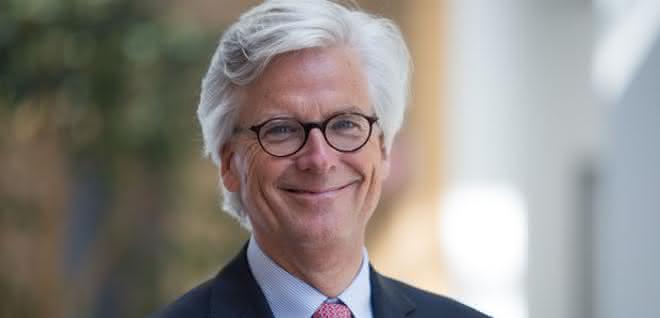
As a multi-technology group,3M is known for its innovative strength. How does 3M manage to maintain its culture of innovation?
3M fosters a culture of innovation in which employees in research and development in particular are given the opportunity to pursue their own ideas. They can spend 15 percent of their time on their own developments and test them in the 3M laboratories. As soon as these innovations reach a certain level of maturity, they are transferred to our R&D projects. There are also 46 technology platforms that are focused and further developed at Group level. These include product technologies such as abrasives, which benefit the 3M Precision Grinding & Finishing business unit, as well as manufacturing processes and process technologies such as additive manufacturing. Last but not least, 3M invests around 6 percent of its annual sales in research and development.
If employees are allowed to invest 15 percent of their time in their own developments, do they also have to be subject-specific?
Of course, most of our employees' ideas have something to do with their area of expertise, but that doesn't have to be the case. It is important to us that these developments are not driven by superiors or day-to-day business, as this is the only way we can get new ideas into the company.
What role does the Precision Grinding & Finishing division play in the global multi-technology group's overall portfolio?
Precision Grinding & Finishing is a global business unit of the Abrasive Systems Division and part of the Safety & Industrial Group. It arose mainly from acquisitions and is important for 3M in that we see very good prospects for the future here. We see the greatest growth opportunities in precision grinding in particular.
So the entire division was not developed through growth from within 3M, but through acquisitions?
3M is the absolute market leader in the field of flexible abrasives. Around ten to twelve years ago, the company decided to enter the bonded abrasives market and has driven this forward with acquisitions and strengthened it with the aforementioned 3M base technologies. This also includes our Precision Shaped Grain technology, which has already been used very successfully in the area of flexible abrasives. It is also very successful with our cutting and grinding discs and conventional bonded abrasives.
How do you differentiate between (precision) sanding and finishing? Which parameters can be used to determine this?
It's always about the surface quality: the better the surface has to be, the more we move from precision grinding to finishing or polishing processes. Surface accuracies of up to around 3 µm are possible with grinding processes, but this is often not enough for the surface qualities that some customers require.
Which tools are then used for finishing?
Finishing films are usually used here. However, they can also be combined rollers, which we offer for grinding gear wheels, for example. Here there is a grinding wheel on one side and a polishing wheel on the other, so grinding and polishing can be carried out in a single process step.
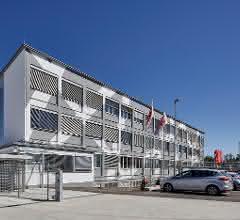
Villach is one of three competence centers for grinding technology. How do the centers differ and which technologies do you focus on in Villach?
In Saint Paul, USA, we focus very strongly on basic research. This is a very good fit, as this is also where Group Research is based, so we can make full use of 3M research. Meerbusch is a competence center for super abrasives, and Villach is the center for conventional abrasives and also for cut-off and grinding wheels.
In March 2018, the plant in Villach was partially destroyed by a major fire. How did this affect delivery capability and customer confidence?
That was indeed a big problem, because our kiln house for ceramic-bonded products burned down completely - we could no longer sinter. As a team, we managed to find alternative ways relatively quickly so that we could continue to offer around 35 percent of our portfolio. On the one hand, we qualified a plant in Sweden and worked with partners in the industry who took over the sintering for us. Secondly, we have entered into close communication with our customers. Our application technology department clarified which products could be supplied and which could not. In some cases, alternative products were sought and offered so that our customers did not have to stop production. In my opinion, this worked very well and we received very good feedback from our customers. In this respect, I believe that customer confidence is still at a good level despite the problems. We are now back and have started to supply our customers again with products that we were unable to deliver for a year.
When will production in Villach be fully operational again?
We have to take one step at a time, but the team in Villach has done a great job: Within 13 months of the major fire, we are able to deliver almost the entire product portfolio again. That is very pleasing! In June, we organized a major event at which our customers were able to take a look at the plant to boost confidence in our ability to deliver, among other things.
What opportunities have arisen from the construction of the new plant?
The big advantage, of course, is that we now have a state-of-the-art plant in terms of safety, energy efficiency and environmental protection, as well as quality assurance and automation.
Can the market also expect new products or product groups?
Of course, our R&D activities continued in parallel with the reconstruction and we will be launching a number of new products in the second half of the year. However, the new products are not directly related to the reconstruction of the plant.
Many industries depend on the same raw materials, for example tungsten and cobalt in toolmaking and battery production. Which materials play a major role for you and how do you guarantee continuous material availability?
The most important raw material for cutting tools is of course the abrasive grain, which we produce in part ourselves. Everything relating to Cubitron and Cubitron II, for example, comes from our own production. We also work with upstream suppliers, including for longer-term planning. Of course, things are now getting exciting in the super abrasive sector, i.e. diamond. Here we need to observe how the trade tensions between the USA and China, but also between China and Europe, develop in order to recognize any effects on availability and pricing at an early stage.
3M is an American company. To what extent do you anticipate problems due to possible punitive tariffs?
A high proportion of diamonds are imported from China, where there are increased customs duties and tariffs. This primarily affects our plant in the USA. However, we will continue to keep an eye on the development of tariffs and duties and any impact on our raw material costs.
Apart from that, 3M pursues a global strategy that means producing in the countries in which we operate wherever possible. In other words, we manufacture in America for America, in Europe for Europe and in Asia for Asia. We try to implement this strategy consistently in our most important product areas. For the Precision Grinding & Finishing division, this means that we have one production facility in the USA and one in China.
Automation systems are playing an increasingly important role, especially in the field of metalworking. Grinding technology is all about maximum precision. How can automation systems help to increase precision?
As our abrasives are mainly used in CNC machines, the degree of automation is already very high. Data analysis and process control are also a given. In the production of the abrasives themselves, there are of course opportunities for automation and therefore also for possible cost savings. On the other hand, there are new production technologies. We have just become the first company in the world to launch additively manufactured super abrasives on the market. 3D printing clearly offers the opportunity to break new ground in product design. On the one hand, it makes us shape-independent, and on the other hand, it increases precision as processes can be reproduced very precisely. Additive manufacturing is also very consistent in its own way.
Can all sanding and finishing processes be automated?
The decisive factor is the extent of automation. Automation also always depends on how easy it is to repeat a process. I believe that many more sanding processes will be automated in the future because, for example, software generation for robots is becoming cheaper and easier. In my opinion, the trend is moving towards more automation, at least in industrial sanding and finishing processes.
In which areas does manual sanding and finishing have advantages over machine sanding?
Manual processes are still widespread, especially for flexible abrasives. In precision grinding, precision is also supported by the CNC machine. However, there are certainly still many areas, especially in the production of many customer-specific workpieces or workpieces with very complicated surface structures, where manual processing is clearly advantageous. But in the longer term, manual machining will be reduced to very specific areas of application.
What are the big trends in sanding?
The materials to be machined are becoming more and more demanding to grind due to their alloy components and properties such as hardness and toughness, which is certainly one of the biggest challenges. Investments in grinding processes are often also the bottleneck in the production process, which is why many users are trying to reduce cycle times and thus increase productivity in the grinding process and reduce the costs per ground component. Added to this are the increasing demands for even greater precision. An example from automotive production: although electric cars require fewer transmission parts, they are subject to higher requirements. As electric vehicles are very quiet, even quiet noises in the gearbox are more noticeable. The transmission parts must therefore be manufactured with a higher profile and surface accuracy.
When does an abrasive reach its limits?
The harder a material, the more difficult it is to grind. Grinding diamond is difficult because diamond is also the hardest abrasive. Here you can only work with coatings and technical tricks. In the field of metallic materials, there is a trend towards new alloys, which pose challenges in the grinding process. Ceramic composites are becoming increasingly important, particularly in the aerospace industry, but also in medical technology, while at the same time driving up grinding requirements.
Which partners do you look for when developing new abrasives?
We work very closely with manufacturers of machines for the production of milling, turning and drilling tools, among other things. In order to improve the process for the customer, the machine and abrasive must of course be perfectly matched. There is a lot of know-how involved here. With our abrasive grains in particular, we can achieve higher productivity with high surface quality. We also work together with our major customers to optimize their processes. Our strength here is our highly qualified team of application engineers and technical sales staff, who have extensive expertise in the specific application processes.
Employee qualification is a top priority in many companies. How does 3M approach this topic?
We have our own certification program for our application engineers and technical sales staff specifically for the Precision Grinding division. To this end, we have training centers in Meerbusch and Saint Paul, among other locations. There, employees are trained on the CNC machines and certified at four to five levels. As a rule, they are trained in everything from abrasive specifications to optimizing machine settings for optimum sanding processes, as well as customer processes.
What are the biggest growth markets?
One of the biggest growth markets is certainly the aerospace industry. There are also very good growth opportunities in the gearbox sector, as we are constantly finding new applications there. For example, every robot is equipped with gear parts. Investment in automation technology, and in robot solutions in particular, is growing enormously worldwide. I see this as one of the biggest growth markets for us.


You might also be interested in
Smooth cleaning
The K900 industrial robot cleans floors autonomously, without preparation time or programming effort - even where it is dangerous or even impossible for humans to do so. Lubricant-free linear guides, shafts, plain and flange bearings from Igus also...
 read more...
New pallet roller for the warehouse
Conveyor technology specialist Rulmeca is expanding its range of conveyor rollers for pallets and other heavy goods with the XPS series.
read more...ACE structural and crash dampers: Safety on the road 7
The seventh axis is used in manufacturing and production systems to make robots more agile and increase their reach. As an additional traversing axis, this linear axis brings robots quickly into the workspace or guides them precisely to parallel...
read more...Torwegge presents FlexO rollers
Visitors to the FMB - Supplier Fair for Mechanical Engineering can once again look forward to a new product at the Torwegge stand this year: the FlexO rollers.
read more...Koenig's discipline
AMF clamping technology pulverizes production times at the world's oldest printing press manufacturer Koenig & Bauer in Würzburg
read more...No damage on axis 7
The seventh axis not only makes robots in many production plants more agile, but also increases their reach. To prevent accidents from ruining this increase in productivity, Expert-Tünkers has been working with ACE shock absorber components for...
read more...Moving heavy loads easily
For a manufacturer of lift tables, the collaboration with Blickle has paid off in full. The wheel and castor specialist supplied castor solutions with the ErgoMove electric drive system.
read more...Support with the construction of a hot water tank
With the Hezinger BendingLine MG4R round bending machine, Hezinger Maschinen is supporting the construction of the hot water storage tank for the Rostock public utility company.
read more...When the spark ignites
The surface of car body parts in automotive engineering must be perfect. The basis for this are high-precision textured rollers that prepare the sheet metal parts for processing. Texturing machines process the rollers with high precision using...
read more...