

Calculations by ZSW and BDEW
Renewable energies cover 42 percent of electricity consumption
A good 42% of the electricity consumed in Germany in 2021 came from renewable energies.
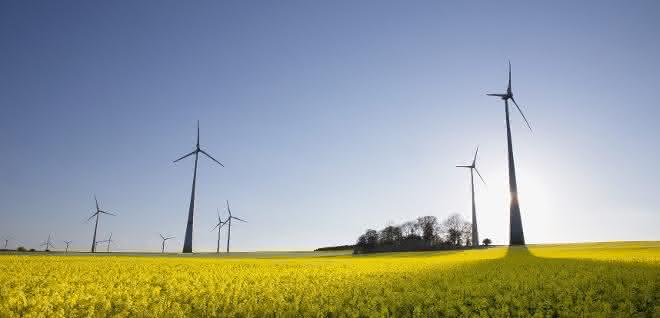
This is shown by preliminary calculations by the Center for Solar Energy and Hydrogen Research Baden-Württemberg (ZSW) and the German Association of Energy and Water Industries (BDEW) for 2021 as a whole.
The share of renewables is therefore lower in 2021 than in the previous year. In 2020, renewables covered just under 46% of the electricity consumed. Weather conditions contributed significantly to the decline in the share of renewables. Although electricity generation from solar energy increased by almost 5%, the first half of the year in particular was significantly less windy than in the previous year. In addition, electricity consumption rose again in 2021 as a result of the economic recovery, which had an additional dampening effect on the share of renewables in electricity consumption.
"The new German government has set ambitious targets for the expansion of renewables. However, we still have a lot of work ahead of us to achieve the planned 80 percent share of renewables in 2030 - especially in view of the fact that electricity consumption is expected to increase significantly in the coming years," says Kerstin Andreae, Chairwoman of the BDEW Executive Board. "In order to achieve the ambitious targets, the new German government must now promptly remove existing obstacles and restrictions to the expansion of renewables and implement the measures announced in the coalition agreement as quickly as possible. This applies in particular to the acceleration of planning and approval procedures, the provision of two percent of the federal area for wind turbines, the prompt designation of further areas on the high seas for use by offshore wind energy and the removal of bureaucratic hurdles for the expansion of PV. It is also crucial to convert and expand the grid accordingly so that renewable electricity can reach consumers."
"The expansion of renewables is also an extensive investment program for the economy," says Professor Frithjof Staiß, Managing Director of the ZSW. "Particular attention must therefore be paid to closing gaps in the domestic value chains, from materials and production to the construction and operation of renewable energy plants, not least because the coronavirus pandemic clearly shows how strongly global supply dependencies can affect the development of individual companies, industries and entire economies. Against this backdrop, the expansion of existing production sites and the establishment of new ones - for example in the photovoltaic industry - in Germany is imperative to ensure that climate protection actually becomes the engine for a future-oriented economy with secure jobs."
The production figures in detail
In total, over 582 billion kWh of electricity was generated in 2021 - almost three percent more than in 2020 (2020: 567 billion kWh). Of this, 238 billion kWh came from renewable energies (2020: 250 billion kWh): Onshore wind power plants accounted for the largest share of renewable electricity generation at 92 billion kWh (2020: just over 105 billion kWh). Photovoltaic systems supplied a good 51 billion kWh (2020: 49 billion kWh), closely followed by biomass (including the biogenic share of municipal waste) with just under 50 billion kWh (2020: just over 50 billion kWh). A good 25 billion kWh of electricity came from offshore wind energy plants (2020: a good 27 billion kWh). Hydropower plants supplied just under 20 billion kWh (2020: just under 19 billion kWh).
Green electricity share: two calculation options
Measuring the share of green electricity in gross electricity consumption is the standard basis for calculation. It is based on European requirements and is in line with the German government's target definitions for the expansion of renewable energies. Gross electricity consumption reflects a country's entire electricity system and, according to preliminary calculations, will amount to just under 562 billion kWh in 2021 (2020: 546 billion kWh).
Another option is to measure the share of renewable energies in gross electricity generation. This includes the total amount of electricity generated in Germany, including exported electricity. The share of renewables in 2021 based on gross electricity generation is just under 41% (2020: 44%).


You might also be interested in
Plagiarius 2024 negative prize
On January 26, 2024, the Plagiarius campaign awarded its dreaded "Plagiarius" negative prize for the 48th time to manufacturers and retailers of particularly brazen counterfeits and fakes.
 read more...
Ivalua honors winners of the Generative AI...
AI-supported "add-ons" for buyers within 48 hours
Ivalua, provider of cloud-based spend management solutions, announced the winners and innovations of the first Generative AI Innovation Cup. The competition took place in December 2023. It was open to all Ivalua partners and employees - more than...
read more...Efaflex celebrates 50 years of high-speed...
The emphasis is on "fast"
Since day one, Efaflex has wanted to use new technologies as early as possible and drive progress in the industry. This year, the family business is celebrating its 50th anniversary under the motto "Fast Forward".
read more...Security of supply even during power outages
In the winter of 2022, Germany was worried about energy shortages. The drugstore retailer dm did not paint any horror scenarios, but nevertheless saw the possibility of controlled, temporary, regional power cuts (brownouts).
read more...Safety technology in mechanical engineering
Modules with new functions
Euchner's product highlights at EMO 2023 include the communication-capable solenoid interlocks.
read more...Transforming the paper industry towards climate neutrality
Together with partners from industry and research, Voith is developing a project for the optimization of energy and material flows in paper production. The aim of the research project is to develop a digital framework that enables effective process...
read more...Up to 95 percent less flue gas thanks to direct extraction
The requirements for occupational safety measures and safety technology are also constantly increasing in welding technology. The Technical Rules for Hazardous Substances (TRGS) stipulate that welding fumes and harmful substances must be extracted...
read more...Competitive advantages with large machines
Whether 3D-printed components for machines and systems, prototypes or aids for design: additive manufacturing is almost indispensable for modern companies in mechanical and plant engineering and automation if they want to play in the premier league.
read more...Transport technology from the modular system
Many transport tasks can be realized with the help of linear technology. Pre-configured solutions are available to simplify the interaction between the linear unit, motor, gearbox and controller. This minimizes the effort required for research and...
read more...