

Additive manufacturing
Guidelines for uniform production quality in the industry
Ensuring the consistent quality of additively manufactured components across different batches and production sites is a challenge for companies and their suppliers. The reasons for this are the use of non-standardized materials and the early stage of maturity of some processes, which often lack process capability qualification.
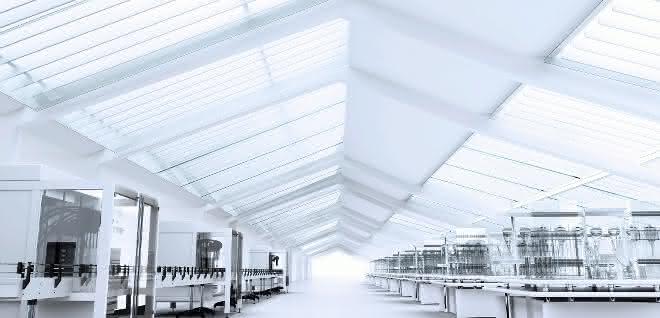
In the production context, a lack of standards and the human factor also play a role. This is because trained experts are crucial for manufacturing quality in an industrial context. DIN SPEC 17071, which is currently being developed, will for the first time define uniform requirements for successful implementation in practice.
The technologically and operationally necessary quality control based on a guideline enables even small and medium-sized companies to build up production maturity for higher quantities. This minimizes risks and makes investments in new production lines transparent and calculable. It also makes new business models possible, such as decentralized production facilities with shorter delivery times.
The guide is also essential for manufacturers who want to set up risk-minimized production for regulated industries. More far-reaching requirements must be met for aviation, medicine, mobility or pressure equipment. The focus here is on material testing, transparent and reproducibly documented machine acceptance and the entire management of the production process. However, the qualification of employees such as operators, engineers, QM managers, sales staff and project managers is just as important.
The entire process chain at a glance
In principle, the operation of the system, the source material and its management as well as the manufacturing process itself must be qualified. In addition to the maintenance and calibration of the test equipment, the documentation should also include the history of the materials and components as well as CAD processes and reproducible data handling. Process descriptions in the form of work instructions and run cards are indispensable - including the associated quality limits (minimum requirements). Last but not least, continuous monitoring of the production process with random samples and material analyses is a must.
In addition to TÜV Süd Product Service and the German Institute for Standardization (DIN NA 145 Additive Manufacturing), committees such as the Joint Committee of ISO (ISO/TC 261) and ASTM are working with various market participants on further standards. One example of this is PWI 52920 for the conformity assessment of additive manufacturing facilities within an industrial manufacturing environment. TÜV Süd supports companies and users with services, certifications, training and digital services along the entire additive manufacturing chain.
Gregor Reischle, Head of Additive Manufacturing, TÜV Süd Product Service


You might also be interested in
Predictive maintenance in retrofit
Predictive maintenance pays off. This is because early detection of impending failures means that systems can be serviced in a targeted manner before production downtime occurs. But how complex is it to integrate such a maintenance concept into an...
 read more...
Maintenance instead of replacement
The circular economy starts with the machinery
Sustainability in industry starts with machines, says our guest author from Deguma: How maintenance, modernization and the 5R strategy save resources, energy and CO₂.
read more...3D printing for unplanned requirements
The material fails and the machine suddenly stops? Then you need to take the right measures to be able to resume production quickly. Material failure in the form of faulty components or material wear in the frame are a risk for any production.
read more...High demands in terms of safety, application and robustness
Demanding work in the electrical trade and energy supply as well as smooth processes in production require innovative and customized measurement technology that scores points for safety, ease of use and resilience.
read more...Car meets e-bike: riding with lubrication-free polymer bearings
Studies show that the proportion of pedestrian and bicycle traffic is increasing in urban areas. With the JetBike, JetBike GmbH from Braunschweig presents a mixture of e-bike and car and relies on lubrication-free polymer bearings from Igus.
read more...Hydraulic hub for more efficient servicing
Bosch Rexroth presents a digital toolbox for service and maintenance. With a comprehensive range of digital services, the Hydraulic Hub simplifies and accelerates the service and maintenance of hydraulic products and increases machine availability.
read more...Arnold Umformtechnik expands after-sales...
Faster help with VR glasses
Arnold Umformtechnik is expanding the after-sales service for its machines to include digital remote services. The focus is on data security, simple operation and clear processes.
read more...147,000 euros per hour: high costs for German companies due to unplanned downtime
According to the "Value of Reliability" study, 67% of industrial companies in Germany experience unplanned downtime at least once a month. This costs the German economy 147,000 euros per hour. Nevertheless, reactive maintenance concepts are not...
read more...Maintenance starts with a maintenance planner
Legal requirements stipulate that machines and systems must be serviced regularly. The maintenance work serves to ensure occupational safety and economic efficiency.
read more...