

Industry ERP
OEM specifications under control
Automotive suppliers need to have their own planning and production processes under control on the one hand and, above all, meet the increasing demands of OEMs on the other. This is hardly possible without high-performance information technology structures. A specialist in wire forming technology has therefore introduced a new ERP system that supports the supplier with sophisticated industry functionalities. By Karsten Wette
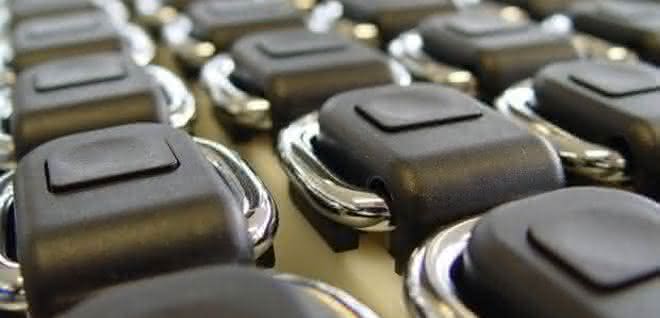
The automotive supplier Lenz, Kämper - Lenzkämper for short - supplies manufacturers such as Volkswagen, Seat, Škoda, Audi and BMW worldwide with all kinds of bent wire parts. These include belt deflection fittings, brake cable holders and lashing eyes. In addition to technical advice, the supplier's range of services also includes the production of complex welded assemblies and hybrid components. The customers for the ready-to-install components are in turn OEMs, but in some cases also companies from other industrial sectors. However, it is primarily the car manufacturers who bind suppliers to strict restrictions and regulations. For example, there are specifications regarding data exchange, packaging structures and traceability of the supplied parts, or certain certificates must be verified. A powerful ERP system plays a central role here. This includes factors such as flexibility, openness and scalability. The old system had reached its limits, so the management invited tenders for the introduction of a new ERP solution. Robert Lenz, Commercial Director of Lenzkämper, recalls: "We wanted an industry standard that had everything we needed for our internal processes and for communication with manufacturers, both functionally and technologically. And, of course, the company needed to have the structures in place for long-term collaboration." Functionally, this means, for example, connection to the OEM portals, mobile applications, end-to-end batch traceability and mapping of the required packaging structures.
Packaging management creates transparency
The ERP system PSIpenta from the Berlin-based ERP and MES provider PSI Automotive & Industry was ultimately chosen. Today, 50 of the 100 employees work with the new system, which supports the order processes from the creation of the OEM call-off via EDI interface, through production, packaging and shipping, to invoicing and the processing of complaints. Particularly important here are the modules and structures that specifically support the fulfillment of the diverse OEM requirements - such as the stringent specifications for the complex packaging structures. The specifications are defined in the framework agreements with the car manufacturers and can vary from customer to customer and from call-off to call-off.
The new ERP system maps these requirements by means of packaging management. It calculates the need for packaging materials based on the production or shipping quantities and triggers corresponding requests. "We also use this module to manage a so-called packaging materials account for each business partnership, in which the entire stock is managed, repackaging processes are controlled and the traceability of the goods down to the individual packaging unit is guaranteed," explains Holger Diedrich, IT and Controlling at Lenzkämper. "Today, we always have a sufficient quantity of the required packaging materials in stock. In the past, we sometimes had to work up a sweat here. Complaints in particular can now be processed much faster and penalties avoided."
Outsourcing is also of particular importance to Lenzkämper. For example, the company uses it to outsource special surface treatments. When these parts are returned, the system transfers them directly to the customer-specific packaging structure or to shipping. Numerous processes are also significantly more efficient thanks to the use of mobile extensions to the ERP system. They replace paper documents or Excel lists. For example, hand scanners are used both for material removal and for good quantity reports: "Whenever we remove material from the warehouse today, it is simply scanned and automatically posted to the order," explains Judith Moos, key user from the very beginning. "The same applies when a production order has been processed and is forwarded to dispatch. The hand scanners are also used here," adds Moos. By providing and evaluating the necessary data for analyses, the ERP system has also become an enabler for optimization. For example, the company uses integrated cost accounting as a starting point to find out which orders have required a lot of time, money and effort and which adjustments need to be made to make processes more efficient.
The new ERP system has provided noticeable improvements on many levels. Those responsible also emphasize the easier traceability down to the individual package, the faster and simpler processing of complaints, the integration of mobile applications and the numerous evaluation options. Finally, the satisfaction is also a testament to the well-functioning support portal and the valuable assistance of the PSI consultants. "We benefit time and again from the automotive expertise of our contacts, who not only know their own system, but above all know what makes the OEMs tick and which VDA standards and certifications may need to be converted to," says Diedrich. With its new ERP standard, Lenzkämper is relying on a system that will also equip the supplier for the requirements of its demanding customers in the long term.
Karsten Wette, Division Manager Automotive at PSI Automotive & Industry / am


You might also be interested in
Protection against electrostatic discharge
StoFloor ESD KU 614 from StoCretec: dissipative flooring with the latest technology meets all ESD standards, is economical, extremely durable, mechanically and chemically resistant. The surface can be adjusted to be slip-resistant. The system is...
 read more...
Cables and wires from Helukabel
Food cultivation on a new level
Vertical farming - cultivation in multi-storey greenhouses - is considered one of the most exciting trends in food production. One of the pioneers in this field is the Romanian start-up Ultragreens. The company relies on solutions from Helukabel to...
read more...Further training for specialists to become security experts
With the "CESA - Certified Expert for Security in Automation" qualification, automation expert Pilz offers a two-day expert course designed to provide participants with compact security knowledge in line with the latest standards.
read more...Meaningful data on the service life of the seal
Seals prevent substances from penetrating or entering technical components. The intelligent seals from Freudenberg Sealing Technologies can significantly expand this core task in the future: the seal itself is also a sensor and becomes a "smart...
read more...Online stud configurator according to drawing
For standard bolts, with head, thread or hole
For standard bolts, with head, thread, bore or as a version with recess, mbo Osswald configurators map the standard specifications, are very easy to use, take a lot of work off the user's hands and save a lot of time.
read more...Safe palletizing with the Cobot
Verla-Pharm's medicinal products and food supplements have been available for decades. Ever-increasing throughputs result in ever-increasing logistics costs, whereby optimum utilization of the available production space is necessary.
read more...The tiger among processors
Since the move towards the Industrial Internet of Things (IIoT) and Industry 4.0 has picked up speed, processor boards and modules must be able to process exponentially growing amounts of data.
read more...VDWF publishes "Sustainability Compendium"
Nowadays, nobody can avoid "sustainability": In addition to a far-reaching presence in the media, it is also becoming increasingly important for companies in the tool and mold making industry to develop and implement appropriate concepts.
read more...More transparency and synergies with QM software
Weber, manufacturer of wood and metal sanding machines and extruders, has reorganized its quality management with ConSense IMS Professional. The software solution enables transparent documentation and more efficient processes.
read more...