

Big Data Analytics
In search of the treasure trove of data
Drawing the right conclusions from a wealth of production data is like detective work. Although every process step generates vast amounts of data, its full potential often remains untapped. Data analytics can help here. This requires a combination of comprehensive data expertise and many years of production knowledge. Only together can measurable added value be generated.
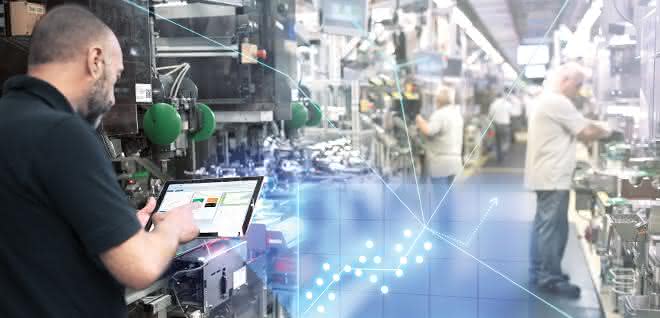
If production is not running smoothly, there can be many different reasons for this. Logically, the first place to look is where the process has come to a standstill or where the root cause is suspected. However, the actual cause often lies elsewhere. This is where the work of data detectives, better known as "data scientists", begins. Using the latest methods for data collection and processing as well as intelligent algorithms, they analyze processes systematically and sustainably.
Manufacturing is a complex interplay of successive process steps in which raw materials, production resources and environmental influences affect the quality of the end product. In discrete manufacturing, for example, each part has its own individual production history to tell, which initially consists of an almost unmanageable sea of data - if it is even possible to clearly assign the data to the respective product. Traceability breaks, i.e. a desynchronization of the real and digital path that occurs during the process, mean that the path becomes lost.
If there is a problem within production, such as increased waste, it is often not easy to identify the technical root cause. This is why every data analytics project should ideally begin with an inspection of production and discussions with the responsible employees and process experts. Although data is the most important raw material of Industry 4.0, the best results can only be achieved in combination with a deep understanding of the respective systems and processes. The data detective must get a very precise picture of production and not only secure the obvious pieces of evidence, but also look at the seemingly insignificant details.
However, it is sometimes difficult to access this data at all. At best, the affected machines and processes are already integrated into a homogeneous IT landscape. But the reality is often different: At present, almost every production facility is a mix of old and new hardware and software. Depending on the source, the required data is available in a wide variety of structures and formats - sometimes even handwritten. Only when all sources have been identified and the data standardized can the data detectives use algorithms to determine the in-depth cause-and-effect relationships across the different data sources. The data expert therefore has the task of tracking down and understanding all the data and transforming it into an analyzable structure. The process knowledge helps to generate new features from the data. For example, two time stamps are turned into a layover time or several influencing variables are turned into an initial multidimensional model.
Up to 40 percent higher product quality
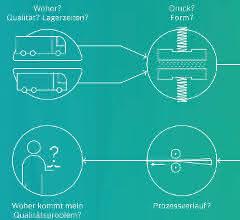
A concrete example from the production of special wire shows the complexity - but also the effect - inherent in these data analyses: in 60 process steps, the powdery raw material is chemically, thermally and mechanically pressed, sintered, annealed, hammered and drawn until it leaves the factory as wire wound onto spools. This type of special wire is made from raw materials from different individual batches, which in turn pass through different stations - for example different furnaces. The processes involve both sequential and parallel production. For manufacturers and customers, it is particularly important that the wire does not break during production, resulting in a piece of wire that is as long and uninterrupted as possible. The data analysis revealed that the quality problem, which only manifested itself much later in the process, had its origins in the idle time of the intermediate powder batches, among other things. This finding shows that cooperation between the data detectives and the witnesses, i.e. the process experts on site, is essential: without the detailed joint preparatory work, the relevant information would not have been included in the analysis in the first place. This is because it was not initially included in the data, but was only identified as a difference between two time stamps after the process had been analyzed. However, at the end of the project, the quality indicator specified by the customer had increased by up to 40 percent.
Sometimes the detective work produces completely different results than expected. This was the case for a manufacturer of particle sensors: In series production, sensor elements came off the production line with strongly fluctuating quality of a certain sensor layer. However, the cause lay in another layer, which was not suspected even after months of improvement projects using established problem-solving methods. Only a holistic view of the process and the data brought this realization to light. What's more, the detectives were able to uncover a case of pseudo rejects almost incidentally. Due to an error in the machine control system, qualitatively flawless parts were identified as rejects - which was uncovered thanks to data analytics and subsequently rectified by the employees. This side effect alone
alone amortized the costs of the analysis for the customer within a single week thanks to savings of around 1,000 euros per day.
As the example shows, there are process problems that can be solved with a one-off analysis. However, the majority of error sources require a longer-term approach. In both cases, it is worth bringing in external experts. They have the methods and analytical know-how and can examine complex processes in a short space of time without the company having to accept downtime or withdraw employees for the task. The production data is analyzed in the background. Faults, irregularities and emerging trends such as a continuous drop in performance are processed and fed back to the company. If required, productive solutions such as a dashboard or forecasting models can also be created in addition to optimization projects. Ultimately, however, the declared aim is always to understand the problem and eliminate the technical root cause.
OT and IT - an unbeatable team
Extensive detective work is required to achieve this goal. Above all, however, it requires good interaction between all parties: With Nexeed Data Analytics, Bosch brings the necessary software and analysis expertise to the table. As the company itself is active in manufacturing, it can also draw on many years of experience in a wide variety of domains. If required, other software modules from the Nexeed portfolio can also be added, for example when it comes to networking lines or plants. But one thing is certain: without the human component, the whole flood of data is only worth half as much. That's why process owners need to be actively involved in a data analytics project.
This initially applies to the inventory, i.e. the error and process description. In the subsequent data collection, the human factor is deliberately excluded. Even data that does not appear to be related to the error is included and analyzed. This shows one of the great advantages of this method in contrast to established process optimization methods: the impartiality and the resulting inclusion of seemingly irrelevant data, which can also bring unexpected results to light. In turn, the process expert plays a fundamental role in interpreting the results. In this way, data analysts and process specialists become an unbeatable investigative team in the Nexeed Data Analytics project.
Deniz Ercan, Head of Nexeed Data Analytics at Bosch Connected Industry / ag


You might also be interested in
Intelligent brownfield networking
Many industrial companies are struggling with established plant structures and proprietary interfaces. Stefan Klaus' presentation will show in a practical way how brownfield environments can be efficiently networked with open technologies and made...
 read more...
Factory-X in practice
How can set-up processes in highly variant production be automated efficiently? Markus Benndorff from soffico shows how Factory-X, industrial data rooms and modular architectures create new possibilities for flexible production concepts.
read more...Mechanical engineering | Case study
Cordless in brush production
The machine manufacturer Wöhler Bohemia is integrating wireless HMI panels from Keba into its brush production systems. The background to this is the need for flexibility, robotics integration and new market strategies.
read more...International product approvals as a strategic competitive advantage in the global market
Which certificates are valid worldwide? Christian Latte, Head of Technical Compliance and Approval Officer at Hummel AG, explains this in an interview. He provides insights into product approvals and explains why early approval strategies shorten...
read more...Foundry modernizes plant park with continuous wire belt shot blasting system
The Spanish foundry Funosa is modernizing its equipment fleet with an RDGE 1250 wire belt continuous shot blasting machine from Rösler. Focus: sand removal from heavy iron castings, energy efficiency, ease of maintenance and ESG strategy.
read more...How bridging steps, stairs and catwalks are changing processes in production and logistics
At Logimat 2026, Munk Günzburger Steigtechnik will be showcasing modular bridging steps, stairs, platform and walkway systems for production, warehousing and logistics. With online configurators, distances can be efficiently shortened, processes...
read more...Drilling cycles optimized
A new replaceable head drill from Walter can reduce machining time in series production thanks to its patented interface and screwless design.
read more...Production, metalworking, robots
Precise 5-axis machining
The new Kern Fortis HD five-axis machining center will provide manufacturing companies with high precision requirements with a new machine from 2026.
read more...Agentless remote access to industrial plants
TeamViewer is expanding its Tensor enterprise platform to include "Agentless Access", enabling secure remote access to industrial systems without the need for local software installation.
read more...