
Support
Agility in customer service in industrial companies
The coronavirus pandemic has brought about many changes for companies, customers and customer service. Tensions in production and supply bottlenecks are forcing companies to roll out new business models to counteract or prevent problems.
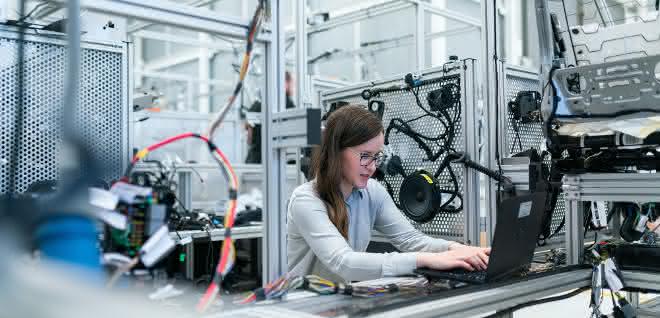
Increased communication via digital channels has led to more customer inquiries, which poses a challenge for many companies. To maintain customer loyalty through exceptional customer service, companies need to understand their customers' needs.
Sustainable customer service makes the difference
Contact restrictions, working from home, lockdowns - there is no way to avoid talking about the coronavirus pandemic. One thing is certain: it is a catalyst for companies around the world to invest in new technologies and workplace models. Customer service has largely had to shift to digital. And that's not all - at the same time, the average number of support requests at industrial companies increased by 31% during the pandemic compared to the previous year. More requests, more remote work - and yet companies still want to offer their customers personalized and consistent communication across all possible channels. 91 percent of the companies surveyed found these changes in customer service to be an enormous challenge, as the latest Customer Experience Trends Report 2021 from Zendesk shows.
The production sector must adapt to new customer demands
However, it is important that companies in the manufacturing sector also embrace these changes in order to adapt to the new demands and communication habits of customers. According to the CX Trends Report, 64% of global respondents have tried new support channels to get in touch with companies in the last year. The response from companies: 78 percent are looking for new ways to communicate with their customers. Stanley Black & Decker, Accuride and Bauhaus are examples of how customer support can already be successfully implemented.
The focus in 2021 - and in future years - will definitely be on messaging channels. This includes SMS, apps such as WhatsApp or Facebook Messenger and embedded messaging on the website. Messaging allows customers to have a natural, personal experience through continuous dialog and quick resolution. The increased popularity of messaging among customers was picked up on: 53% of the companies surveyed that have added a new communication channel to their customer service opted for messaging services.
What constitutes agility in customer service?
During the coronavirus pandemic, agility was one of the key elements for companies to successfully deal with the situation. According to another study by Zendesk on agility in companies, 73 percent of the companies surveyed already had a high level of agility before the pandemic. However, few could demonstrate the kind of agility required to be classified as "market-leading". Agility not only makes it easier to respond and adapt to change, but can also have a positive impact on the bottom line: according to the Zendesk study, 49% of German managers were able to reduce their costs by up to a quarter thanks to high agility.
Customers have high expectations when it comes to agile service
For customers, the need for agility is simple: they expect the quickest and easiest response possible. As policies, offerings and product availability change at an ever-increasing pace during the pandemic, a fast, efficient support response is becoming more important - but also more difficult to deliver. Using multiple interconnected tools allows support teams to be more agile due to the faster scalability of processes and the availability of real-time data insights: For example, a company's data situation can tell it that it is receiving an above-average number of customer inquiries due to a particular problem. With clear insights and an agile culture, a company can respond quickly and minimize the impact on its customers. The provision of support staff leads to longer queues being handled on more popular channels.
In order to be able to answer recurring questions more quickly, it is advisable to use self-service and automation. Finally, workflows can be updated, making it easier for employees to be informed and solve the recurring problem quickly. In the meantime, the product teams can use these insights to find a permanent solution.
Internal communication between employees and departments also appears to have room for improvement: Almost half of support employees find collaboration with other departments more time-consuming, partly due to various remote teams. However, more than half (58 percent) believe that greater collaboration would help them to be more effective.
Agile customer service as a strategy for success
Good performance and efficiency through agile working ultimately lead to a better customer experience. The CX Trends Report proves that customer satisfaction is also important in production: 73% of customers surveyed stated that they would be loyal to a company if they had a positive customer service experience. However, negative experiences also have an impact. For example, one in two said they would turn their back on a company after just one negative customer experience. In order to meet these requirements and challenges, technology can lay the necessary foundation for agility in the company.
It's time to put the customer experience first. Why? According to Zendesk's CX Trends Report, 75 percent of customers would spend more money if the company offered a good customer experience. Knowing what customers think helps a company to increase customer satisfaction and loyalty. After all, 67% of the CX managers surveyed in industrial companies agree that the customer experience has become even more important than before the pandemic.
Companies should now seize the opportunity to invest in new technologies and gain this competitive advantage.
Ulrich Hoffmann, Director EMEA Central at Zendesk


You might also be interested in
"We are clearly different from the competition"
The IT company 21unity offers a range of hardware and software services, as well as traditional services. Andreas Mühlbauer spoke to Managing Director Anja I. Gondolf about the company's appearance at the Hannover Messe, its services and future...
 read more...
Think digital, act local
When it comes to industrial damping technology, on-site advice is often very valuable for engineers and designers.
read more...Plagiarius 2024 negative prize
On January 26, 2024, the Plagiarius campaign awarded its dreaded "Plagiarius" negative prize for the 48th time to manufacturers and retailers of particularly brazen counterfeits and fakes.
read more...Spindel Full Service records second-best...
Maintenance as an economic success factor
Spindel Full Service, the spindle repair specialist from Baden-Württemberg, can look back on its second-best financial year in its history - with 15% growth compared to the previous year. And the further forecast also looks good.
read more...Thyssenkrupp and Novelis cooperate
Platform for the circular economy
With a platform for the circular economy in the automotive industry, the two companies Thyssenkrupp Materials Services and Novelis want to set new standards for the recycling of used materials. The open platform will enable access to larger...
read more...How production can benefit from AI
Together with AI technology, IIoT networking makes it possible to better control machine parameters and optimize quality with predictive quality. Downtimes and set-up times can also be further minimized. Cloud platforms also make these technologies...
read more...Marco Ghirardello takes the lead
Fanuc has appointed Marco Ghirardello (48) as the new President and CEO of Fanuc Europe. Ghirardello succeeds Shinichi Tanzawa, who has led the company since 2016 and will take on a new role at Fanuc's headquarters in Japan.
read more...Efficient robot monitoring
Microchips are installed almost everywhere - whether in smartphones, washing machines or cars. With increasing digitalization, the demand for semiconductors has been growing rapidly in all areas of the economy for years.
read more...Everything on one platform
Functional and powerful tools are essential for professional work on the construction site, in the workshop or when carrying out repairs.
read more...