

Sensors
Portfolio for hygienic processes
Sensor technology for cleanroom applications. Plant operators are faced with increasing challenges in cleanroom applications. In addition to strict regulatory requirements and high quality standards, increasing digitalization, the required productivity and the reduction of operating costs over the entire life cycle are playing an increasingly important role. Endress+Hauser has launched various products for hygienic and sterile applications on the market.
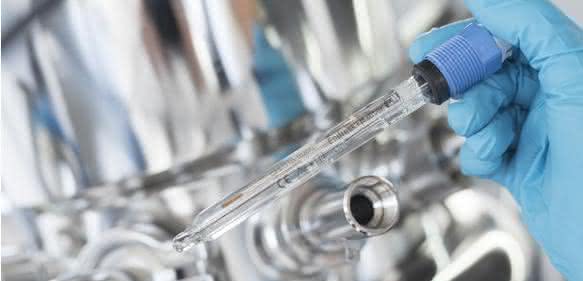
With the pH sensor Memosens CPS171D, the oxygen sensor Memosens COS81D and the conductivity sensor Memosens CLS82D, sensors are available for the most important, critical measurement parameters that provide precise and stable measured values and meet current hygiene and regulatory requirements. All sensors are based on digital Memosens technology. The measured value is digitized in the sensor and transmitted contactlessly to the transmitter via induction. Moisture and corrosion, which could falsify the measured value or cause the measuring point to fail, have no chance. This results in maximum reliability in data transmission.
Stored data is used for process optimization
The digital sensors with Memosens technology store calibration, sensor and process data. This allows them to be calibrated and regenerated under optimum conditions in the laboratory using the Memobase Plus software. This increases the service life of the sensors and simplifies commissioning and maintenance. Pre-calibrated sensors can be replaced in the field within a very short time thanks to the bayonet lock and automatic sensor recognition. The stored data can be used for predictive maintenance and process optimization.
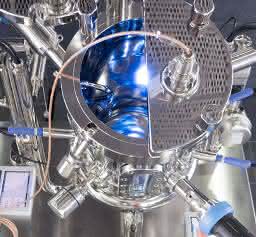
All sensors are compact and available in a twelve-millimeter design with PG screw connection. They are suitable for laboratory measurements as well as for pilot and production plants. By using the same technology, uniform measurement results are achieved, which enables faster transferability from the laboratory process to the large-scale production plant as well as optimized process control. The sensors can either be used directly in benchtop fermenters, for example, or installed in tanks and pipelines using static or retractable fittings.
Oxygen sensor Memosens COS81D
The main applications of oxygen measurement can be divided into two categories: measuring the absence of oxygen for safety reasons and to protect intermediate and end products, and measuring the concentration of oxygen for optimum process monitoring and control. The product quality and yield, for example in cell cultivation and fermentation processes, is largely determined by the oxygen concentration in addition to the pH value. The Memosens COS81D oxygen sensor is based on the optical fluorescence method and delivers precise and stable measured values even under the harshest process conditions up to 140 degrees Celsius.
The suitability for hygienic and pharmaceutical applications of all wetted materials and the sensor design has been proven through extensive testing; all necessary declarations of conformity and certificates are available, such as EHEDG, FDA and USP. Another advantage of the Memosens COS81D is its simple calibration; it can be carried out in the field using the completely oxygen-free, ready-to-use zero point gel COY8 or in the laboratory under optimum conditions with Memobase Plus. Both increase the accuracy and reliability of the entire measuring point and enable optimum sensor management.
Conductivity sensor Memosens CLS82D
Electrical conductivity is the most frequently used parameter in the production of food and pharmaceuticals. It must be measured over a wide range, from the lowest values when monitoring water quality or rinsing processes with ultrapure water to medium to high values for concentration measurements and phase separations in the process. The new Memosens CLS82D four-electrode conductivity sensor is suitable for this. Sensors with four electrodes compensate for polarization effects that occur at high conductivity values and lead to falsified measurement results. The compensation ensures consistently reliable values over the entire measuring range.
The special feature of the Memosens sensor is its ceramic sensor element with platinum electrodes. The advantage of this combination of materials is that ceramic and platinum behave very similarly when the temperature changes and therefore expand and contract evenly. This means that there are never any gaps - germs or water cannot penetrate. The sensor design guarantees good cleanability and even aseptic hygiene, according to the manufacturer. pb


You might also be interested in
Predictive maintenance in retrofit
Predictive maintenance pays off. This is because early detection of impending failures means that systems can be serviced in a targeted manner before production downtime occurs. But how complex is it to integrate such a maintenance concept into an...
 read more...
Maintenance instead of replacement
The circular economy starts with the machinery
Sustainability in industry starts with machines, says our guest author from Deguma: How maintenance, modernization and the 5R strategy save resources, energy and CO₂.
read more...3D printing for unplanned requirements
The material fails and the machine suddenly stops? Then you need to take the right measures to be able to resume production quickly. Material failure in the form of faulty components or material wear in the frame are a risk for any production.
read more...High demands in terms of safety, application and robustness
Demanding work in the electrical trade and energy supply as well as smooth processes in production require innovative and customized measurement technology that scores points for safety, ease of use and resilience.
read more...Car meets e-bike: riding with lubrication-free polymer bearings
Studies show that the proportion of pedestrian and bicycle traffic is increasing in urban areas. With the JetBike, JetBike GmbH from Braunschweig presents a mixture of e-bike and car and relies on lubrication-free polymer bearings from Igus.
read more...Hydraulic hub for more efficient servicing
Bosch Rexroth presents a digital toolbox for service and maintenance. With a comprehensive range of digital services, the Hydraulic Hub simplifies and accelerates the service and maintenance of hydraulic products and increases machine availability.
read more...Arnold Umformtechnik expands after-sales...
Faster help with VR glasses
Arnold Umformtechnik is expanding the after-sales service for its machines to include digital remote services. The focus is on data security, simple operation and clear processes.
read more...147,000 euros per hour: high costs for German companies due to unplanned downtime
According to the "Value of Reliability" study, 67% of industrial companies in Germany experience unplanned downtime at least once a month. This costs the German economy 147,000 euros per hour. Nevertheless, reactive maintenance concepts are not...
read more...Maintenance starts with a maintenance planner
Legal requirements stipulate that machines and systems must be serviced regularly. The maintenance work serves to ensure occupational safety and economic efficiency.
read more...