

Green steel production
Steel to become CO2-neutral
Steel is considered the "material of life". Whether in mobility, architecture, mechanical engineering, furniture, screws or cutlery - life without steel would be hard to imagine. The problem: the production of steelreleases a lot ofCO2 - the steel industry is responsible for around 7 percent of globalCO2 emissions. This is now set to change.
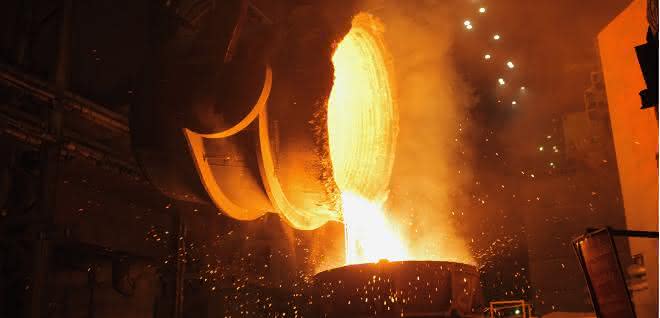
Arcelor Mittal has announced that it will becomeCO2-neutral by 2050 in Europe, where the steel group leaves its largest footprint. This is a bold promise, as the technologies that makeCO2-neutral steel production possible do not yet exist. The fact that the steel manufacturer is nevertheless confident of achieving this goal is due to a number of technological developments that the Group is driving forward at a rapid pace, above all the replacement of fossil fuels with hydrogen in iron production.
Simple idea - complex implementation
First of all, the project sounds very simple: steel and its raw material iron are not found in nature in practically pure form, but as iron ore, which consists primarily of iron oxide, i.e. iron plus oxygen. To obtain pure iron, the oxygen is traditionally dissolved using coking coal; alternatively, synthesis gas obtained from methane can also be used. The process is almost as old as mankind itself: if the iron ore is heated to a very high temperature using coal as an energy source, the oxygen binds to the carbon under the high temperatures. This produces (almost) pure iron on one side andCO2 on the other. In a second step, the pig iron obtained can now be refined. Additives such as manganese, chromium, nickel, cobalt or tungsten make it the starting product for either flexible steels, from which ballpoint pen nibs or steel belt tires are made, or for hard steels, from which car sheets, excavator shovels or steel cables for anchoring oil rigs are manufactured. However, the first step is always the extraction of the purest possible iron, which accounts for the majority ofCO2 emissions in steel production.
In addition to the classic blast furnace process using coking coal, another process was established in the early 1970s that produces pig iron from iron ore pellets by means of direct reduction - the Midrex process. In this process, the pellets are heated and flushed with methane. The oxygen is reduced and pig iron is produced in the form of sponge iron, known as direct reduced iron (DRI), which can then be processed further. In Hamburg, Arcelor Mittal operates the only plant in Europe that currently uses this Midrex technology. This is why the company now wants to replace methane with hydrogen at its Hamburg steelworks, which is already the most energy-efficient in the Group. The oxygen released could be bound to hydrogen instead of carbon. The result would be iron and, as a by-product, water.
Eye of the needle: green hydrogen for 100,000 tons of steel
What sounds so simple, however, has many pitfalls. The process is successful in the laboratory. Whether it works on an industrial scale remains to be seen. And one of the first problems that arises is the starting material. This is because hydrogen is not yet available in the quantities required here. That's why they want to build a demonstration plant first - the little brother of the 50-year-old Midrex plant. The budget is huge - the investment is currently estimated at 65 million euros. And the technology provider Midrex is back on board. Arcelor Mittal has just commissioned it with the planning.
The planned plant is expected to produce 100,000 tons of directly reduced iron from 2024 - a material that is physically not quite the same as the pig iron from the blast furnace or the directly reduced iron from the Midrex plant. The question of how the iron produced using hydrogen reduction will be stored and processed in future is part of the project, which is gathering pace these days.
Another obstacle is the lack of hydrogen. Green hydrogen (see also "What is green and gray hydrogen?" at the end of this article) is not yet available in the required quantities. However, there is the possibility of extracting gray hydrogen from the company's own Midrex plant, which is produced in the existing process anyway. How this will work is clear, at least on paper. With a purity of more than 97 percent, the separation of hydrogen from the blast furnace gas (a mixture of mainly carbon monoxide, carbon dioxide and hydrogen) from the existing plant is to be achieved using a process known as pressure swing adsorption. And in future, if available and affordable, the aim is to use hydrogen produced using renewable energies so that the ecological balance sheet is also right in the end.
Regional planning for optimized infrastructure
The lack of hydrogen is another reason why Arcelor Mittal chose Hamburg as a location. This is because there are already plans to build the world's largest electrolysis plant in the Port of Hamburg, in the direct vicinity of the company. It is to be operated primarily with electricity from offshore wind farms, whenever the power grid is unable to absorb the surplus electricity. This would allow renewable energy to be stored in the form of hydrogen and then used in the steelworks without having to travel long distances. If all the wheels fall into place, the Hamburg plant could become a pilot steelworks in the industry and demonstrate thatCO2-neutral steel production is feasible and economically viable. The steel producer is already convinced that it is possible to fundamentally change steel production - provided that the commitment to ecologically sensible production is supported in Europe and hydrogen can be made available at economical prices. This also includes creating a level playing field for all market participants - especially for steel imports, which do not meet European environmental standards and therefore distort competition today.
The Hamburg demonstration plant is not only new territory in technological terms. Regional energy structure planning and political regulations also require further development so thatCO2-neutral steel can become a reality on a large scale.
According to documents from Arcelor Mittal / ag
What is green and gray hydrogen? |
|
The term "green hydrogen" refers to hydrogen that is produced in aCO2-neutral way. As energy is required to split water into its two components, oxygen and hydrogen, the electricity for this process must be obtained from renewable energy sources, i.e. wind or solar power plants. |
|
Conversely, "gray hydrogen" refers to non-CO2-neutral hydrogen, which does not have to be produced separately but is a by-product of industry anyway. An example of this is hydrogen produced from natural gas. |


You might also be interested in
Micro motors as the driving force behind intralogistics
Suitable transport structures in intralogistics are a prerequisite in all industries in order to withstand competitive pressure in the future. The basis for this is comprehensive automation, which would be inconceivable without an armada of powerful...
 read more...
E-scooter with customizable damping
The startup Scuddy has significantly improved the flexibility, performance, customizability and ergonomics of its second-generation foldable e-scooter of the same name - thanks in part to damping technology from ACE.
read more...Electric multidirectional counterbalanced...
360-degree steering on three wheels
Hubtex has given its FluX electric multidirectional counterbalanced truck an update: The new generation for the three-ton capacity class.
read more...New FLUX: 360-degree steering on 3 wheels
HUBTEX presents the new generation of the FLUX 30 electric multidirectional counterbalanced truck (load capacity 3 t). The innovative 2-in-1 stacker is both a front and sideloader. With its patented 360-degree HX steering, it transports both long...
read more...Norelem supports VDI Racing Camp
Mastering the challenges of e-mobility
Promoting young talent has been a priority at Norelem for many years: the company supports young talents with components and the necessary know-how and provides schools with illustrative material.
read more...igus:bike honored with German Design Award 2023
A wide, angular frame made of plastic, black wheels with Y-spokes: The futuristic look of the bicycle designed by Dutch bicycle developer mtrl with motion plastics from Igus can look forward to the prestigious German Design Award 2023.
read more...Floating garbage trap cleans up the Rhine
Every day, a ton of garbage flows down the Rhine. To catch some of it, the Cologne-based Krake association has now inaugurated a floating garbage trap. One of the sponsors of the so-called Rhine octopus is the plastics specialist Igus.
read more...Torwegge presents FlexO rollers
Visitors to the FMB - Supplier Fair for Mechanical Engineering can once again look forward to a new product at the Torwegge stand this year: the FlexO rollers.
read more...Igus partner Mura's project is making progress
Recovering crude oil from plastic: This is the goal that the British company Mura Technology is pursuing with the HydroPRS process. Igus has been supporting the project as an investor since 2020. The first HydroPRS plant for the chemical recycling...
read more...