

Component repair
Rescue in an emergency
One of the biggest challenges in the offshore, automotive, mechanical engineering and toolmaking sectors is to minimize the failure of critical components. Repairing damaged components is a time and cost-saving alternative to replacing them or manufacturing new ones. Pallas offers complex material knowledge and the entire spectrum of machining technologies for this purpose.
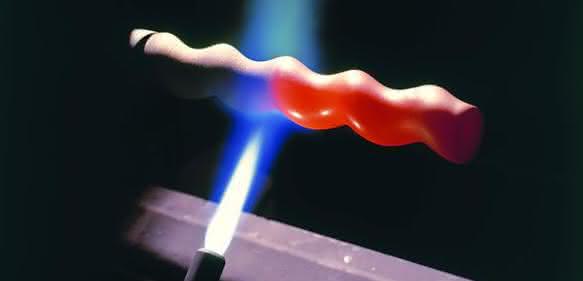
Wear and corrosion are the most common causes of failure in heavily stressed components. Internal bores, hydraulic cylinders or bearing seats in particular are subject to high wear due to continuous stress or abrasion by foreign bodies. With application-optimized repairs, Pallas from Würselen provides rapid assistance in the event of tool failure or breakage. The surface specialist can also save high-quality components from being scrapped by correcting machining or production errors. Depending on the condition and area of application of the components, thermal coating, hard chrome plating, electroless nickel plating or laser cladding are used.
Protection even where the going gets tough
Thermal spraying is often the process of choice for repairing rotationally symmetrical parts such as rollers, shafts or cylinders with layer thicknesses of up to 1 mm. The fast layer build-up makes it ideal for repair applications where cost-effectiveness is paramount. With thermal coating processes, Pallas offers a broad processing spectrum for repairing, regenerating or modifying individual parts or small and medium series. To protect the sealing seats and rollers from corrosion, the expert provides them with cost-effective coatings of low-melting metals that can be up to several millimetres thick if necessary. Hard metals such as tungsten carbide, chromium carbide or ceramic are used as wear protection.
To protect sealing and sliding surfaces against wear and corrosion, the company often chooses hard chrome, which has a high hardness with a low coating thickness. For other repairs, hard chrome coatings up to several tenths of a millimeter thick are used to ensure long machine service lives. As the subsequent grinding of defective fits, complex geometries or internal threads is very time-consuming, Pallas opts for an electroless nickel coating in these cases. As an electrolessly deposited layer, it builds up to the required dimensions with micrometer precision and achieves a hardness almost comparable to hard chrome. The coating is also suitable for subsequent changes to finished components, such as correcting fits that are too small or drill holes that are too large.
The internal machining of worn or defective components with small opening diameters, large machining depths or internal recesses poses a particular challenge. Pallas uses the special iClad optics for laser deposition welding of internal contours on components with difficult-to-access surfaces from an opening diameter of 50 mm. Thanks to the wide range of materials, from repair steels to pseudo-hard alloys, the surface properties can be specifically adapted to the respective load during internal contour processing by laser deposition welding with the special optics.
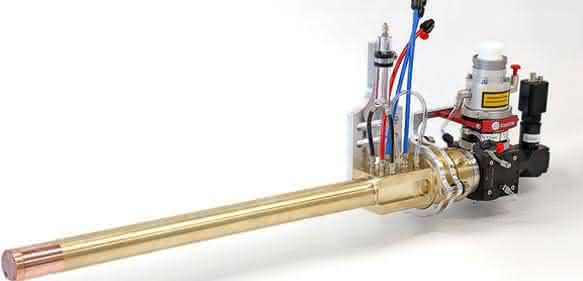
To process the defective surface, a narrowly focused laser beam melts a thin edge layer of the base material and the powder injected via a nozzle. In the resulting melt pool, the materials combine metallurgically to form a dense layer with minimal mixing. This allows CNC or robot-controlled layers and geometries in thicknesses from 0.1 mm to several millimetres to be welded on even in hard-to-reach areas. When processing internal contours, the immersion depth of conventional processing optics is severely limited by small aperture diameters. The special optics make it possible to correct the faulty design with a locally limited heat input. The iClad with a 35 mm processing head is used for this. The special optics also save the day when it comes to preventing 1,500 mm long hydraulic cylinders with an open pore from being scrapped. Despite the small opening diameter of 30 mm and the large processing depth, Pallas can coat the inner contour of the cylinder without leaving any pores.
Working in depth
The Neuss-based company Ruhfus System-hydraulik also benefits from this. Specializing in the customer-specific design and manufacture of complex hydraulic cylinders, the company needs a partner who can repair defects caused by material or machining errors and wear parts with high precision in a short space of time. Tolerances in the hundredths of a millimeter range are often required. Examples include tubes up to 15 m long for hydraulic cylinders with diameters of 400 to 500 mm and unit weights of up to 4 tons. To machine imperfections or internal grooves, only a small amount of heat may be applied to these components made of unalloyed structural steel so that the material structure does not change. At the same time, high precision is required.
Thanks to the integrated media supply, the iClad can process internal contours and blind holes with openings as small as 30 mm up to a depth of 500 mm. With an opening diameter of 50 mm or more, a screw-on taper can even be used to repair components up to 750 mm deep. This internal contour processing is made possible by the compact housing of the iClad, which contains all the components for beam guidance and shaping. The connection for the optical fiber and the supply lines for process media are located at the rear end of the optics. Active water cooling protects the optical components from overheating. An internal optical protection system prevents contamination or damage caused by particle deposits. In addition, the beam path is permanently purged with inert gas. For processing, the tube rotates around the fixed optics. Depending on the position of the work surface, the appropriate laser beam angle is selected so that even blind holes can be repaired.
Pallas selects the optimum technology for fast, efficient and cost-effective repairs based on the specific application requirements and general conditions, such as accessibility of the damaged areas or temperature sensitivity of the components. The wide range of systems, materials and processes available ensures that the customized solution is implemented within a short time. In an emergency, the company makes capacities available quickly, so that turnaround times of two days are not uncommon. If necessary, repairs can also be carried out on site at the customer's premises. In combination with the extensive range of services for pre- and post-treatment, customers from the plant and mechanical engineering, chemical, plastics and paper industries can therefore be sure of tailor-made solutions. am


You might also be interested in
Smooth cleaning
The K900 industrial robot cleans floors autonomously, without preparation time or programming effort - even where it is dangerous or even impossible for humans to do so. Lubricant-free linear guides, shafts, plain and flange bearings from Igus also...
 read more...
New pallet roller for the warehouse
Conveyor technology specialist Rulmeca is expanding its range of conveyor rollers for pallets and other heavy goods with the XPS series.
read more...ACE structural and crash dampers: Safety on the road 7
The seventh axis is used in manufacturing and production systems to make robots more agile and increase their reach. As an additional traversing axis, this linear axis brings robots quickly into the workspace or guides them precisely to parallel...
read more...Torwegge presents FlexO rollers
Visitors to the FMB - Supplier Fair for Mechanical Engineering can once again look forward to a new product at the Torwegge stand this year: the FlexO rollers.
read more...Koenig's discipline
AMF clamping technology pulverizes production times at the world's oldest printing press manufacturer Koenig & Bauer in Würzburg
read more...No damage on axis 7
The seventh axis not only makes robots in many production plants more agile, but also increases their reach. To prevent accidents from ruining this increase in productivity, Expert-Tünkers has been working with ACE shock absorber components for...
read more...Moving heavy loads easily
For a manufacturer of lift tables, the collaboration with Blickle has paid off in full. The wheel and castor specialist supplied castor solutions with the ErgoMove electric drive system.
read more...Support with the construction of a hot water tank
With the Hezinger BendingLine MG4R round bending machine, Hezinger Maschinen is supporting the construction of the hot water storage tank for the Rostock public utility company.
read more...When the spark ignites
The surface of car body parts in automotive engineering must be perfect. The basis for this are high-precision textured rollers that prepare the sheet metal parts for processing. Texturing machines process the rollers with high precision using...
read more...