

Specialist pack
Smart load carriers: making logistics transparent
As digitalization progresses, load carriers and transport packaging are also becoming increasingly intelligent. They are evolving from pure transport containers to cyber-physical objects that communicate with higher-level IT systems.
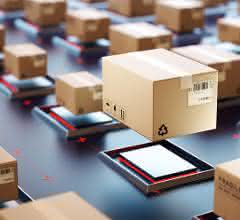
The Internet of Things (IoT) is encompassing ever more far-reaching parts of industry through the networking of objects within production and logistics. Equipped with modern sensor technologies and digital services such as cloud solutions, parts from the real world are connecting with virtual applications. Load carriers and transport packaging in logistics are also becoming cyber-physical objects in this way.
Sensors attached to or in load carriers such as crates or pallets record data such as temperature, humidity, vibrations, location data and product quantities removed. The data is forwarded to corresponding applications on computers, tablets or smartphones and evaluated in real time. RFID and NFC chips also ensure more effective protection against counterfeiting and theft. QR codes are also in widespread use today as a link between load carriers and the virtual world.
Tracking and tracing in real time
Sensors, chips and codes already allow logistics planners to track routes live and ensure that load carriers with the goods they contain arrive at the right place at the right time. Thanks to the transmitted data, those involved in the supply chain know about incidents and deviations from the plan at an early stage and can react quickly. Material planners are also aware of how many load carriers are in circulation at all times. This enables them to quickly identify and rectify any surpluses or shortages of load carriers at customers or service providers.
Such intelligent solutions play a decisive role, especially for automated transport and warehouse logistics. The digital extras offer added value for logistics companies and their customers if they can be connected to the IT systems of the respective companies. Another option is to give customers access to certain parts of their own service platform. This can be done via cloud solutions, for example. Such service systems enable companies to record and evaluate data on the current status of the supply chain, identify critical conditions and prevent disruptions in logistics.
Simplified material management
One example of cyber-physical load carriers are plastic pallets and crates, which use RFID or in-mold labeling to ensure that goods can be traced. In the latter case, the codes are permanently attached to the load carrier and therefore cannot be lost. However, QR codes on classic wooden pallets, crates and pallet cages also make them interactive. The communication can be read with various smart devices that are connected to a network.
Modern systems also offer interfaces for numerous other applications and can therefore also be linked to artificial intelligence (AI). For example, the Fraunhofer Institute IML presented an app for smartphones at Fachpack that makes it possible to count pallets using image recognition. This should make it much easier to exchange pallets and other transport packaging. Everyone involved in the supply chain then knows, for example, how many containers are in the warehouse, whether there are enough containers available or whether new ones need to be ordered and which products are on which load carrier.
The Fraunhofer Institute IIS is looking at a different aspect in the DProdLog research project: This involves the automatic reordering and tracking of Kanban containers in manufacturing companies. The smart containers record the fill level and are connected to a service platform. Logisticians can thus automate the recording of stock levels and the delivery of parts.
The use of intelligent load carriers makes logistics processes more transparent and efficient. As an effective tool against shrinkage or for the allocation of damage, costs can also be saved. In production, they use sensors to ensure that there is always a sufficient supply of material. Packaging and load carriers have thus long since expanded their functions as a protective and auxiliary tool and have become indispensable information carriers in the supply chain. as


You might also be interested in
ESTIA aims to strengthen Europe's cloud
New tech alliance for EU sovereignty
Twelve companies, including Dassault Systèmes, are founding the European Sovereign Tech Industry Alliance (ESTIA). The initiative aims to strengthen Europe's technological independence and define requirements for sovereign cloud services. The start...
 read more...
Deutsche Telekom and Nvidia launch one of Europe's largest AI factories
With the Industrial AI Cloud in Munich, Deutsche Telekom and NVIDIA are creating one of the largest AI factories in Europe. Companies can train AI models, carry out simulations and access 10,000 GPUs.
read more...Leveraging data potential with AI and streaming
Huge data treasures are still lying dormant in many manufacturing companies. And yet it is high time that these treasures were unlocked. There is often a lack of resources and capacity to make data usable in real time. Streaming production data can...
read more...More awareness of noise
Dematic offers solutions that are tailored to different cloud environments and reduce environmental impact through reduced material consumption and improved energy efficiency.
read more...Generative AI in the automation environment
The mechanical engineering and automation industry is undergoing profound change. This transformation is being driven by more volatile global trade, geopolitical crises and increasing market pressure, which demands greater agility, technological...
read more...Rigid data structures have had their day
The traditional data center is no longer the center of data. A hybrid cloud storage approach enables manufacturing companies to both meet the current requirements of data-intensive processes and future-proof their infrastructure.
read more...Software as a service in three stages
CIM Database Cloud is a new out-of-the-box solution from Contact for end-to-end digital product development.
read more...How production can benefit from AI
Together with AI technology, IIoT networking makes it possible to better control machine parameters and optimize quality with predictive quality. Downtimes and set-up times can also be further minimized. Cloud platforms also make these technologies...
read more...More expertise for digital engineering
Altair, a computational science and artificial intelligence (AI) company, has acquired OmniV, a technology from Michigan, USA-based software company XLDyn.
read more...