

Successful digitalization of the warehouse, part 1
Valid material master data as the basis for efficient material flow processes
When it comes to innovative warehouses and logistics centers, SSI Schaefer is a partner that can also supply and implement solutions on request.
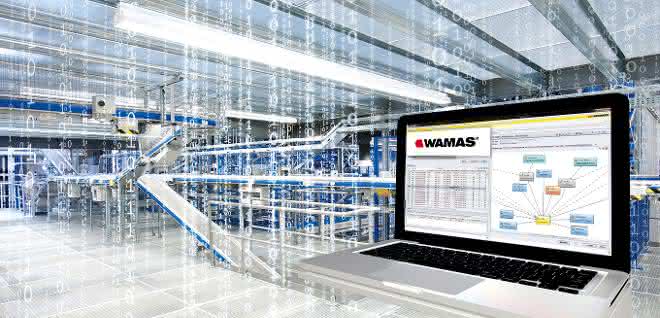
The comprehensive and high-quality modular product system and innovative services form the basis for customized complete solutions. A complete solution from SSI Schaefer generally also includes the migration of a considerable amount of data to the IT systems installed with the new warehouse. SSI Schaefer has the necessary know-how to transfer the data into a new system together with the customer and advises the warehouse operator on the importance of valid data and its benefits for sustainable, efficient operation of the warehouse and warehouse technology.
Since the beginning of IT, data has been processed into information in digital form on a numerical basis. The quality of the results has always depended on the quality and reliability of the input data and will continue to do so in the future. In addition, the underlying calculation model is of crucial importance, as it processes the input data into useful and efficient results. In order to continuously process even more data for even better warehouse operations, there is now no way around digitalization.
Even the most essential data, such as valid material master data, has enormous potential for managing a warehouse as efficiently and effectively as possible.
Generate valid material master data
The following questions can help to determine the quality and potential for improvement of the data:
- Are the containers used in the warehouse optimally adapted to the item sizes and the required quantities for the storage requirements?
- What is the possibility of (recurring) content/fill level checks based on known data?
- How high is the proportion of shortages (or overstocks) resulting from problems with quantity recording?
- Have any existing legal requirements (e.g. bans on storing certain goods together) been demonstrably observed at all times?
Proper, very precise warehouse management not only leads to highly cost-optimized storage, it also results in extremely reliable material master data.
Avoid inefficient warehousing
But what happens if not enough attention is paid to certain parameters in warehousing? What are the consequences of inefficient warehousing and the associated inadequate material master data?
- High costs due to container size not being matched to the replenishment quantity:
Replenishment containers that have already been opened but not completely emptied have to be returned to the large warehouse. The reason for this is that the incorrectly selected receiving container for the more efficient small parts warehouse cannot hold the quantities of the delivered container during repacking. - The risk of structural instability of the racking due to overload: Due to the lack of correct recording of article weights and the resulting lack of or errors in current load calculations, areas can become overloaded. However, you only notice this when it is literally too late.
- Multiple storage of the same item in different storage locations due to unrecognized duplicate and multiple entries: A comparison based on the manufacturer code associated with the item alone could save space.
- Damage to items due to a lack of appropriate indications of fragility or similar.
- Frequent selection of oversized shipping containers and enormous consumption of filling material during packaging.
- Spoilage of goods due to exceeding best-before dates or other maximum time intervals for storage.
- Destruction of goods due to a lack of data on special storage requirements (environmental conditions, electrostatic protection, etc.).
Observations show that undocumented "special processes" are often carried out informally due to the problems mentioned above: for example, an additional trip to the large warehouse to pick up missing quantities. Thorough and careful data maintenance can eliminate inefficient and cost-causing processes and significantly improve warehouse KPIs.
Scrutinize intralogistics processes and identify potential for optimization
In this case, it is incredibly important to create a certain awareness of optimization potential in the warehouse. This is because only the knowledge of this possibility of increasing efficiency encourages intralogistics processes to be questioned and subsequently optimized.
Warehouse operators who enjoy competitive logistics costs have this valuable know-how at their disposal. These warehouses enable, for example:
- Higher volume utilization through more efficient container use
- Automated reliable packing patterns and packing pattern calculations after dimensions and weight are correct for the optimization algorithms
- Automated pre-check of picked orders based on total weight thanks to reliable weight information for items
- Efficient replenishment processes based on current product categorizations and thus exact quantity determinations for the respective replenishment process
Reliable data as the basis for Industry 4.0
The question "To what extent is my warehouse prepared for Industry 4.0?" implies the question "How well is my data foundation prepared for Industry 4.0?". The implementation partner can only create the appropriate framework conditions for future-proof warehouse operations if the data quality is appropriate.
Markus Klug, Data Science & Simulation, SSI Schäfer


You might also be interested in
"We are clearly different from the competition"
The IT company 21unity offers a range of hardware and software services, as well as traditional services. Andreas Mühlbauer spoke to Managing Director Anja I. Gondolf about the company's appearance at the Hannover Messe, its services and future...
 read more...
Think digital, act local
When it comes to industrial damping technology, on-site advice is often very valuable for engineers and designers.
read more...Plagiarius 2024 negative prize
On January 26, 2024, the Plagiarius campaign awarded its dreaded "Plagiarius" negative prize for the 48th time to manufacturers and retailers of particularly brazen counterfeits and fakes.
read more...Spindel Full Service records second-best...
Maintenance as an economic success factor
Spindel Full Service, the spindle repair specialist from Baden-Württemberg, can look back on its second-best financial year in its history - with 15% growth compared to the previous year. And the further forecast also looks good.
read more...Thyssenkrupp and Novelis cooperate
Platform for the circular economy
With a platform for the circular economy in the automotive industry, the two companies Thyssenkrupp Materials Services and Novelis want to set new standards for the recycling of used materials. The open platform will enable access to larger...
read more...How production can benefit from AI
Together with AI technology, IIoT networking makes it possible to better control machine parameters and optimize quality with predictive quality. Downtimes and set-up times can also be further minimized. Cloud platforms also make these technologies...
read more...Marco Ghirardello takes the lead
Fanuc has appointed Marco Ghirardello (48) as the new President and CEO of Fanuc Europe. Ghirardello succeeds Shinichi Tanzawa, who has led the company since 2016 and will take on a new role at Fanuc's headquarters in Japan.
read more...Efficient robot monitoring
Microchips are installed almost everywhere - whether in smartphones, washing machines or cars. With increasing digitalization, the demand for semiconductors has been growing rapidly in all areas of the economy for years.
read more...Everything on one platform
Functional and powerful tools are essential for professional work on the construction site, in the workshop or when carrying out repairs.
read more...