

Digital twin
From the idea to the design
In recent months, many manufacturing companies have had to reorganize their processes and adapt to the "new normal". For Germany as an industrial location, this means breaking new ground and increasingly relying on digital structures. The solution: a virtual twin of the entire value chain to break down the boundaries between the virtual and real worlds.
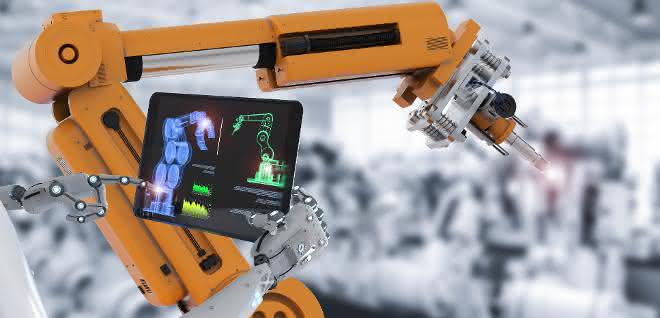
Virtual 3D worlds have long been part of our everyday lives - whether in computer games or films. What seems strange at first suddenly becomes tangible. More and more companies are taking advantage of this aspect and creating digital images of real objects. Virtual twins of components, products, production machines or entire production plants are complex constructs that are fed with data from the real world. The aim is to make the simulation as lifelike as possible in order to be able to draw conclusions about the later real image. They therefore have the potential to revolutionize the way in which products are developed and produced.
Many companies continue to rely on the validation of simulations in the real world for product development. However, the virtual twin makes it possible to simulate and analyze the entire value chain of a product - from development and production to operation and recycling - under realistic conditions. This also makes it possible to map entire supply chains and material flows holistically on the computer. Disruptions in the supply chain can thus be identified and optimized in good time and supply bottlenecks avoided.
This information is bundled on a data platform in the background, such as the 3DExperience platform from Dassault Systèmes. This allows the product to be put through its paces right from the initial development stages, thereby significantly shortening the development time. In addition, employees from different departments and at different company locations can work in parallel on the development of a product and make adjustments at any time. Specialist knowledge from the most diverse areas is pooled.
In the virtual test lab
Carrying out physical tests is a significant time and cost factor in product development. In order to achieve the desired result, many companies still stick to traditional, physical prototyping. This not only costs time and money, but also consumes valuable resources. After testing, these prototypes often end up as waste, just like rejects from production. With the help of a virtual twin, these test scenarios are shifted to the virtual space and prototypes are reduced to an absolute minimum. The product can be digitally tested in detail and any errors can be analyzed in real time. Thanks to a direct link with simulation software, corrections can be made immediately. The time saved means that products reach market maturity much faster. At the same time, resources are conserved to a large extent, making manufacturing processes more sustainable.
Development is far from over. The digital consistency of data makes it possible to accompany a physical product throughout its entire life cycle and to identify and implement adaptation options more quickly. Optimization of a product becomes necessary, for example, when customer needs change, new application scenarios arise or it has to be adapted to new environmental influences. As all data is stored in the virtual world, developers can directly access the entire design data and make adjustments during operation. This even makes it possible to present initial changes during on-site discussions with the customer. Manufacturers remain agile and can adapt their product flexibly and promptly to new market conditions.
Example from practice
Virtual twins have long existed not only for products. Entire production lines can also be simulated in the virtual world. French automotive supplier Faurecia has proven this. The company uses the 3DExperience twin in conjunction with the 3DExperience platform and the Delmia simulation software to find innovative solutions for the mobility of tomorrow. The 3DExperience Twin was used at a very early stage of the project: even before the development and production of the first automotive parts got underway, the company simulated the entire production line on the 3DExperience platform. This made it possible to identify at a very early stage which adjustments still needed to be made before real production machines were used. The bottom line was a significant reduction in production start-up costs. In addition, the use of a virtual twin gives Faurecia a decisive advantage for future agile business decisions that have to be made due to new market conditions.
Digitally into the future
At first glance, the switch to a fully digital value chain may seem challenging for many companies. In the long term, however, digital transformation is the key to success. Embedded in a holistic digitalization strategy, the use of a virtual twin helps companies to become more agile and innovative, as resources can be deployed in a more targeted manner. One thing is certain: the virtual twin will revolutionize the way products are developed in the future. After all, what may seem unfamiliar at first becomes tangible in the virtual world.


You might also be interested in
Plagiarius 2024 negative prize
On January 26, 2024, the Plagiarius campaign awarded its dreaded "Plagiarius" negative prize for the 48th time to manufacturers and retailers of particularly brazen counterfeits and fakes.
 read more...
Ivalua honors winners of the Generative AI...
AI-supported "add-ons" for buyers within 48 hours
Ivalua, provider of cloud-based spend management solutions, announced the winners and innovations of the first Generative AI Innovation Cup. The competition took place in December 2023. It was open to all Ivalua partners and employees - more than...
read more...Efaflex celebrates 50 years of high-speed...
The emphasis is on "fast"
Since day one, Efaflex has wanted to use new technologies as early as possible and drive progress in the industry. This year, the family business is celebrating its 50th anniversary under the motto "Fast Forward".
read more...Security of supply even during power outages
In the winter of 2022, Germany was worried about energy shortages. The drugstore retailer dm did not paint any horror scenarios, but nevertheless saw the possibility of controlled, temporary, regional power cuts (brownouts).
read more...Safety technology in mechanical engineering
Modules with new functions
Euchner's product highlights at EMO 2023 include the communication-capable solenoid interlocks.
read more...Transforming the paper industry towards climate neutrality
Together with partners from industry and research, Voith is developing a project for the optimization of energy and material flows in paper production. The aim of the research project is to develop a digital framework that enables effective process...
read more...Up to 95 percent less flue gas thanks to direct extraction
The requirements for occupational safety measures and safety technology are also constantly increasing in welding technology. The Technical Rules for Hazardous Substances (TRGS) stipulate that welding fumes and harmful substances must be extracted...
read more...Competitive advantages with large machines
Whether 3D-printed components for machines and systems, prototypes or aids for design: additive manufacturing is almost indispensable for modern companies in mechanical and plant engineering and automation if they want to play in the premier league.
read more...Transport technology from the modular system
Many transport tasks can be realized with the help of linear technology. Pre-configured solutions are available to simplify the interaction between the linear unit, motor, gearbox and controller. This minimizes the effort required for research and...
read more...