

Quality controls in production
Robots check car floor pans fully automatically
Quality control is one of the key processes in automotive production. Until now, however, many of these checks have only been carried out manually on a random basis - too complex, too costly and too time-consuming. The Canadian company Vista Solutions Inc. wants to change this. Together with MVTec Software GmbH, Vista has developed a solution that fully automates the measurement of floor pans.
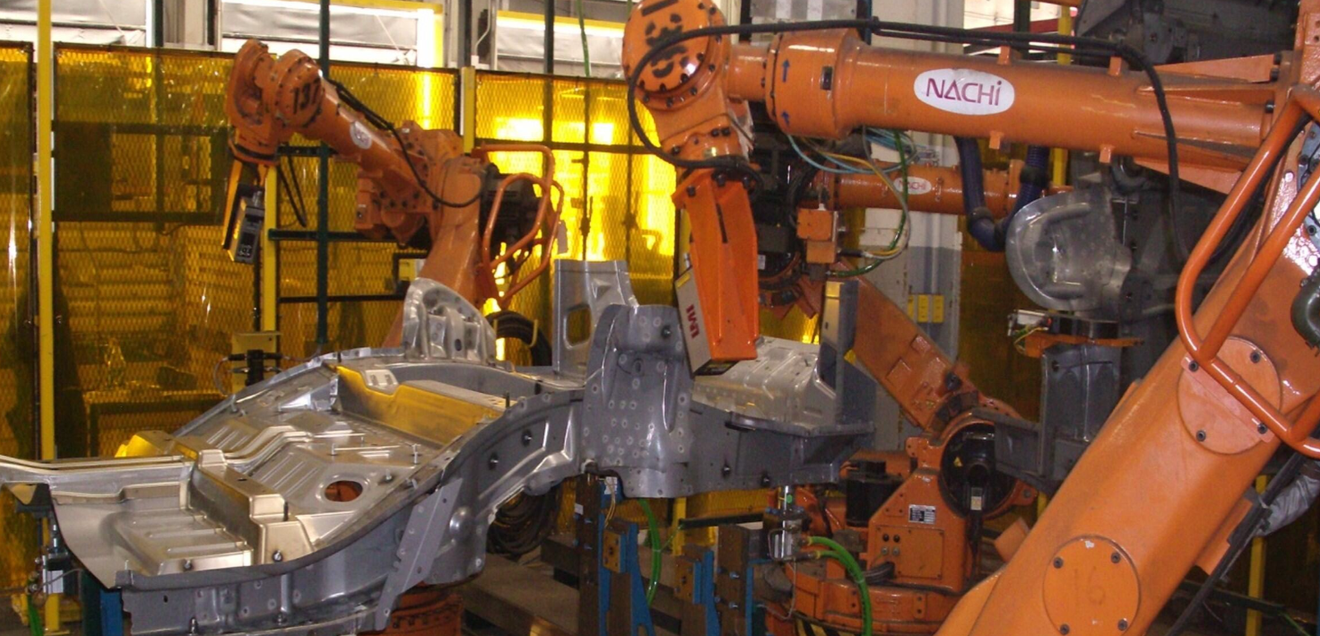
The technical basis for this is provided by processes with names that sound more like science fiction than factory floor: "Surfaced-Based Matching", "Sheet-of-Light" or "Edge Extraction". These are methods of industrial image processing that can be used to automate production processes and make them more precise.
Fully automated and real-time inspection of components using machine vision and robotics
In this specific case, it is a matter of so-called True Position Measurements (TPM) on floor pan assemblies for the automotive industry. Precisely defined features within the floor panel and their spatial positions are crucial here. Previously, these measurements were carried out manually by employees. Now two robots take over the process.
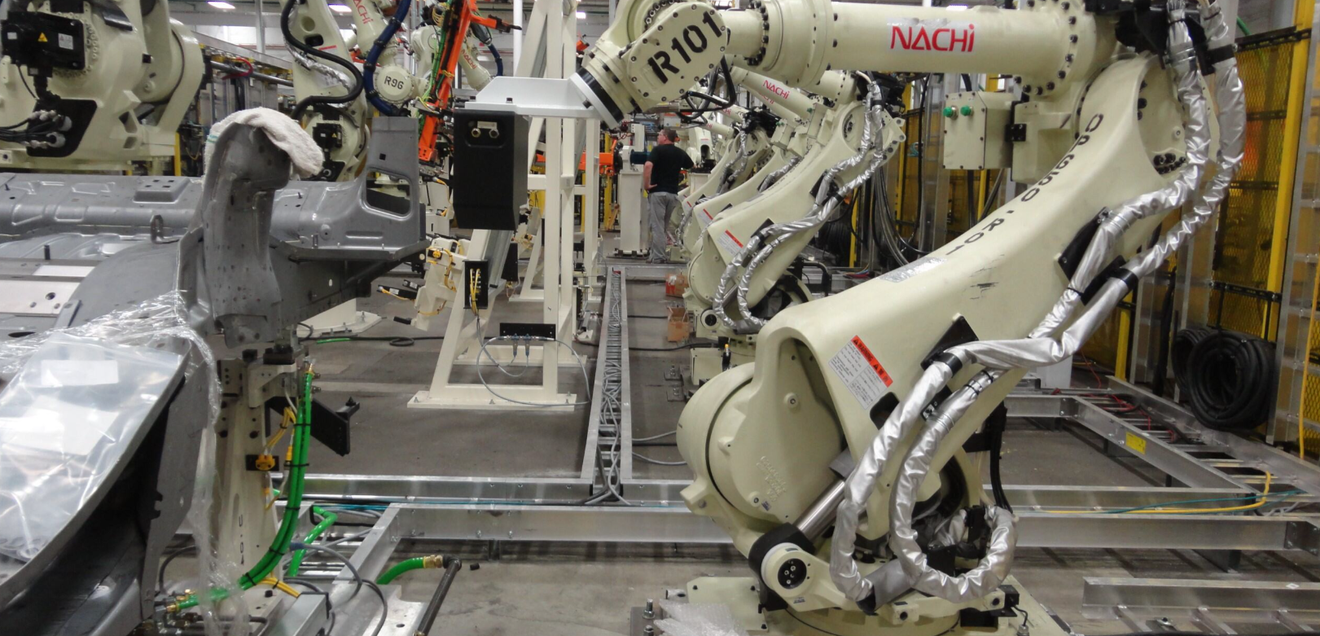
Camera systems with ring lights and laser projectors are attached to the gripper arms of the two 6-axis robots. They generate images and 3D data of the relevant features. The 'MVTec Halcon' image processing software analyzes the images and measures the distances, depths, thicknesses and positions of the components, among other things. At the same time, the software controls the movements of the robots.
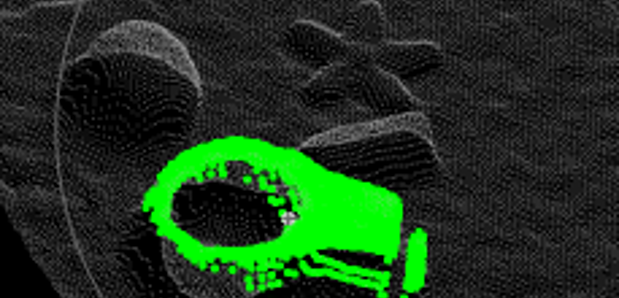
According to Vista, this has created a fully automated process that has never been seen before in this form anywhere in the world.
Vista Solutions, headquartered in Windsor, Canada, with additional locations in Detroit and Querétaro, has been developing machine vision solutions for the automotive industry, road safety and the defense sector since 2003. The current application shows how important machine vision has become in manufacturing. The technology is regarded in the industry as a kind of "hidden champion" of automation: it works around the clock, delivers consistent results and relieves employees of monotonous routine tasks.
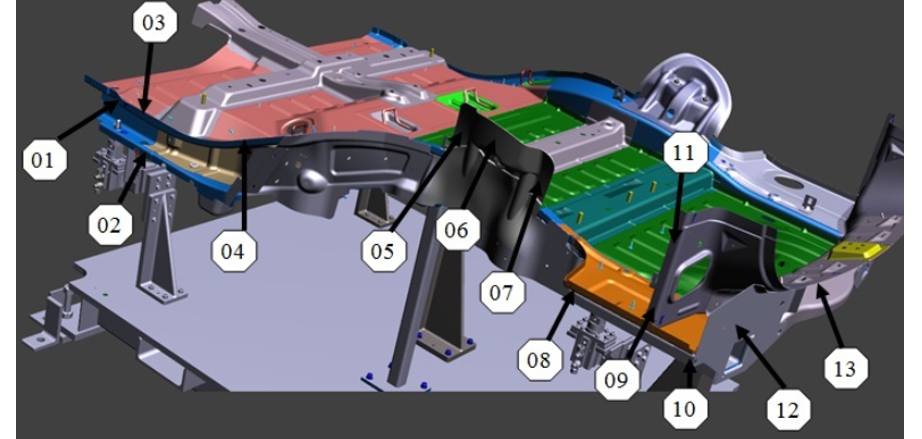
The so-called Flex-Inspect Platform from Vista is used. It was integrated directly into the production process as an inline solution at an automotive supplier. The aim was to achieve a fully automated measurement process within the production cycle time - something that would not have been possible manually.
"To achieve these goals, it was clear that a solution could only work on the basis of machine vision. The technology offers great flexibility, fast process integration and, unlike sensors, still works reliably even if the camera is not positioned 100 percent accurately," explains Peter Denzinger, Vice President of Engineering at Vista.
The so-called hand-eye calibration plays a central role here. It synchronizes the coordinate systems of the robot and camera system. Only then can the robot determine its exact position in relation to the component and laser.
This is made possible by the software's extensive library. According to MVTec, it contains more than 2,100 operators for different image processing tasks.
"We have been working with MVTec since 2008. In this case, we opted for MVTec's software because it's the only one that gives us the necessary range of functions and compatibility," says Peter Denzinger.
In the production process, the robots move independently of each other to defined measuring points
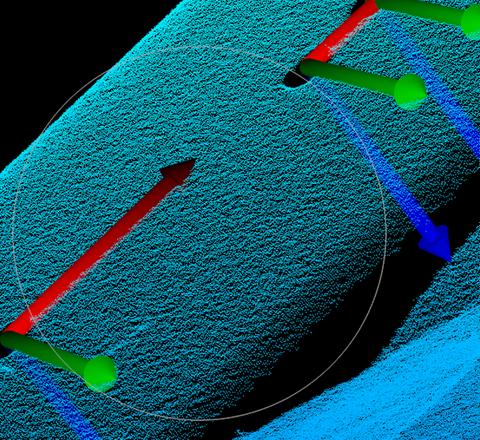
During the production process, the robots move independently of each other to defined measuring points. The software determines the exact positions of relevant features in real-world coordinates. The evaluation is then carried out: "passed" or "failed". To do this, the measured values are compared with defined tolerance limits - in real time. The various image processing methods perform different tasks. "Surfaced-based matching localizes relevant objects in the image with particular precision. "Sheet-of-Light reconstructs the object surface using laser lines and enables height measurements. "Edge extraction, on the other hand, detects edges and lines with sub-pixel accuracy.
This process is repeated for each individual feature of the workpiece. Once all measurements have been completed, gauge measurements or 3D offsets can also be calculated.
"One of the great strengths of MVTec Halcon is certainly its large library. With over 2,100 operators, we can offer the right method for different activities. This increases flexibility enormously for companies, as they can carry out many different activities with Halcon," says Jan Gärtner, Product Manager Halcon at MVTec.
Potential for machine vision in industry
The solution has now been in use for a complete product cycle. According to Vista, all strategic goals have been achieved - especially the increase in component quality.
"We were in close contact with the customer even after commissioning. That's why we know that all strategic goals have been achieved. The quality improvement in particular gives the customer an advantage over the competition. In the future, we expect to see growing areas of application in the automotive industry in particular, especially for inspection solutions that work with artificial intelligence. With Vista's Flex-Inspect Platform in conjunction with MVTec Halcon, we are already very well positioned for this," explains Peter Denzinger.
MVTec also sees great potential for machine vision in industry. "Vista's solution shows how variably machine vision can be used and what advantages it offers customers. The fact that employees are relieved of monotonous work and production is fully automated, often even faster and more accurately than before, gives companies enormous competitive advantages," says Jan Gärtner.


You might also be interested in
Quality inspection with fast measurement workflows
Hexagon's Stationary Division presents Maestro, a next-generation coordinate measuring machine (CMM) that transforms quality inspection with fast, networked measurement workflows. The solution has been developed from the ground up with the...
 read more...
Greenhouse gas strategy with substance
Energy-intensive industries are facing major challenges: Complex supply chains, fossil raw materials and processes that are difficult to decarbonize make the path to greenhouse gas neutrality more difficult. A guest article by Dr. Gabriela Espinosa...
read more...Process monitoring and fault detection
Cameras ensure quality during laser melting
Powder bed-based laser melting (PBF-LB/M) opens up new possibilities in additive manufacturing. Modern camera systems provide crucial process data to further increase quality and efficiency.
read more...Vision Sensor is three times faster than its predecessor
The 'CS-62' vision sensor from di-soric is around three times faster than its predecessor, the 'CS-60'. In combination with the 'nVision-i 25.1' software, it enables image processing solutions that were previously reserved for smart cameras.
read more...Thermal imaging cameras for quality control
Automated thermal imaging cameras are often suitable for quality control applications where temperature plays a role. However, while there are various solutions on the market for slow processes, it is challenging to select a camera that reliably...
read more...Zoom-capable structured light scanner
Hexagon will be presenting products from its range of measuring machines and measuring robots at Control. These include SmartScan VR800 (image), the first zoom-capable structured light scanner with optical zoom projection and two stereo cameras,...
read more...Precise 3D surface inspection and defect detection
Reflectcontrol sensors from Micro-Epsilon use phase-measuring deflectometry to precisely analyze reflective surfaces.
read more...Control 2025
The 37th Control - International Trade Fair for Quality Assurance will take place in Stuttgart from May 6 to 9, 2025.
read more...X-ray and CT inspection solutions for industry
Waygate Technologies will be showcasing its portfolio of industrial X-ray, computed tomography (CT) and ultrasonic inspection technologies and a wide range of services at Control - including an exclusive preview of a new CT system that will be...
read more...