

Robot applications
Robots and their areas of application
Robots are becoming increasingly popular in a wide variety of applications. In industry, they have become an integral part of intelligent, networked production and assembly. But which robot is best suited to which application? By Peter Lange
According to a recent study by the International Federation of Robotics, there will be around 3.05 million industrial robots worldwide by 2020 - and the trend is rising. Their most important advantages are undoubtedly obvious: automated production helps to improve processes, reduce the workload of employees, save costs and create competitive advantages. But which robot types and kinematics are suitable for which process? Which areas offer the greatest earnings potential for robot automation and what significance does image processing have? The following explanations provide answers.
Selection aspects for the right kinematics solution
Important factors when choosing a robot are range, load capacity, movement requirements and interaction with image processing. First and foremost, the required load capacity of the robot is important. Often, only the product that is to be processed is taken into account. However, tools or grippers must also be taken into account. Another point is the movement requirements. Not only the simple movement of a pick-and-place application plays a role here, but also existing interference between the robot and its kinematics as well as other parts that could move within the cell.
The type of part production and the required throughput rate should also be taken into account. How reproducible must the robot be? It is important to note that robot manufacturers often talk about repeatability, whereas engineers tend to look at this from a precision point of view. The repeatability of a robot outlines the ability (once learned) to return to the desired position. Precision is about the ability to digitally input a specific position and move the robot "precisely" to that point in space. This includes both an axis offset and other digitally entered movement parameters and often varies within the specified working range of a mechanical unit. A good understanding of process requirements together with the performance of a particular robot solution therefore requires careful assessment.
The most important robot types
Robot kinematics can be divided into four main categories: Cartesian, SCARA, articulated arm and delta/parallel.
Cartesian robots: Cartesian kinematics are highly configurable, as this type of kinematics includes everything from degrees of freedom to a single axis to multiple axes of movement. Given the simplicity of this kinematics, the configuration and adjustment of the cycle or length are relatively simple compared to the other models. Cartesian robots have several optimized drives for high performance and precise movements. These drives are either a ball screw mechanism or a belt-driven system. The Cartesian robot enables the assembly of small parts up to an extremely long part transfer, such as overhead cranes found under the ceiling in production halls.
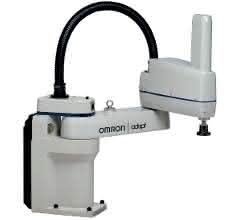
SCARA robot: The structure of a SCARA robot (Selective Compliance Assembly Robot Arm) is similar to a human arm. It is also known as a "horizontal articulated arm robot". The SCARA robot offers a cylindrical working area and works significantly faster than Cartesian and articulated robots. SCARAs are suitable for pick and place applications and other handling processes. They deliver a repeat accuracy that is often significantly higher than that of articulated robots. They are normally used in applications with a lower load capacity of less than ten kilograms. Examples include applications in assembly, packaging or material handling.
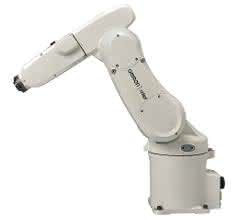
Articulated arm robots: The third group of robots comprises articulated arm robots, also known as jointed arm robots. They have a spherical working area. Due to their joints and the higher number of degrees of freedom, their articulated arms offer maximum flexibility. This is the largest robot segment and offers numerous solutions - from table-top robots to very large machines. Articulated arm robots are often used in process-intensive applications such as welding, painting, adhesive or sealant application, assembly or material handling, where they can make full use of their articulation and dexterity.
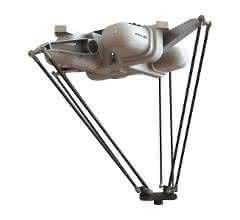
Delta/parallel robots: Parallel robots have a cylindrical working area and are often used in applications where the products remain on the same surface during the pick & place process. Motors and low-mass joints built into the base allow extremely fast acceleration and thus increase the throughput rate. The parallel robot is an overhead assembly solution that maximizes access options and reduces floor space. These types of robots are specially designed for high-speed applications and lightweight products. Thanks to the absence of moving cable harnesses and cyclic loading, the parallel robot requires very little maintenance.
Flexibility with image processing
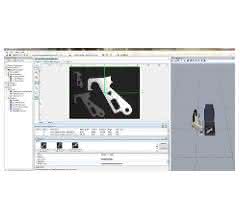
Machine vision is increasingly being used to improve the productivity of robot automation in all industrial sectors. Machine vision systems offer tremendous flexibility for applications that do not require fixtures or pallets for part placement. Machine vision allows the system to take a picture, calculate the placement and orientation of the part in question, and guide the robot to the part with a calculated robot-to-camera transformation achieved through an automated calibration process. The use of a vision system increases flexibility and reduces costs as the parts do not need to be fixed. They can be presented to the robot at random without having to align them in advance or place them on a pallet, which also saves costs. These systems often include a tracking function that enables the robot to pick up parts from a moving conveyor belt. This further optimizes the production process. Robot-integrated image processing makes it possible to inspect the parts during the machining process. This allows inspection or quality control to be carried out in parallel with the machining process, which in turn reduces overall cycle times and increases throughput.
The future of robots
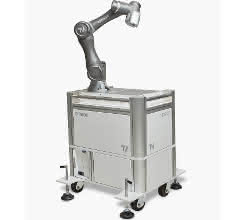
Constantly changing consumer trends are leading to ever shorter product life cycles. In future, manufacturing companies will therefore need production lines that are designed for frequent product changes. In addition, there is a growing shortage of skilled workers, which is why production companies are moving towards automating simple and monotonous work processes, such as assembly, mounting or checking, so that employee capacities are freed up for more creative tasks.
In the course of Industry 4.0, classic industrial robots are being further developed into the new generation of "cobots". Collaborative robots that work safely with humans play an essential role in flexible manufacturing. Modern collaborative robots (cobots) can also be integrated into mobile robots. One example is the intelligent LD series from Omron. These mobile robots close a gap in the robotics market for applications where the focus is more on flexibility than speed.
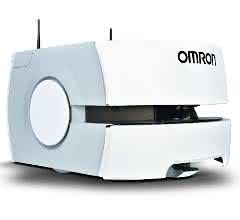
Cobots are designed to work directly with humans within a defined collaboration space. They are used in a wide variety of industries. Their tasks range from simple pick-and-place applications in parts handling, sorting and palletizing to machine loading, picking, packing and testing.
The use of artificial intelligence is also becoming increasingly important. AI at machine level (at the edge) is crucial for real-time applications. Production lines and machines are monitored with real-time sensors and data is collected, processed and evaluated at high speed to quickly detect anomalies. This approach offers high flexibility and fast response times.
The author: Peter Lange, European Fixed Robotic Team, Business Development Manager at Omron Electronics.


You might also be interested in
Helu makes its first trade fair appearance under a new brand name
Helu Kabel will be presenting itself as Helu for the first time at Hannover Messe 2026, showcasing system solutions, Heluchain cables and new industrial luminaires.
 read more...
Strategic realignment with brand relaunch
In future, Helukabel will trade as Helu
The Helukabel Group is parting with part of its name: in future, the company will only operate under the Helu brand. With this step, the specialist for electrical connection technology is underlining its strategic development from a classic cable...
read more...Modular plant construction for corrugated board
Insight into the production of corrugators at BHS Corrugated: Automated, modular and equipped with Helukabel components.
read more...Best quality for the steel
Conditions in the steel industry are harsh and inhospitable. The machines used must be able to withstand the demanding environmental conditions in order to deliver the best quality at all times.
read more...If the standard cable is not sufficient
Lapp offers cables for countless applications - but not for all of them. From time to time, the developers have to modify a standard cable or develop a special cable.
read more...Slight decline in sales, strong investments
The Lapp Group has not been spared from the weakening global economy. However, the company only recorded a slight loss in the past 2024 financial year.
read more...Electrical connection technology
Cables and wires for industrial automation
Heukabel offers system solutions for cable routing from a single source. The subsidiary EKD Systems specializes in tailor-made cable drag chains made of steel, stainless steel and plastic, which are used in moving machines and systems as well as in...
read more...Lapp relies on Ultramid from BASF
Mobile charging of electric vehicles
The automotive industry is currently undergoing the biggest transformation in its history. The boom in battery electric vehicles in particular is presenting the industry with major challenges. Lapp, as a supplier of cables and connection...
read more...Cable handling application
At this year's Motek, ArtiMinds Robotics is showcasing a robot-based automation solution for the sensor-assisted assembly of flexible cables in connector housings.
read more...