

Digital transformation
Retrofit - an opportunity for the future
The good thing about challenging times is the return to old virtues. Many a company is rediscovering its old inventive spirit, which was born out of a lack of economic opportunities and has been lost over the years. A new machine is not always the optimal solution. A retrofit often makes more sense.
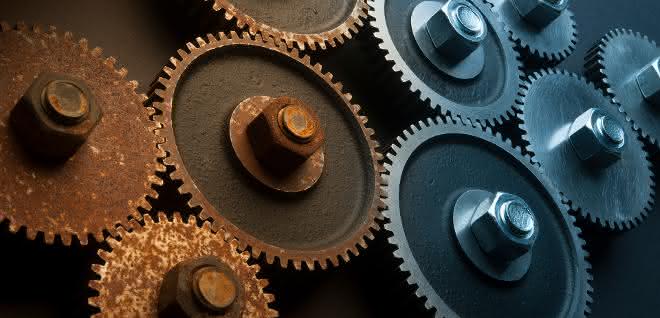
Retrofitting is the trend. For many SMEs, retrofitting and upgrading existing production systems seems to be a less risky option than purchasing a completely new machine or system. A retrofit not only extends the service life of the system, but is also more cost-effective than a new purchase. For example, productivity and energy efficiency can be increased to a certain extent. Another advantage is the reduced need for training, as the employees are already familiar with the technology and only need to be instructed in the new components.
In addition, the knowledge gained from experience remains in the company, as every machine "ticks" slightly differently. Although the German Council of Economic Experts [1] estimates GDP growth of 3.6% for 2023 to be quite positive in view of the current global situation, it also points to uncertainties, particularly in the energy supply. Even in light of the renewed reluctance to lend to SMEs (see Kfw [2] in July 2022), retrofitting appears to be a sensible strategy for the foreseeable future.
At the same time, retrofitting offers many companies a great opportunity to get a better grip on their production facilities, to position themselves much more sustainably and even to explore possible new business models. "Digital" retrofitting is the evolutionary, organic entry into Industry 4.0. By retrofitting old systems with new sensors - even without major intervention in electronics and mechanics - more data can be collected. This data serves a variety of purposes, depending on how it is used and evaluated. The basic idea behind a digital retrofit is to bring more transparency to production.
However, companies cannot expect a quantum leap in productivity without major technical changes - but thanks to a digital retrofit, new strategies can be developed and more efficient production processes established.
Entry can take place in stages. In the first phase, it is easy to achieve short-term goals. These include, for example
- Determine the operating states of machines using the sensors
Determine capacity utilization - Install piece counters to better estimate the production time of orders
- Visualizations based on real data - directly on the machine or virtually
However, the medium to long-term goal of a digital retrofit is high quality in production and for the entire company. Desirable development stages are, for example:
- Predictive maintenance: Thanks to the machine data read out and corresponding artificial intelligence (AI) methods, problems in the machine or system can be detected at an early stage and production downtimes avoided.
- Determining the carbon footprint: If machines provide more data, the carbon footprint of products or an entire factory can be determined in conjunction with appropriate software and an integrated ERP. The European Commission's Corporate Sustainability Reporting Directive (CSRD [3]) is also expected to become relevant for SMEs from 2026.
- Optimizing the supply chain: In future, exchanges with companies within the supply chain (downwards and upwards) will take place via clouds. Here, too, it is worth getting started with sensor data in cloud-enabled applications in order to make production more fluid overall and present yourself as a partner of the future.
Achieving the above-mentioned evolutionary stages can have a lasting impact on the individual company - triggered by a few sensors on old machines. Consequently, every company is well advised to take this path with sufficient foresight. While a sensor is quickly attached to a machine, legal implications must also be considered beforehand.
If a machine is extended by an Industry 4.0 retrofit, it is necessary to check whether safe operation of the machine is still guaranteed in accordance with the Occupational Health and Safety Act, the Ordinance on Industrial Safety and Health and the Product Safety Act. Interfering with the machine's existing control cabinet can potentially cause problems with CE marking and occupational health and safety. If human operator data is collected via the sensors, the works council must also be consulted. The less invasive a digital retrofit is, the fewer risks it entails.
Despite all the fascination with the possibilities of sensor technology today, it is important to define what is to be achieved before every project. The following questions must therefore be answered in the retrofit project exposé:
- What are the relevant influencing parameters? Should limit values be defined?
- What should be measured and what should be achieved with the recorded data?
- What does the provision for higher-level systems in the automation or supply chain look like?
However, a great deal of strategy and experience is required to achieve the aforementioned leaps in development. Important industry standards, such as data flow and exchange, play a central role in this. However, companies do not have to start from scratch here. In the meantime, associations and organizations have been working intensively on Industry 4.0 and the relevant industry standards. The Industrial Digital Twin Association (IDTA) [4], for example, is an important point of contact. It was founded by the German Engineering Federation (VDMA) and the German Electrical and Electronic Manufacturers' Association (ZVEI) together with Bitkom and 20 companies from the electrical and mechanical engineering industries, the software sector and other users as a user organization for the digital twin in the context of Industry 4.0.
The digital twin of a machine and the closely related Asset Administration Shell (AAS) are the central cloud strategies for implementing a digital transformation. In addition to associations and relevant communication standards such as OPC UA or MQTT, there are also user associations such as the Open Industry 4.0 Alliance [5], which are working on the practical implementation of such standards with the aim of creating a networked factory.
So it shows: In the midst of difficult circumstances for the industry, medium-sized companies in particular can now embark on a journey into the future with simple means. The moonshot is possible and can be achieved economically by means of successive "carrier stages".
[1] www.sachverstaendigenrat-wirtschaft.de/fileadmin/dateiablage/Konjunkturprognosen/2022/KJ2022_Gesamtausgabe.pdf
[2] www.kfw.de/%C3%9Cber-die-KfW/Newsroom/Aktuelles/Pressemitteilungen-Details_719168.html/
[3] eur-lex.europa.eu/legal-content/DE/TXT/?uri=CELEX%3A52021PC0189
[4] industrialdigitaltwin.org/
[5] openindustry4.com/


You might also be interested in
ESTIA aims to strengthen Europe's cloud
New tech alliance for EU sovereignty
Twelve companies, including Dassault Systèmes, are founding the European Sovereign Tech Industry Alliance (ESTIA). The initiative aims to strengthen Europe's technological independence and define requirements for sovereign cloud services. The start...
 read more...
Deutsche Telekom and Nvidia launch one of Europe's largest AI factories
With the Industrial AI Cloud in Munich, Deutsche Telekom and NVIDIA are creating one of the largest AI factories in Europe. Companies can train AI models, carry out simulations and access 10,000 GPUs.
read more...Leveraging data potential with AI and streaming
Huge data treasures are still lying dormant in many manufacturing companies. And yet it is high time that these treasures were unlocked. There is often a lack of resources and capacity to make data usable in real time. Streaming production data can...
read more...More awareness of noise
Dematic offers solutions that are tailored to different cloud environments and reduce environmental impact through reduced material consumption and improved energy efficiency.
read more...Generative AI in the automation environment
The mechanical engineering and automation industry is undergoing profound change. This transformation is being driven by more volatile global trade, geopolitical crises and increasing market pressure, which demands greater agility, technological...
read more...Rigid data structures have had their day
The traditional data center is no longer the center of data. A hybrid cloud storage approach enables manufacturing companies to both meet the current requirements of data-intensive processes and future-proof their infrastructure.
read more...Software as a service in three stages
CIM Database Cloud is a new out-of-the-box solution from Contact for end-to-end digital product development.
read more...How production can benefit from AI
Together with AI technology, IIoT networking makes it possible to better control machine parameters and optimize quality with predictive quality. Downtimes and set-up times can also be further minimized. Cloud platforms also make these technologies...
read more...More expertise for digital engineering
Altair, a computational science and artificial intelligence (AI) company, has acquired OmniV, a technology from Michigan, USA-based software company XLDyn.
read more...