

Interview with Eddie Goodwin, Enterprise Ireland
"Learning from each other is crucial to success"
Since 1998, the Irish state organization for economic development and cooperation, Enterprise Ireland, has been supporting Irish companies in developing and maintaining business contacts worldwide.
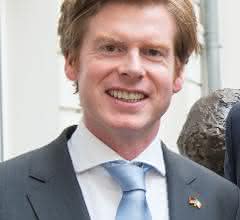
Germany plays an important role as Ireland's third largest trading partner. Andreas Mühlbauer spoke to Eddie Goodwin, Manager for Germany, Austria and Switzerland at Enterprise Ireland, about economic cooperation between the two countries and the impact of Brexit on the Irish economy.
SCOPE: Mr. Goodwin, after the Irish economy suffered a severe slump in 2009 and 2010 in the wake of the financial crisis, it has been on a steady and solid upward trend since 2012. This applies not only to the gross domestic product, where financial and investment effects are particularly noticeable in Ireland, but also to the real local economy, reflected in the so-called gross national product. The unemployment rate is also falling. How did this positive development come about?
Goodwin: Ireland has learned from the experiences and mistakes of the years in which the Irish economy has struggled. The economy is heavily dependent on exports as its own market is small. Ireland has always been outward looking in terms of trade. Therefore, Irish companies have had to think outside the box and prove their competence in international markets. Consider that in 1962, when Ireland opened its first trading office in Germany, the value of Irish exports was 7 million pounds (8 million euros) and the value of trade between the countries today is 15 billion euros - including 8 billion euros worth of Irish exports to Germany. Today, it is chemicals, electronics and medical devices that show how competitive innovative Irish companies have already become in a number of sectors.
Large companies from all over the world play an important role in the Irish economy and this is internationally recognized. However, it should not be forgotten that small and medium-sized enterprises are equally important. In fact, more people in Ireland are employed by SMEs than by multinationals. They also bring jobs to all regions of Ireland. Their innovation, adaptability and export capability have been instrumental in helping Ireland to bounce back quickly in recent years, creating over 200,000 jobs.
SCOPE: What importance do you attach to Germany as a business partner for Ireland, and in which sectors is there a particularly lively exchange?
Goodwin: Germany is Ireland's third largest export partner after the UK and the USA and is therefore a very important economic partner. In 2017 alone, goods worth 8 billion euros were exported to Germany.
However, we very much see trade as a two-way street for mutual benefit. There are many German companies that have established themselves in Ireland. At the same time, many Irish companies are establishing themselves in Germany. Around 12,000 Irish people are employed by German companies. And 14,000 Germans work for Irish companies in Germany. This cooperation is extremely important for both sides. It allows both Germany and Ireland to get the best out of development - especially when it comes to the exchange of knowledge and experience. We can see this very clearly in the fields of mechanical engineering, construction and agricultural technology, but also in software services.
A prime example in mechanical engineering is Burnside Eurocyl, which supplies the German construction industry with hydraulic cylinder technology. Another company that is setting a good example in medical technology is Aerogen. The company is based in Düsseldorf and supplies the German healthcare industry with respiratory technology.
SCOPE: What role does Enterprise Ireland play in economic cooperation?
Goodwin: Enterprise Ireland acts as a window to innovation and industry in Ireland for German companies and supports Irish companies in their search for partners and customers. In short, we bring German and Irish companies together to create mutually beneficial partnership opportunities. After all, cooperation and active knowledge exchange are crucial to the success of both countries. This is based on the good relationship that has existed between the two countries for many years. We support Irish companies in identifying the relevant sectors and companies in Germany and establish contact. We offer our Irish companies access to our network, develop market plans together and arrange introductions between German and Irish companies. Currently, 500 companies from various industries count on our support in the German market.
SCOPE: In which sectors does Enterprise Ireland see the greatest potential for start-ups, and how do you support them?
Goodwin: In Ireland, we support over 200 start-ups from various sectors every year. Our range of services is very comprehensive, from funding and management support to launching into global markets. Many of our clients say that while the funding they have received from Enterprise Ireland has been helpful, the non-financial support has proved even more valuable. This includes, for example, introducing experts, buyers and potential customers to the companies. Start-ups in the information and communication technology and medical technology sectors are particularly exciting in Ireland, as they have grown very rapidly. In our support, however, we do not pay attention to which sectors the start-ups come from, but rather examine their innovation potential. We even have our own program for this, for which we select so-called "high potential start-ups". These are internationally oriented companies with a sales potential of at least one million euros within three to four years of their foundation. During the first eighteen months, we work with them to validate their services and products, support their management and prepare them for international growth.
SCOPE: Everyone is talking about Brexit. Are you too? What does Ireland need to prepare for in terms of cooperation with its second largest trading partner, the UK, and how can the associated difficulties be overcome?
Goodwin: Of course, Brexit is also a big issue for us. The whole Brexit situation presents us with challenges in many areas and brings with it numerous considerations. As Ireland's direct neighbor and important trading partner, the UK is traditionally the first port of call. Two billion euros worth of goods are traded between Ireland and the UK every week. Some local businesses are dependent on the UK to a certain extent. In recent years, this dependency has already been gradually reduced - not least through partnerships with other countries such as Germany.
The Irish government recently set up a Brexit fund worth 300 million euros. It is intended to support companies that could get into difficulties as a result of Brexit. We at Enterprise Ireland also want to offer companies the best possible cushioning and have therefore set up a "Brexit Unit". This is specifically designed to educate our clients and prepare them for all eventualities. We use a Brexit Score Card to check the extent to which they are affected. We are currently very focused on stabilizing exports to the UK and at the same time diversifying companies into other markets. The eurozone is the most important target area for us, and the German market - as the European power plant industry - is the most important target market. We advise companies on which markets are suitable for them and help them to overcome language barriers and cultural differences.
SCOPE: How will this affect trade with other European countries and cooperation between companies?
Goodwin: On the one hand, we want to stabilize exports with the UK. On the other hand, we also want to conquer new markets to ensure market diversity. That is why it is so important right now that the 26 states that remain in the EU work together more closely and better than ever.
Our goal is to increase exports to the eurozone by 50 percent by 2020. That is ambitious, but feasible. The EU in particular offers many advantages due to its logistical proximity and lack of trade borders. Ireland is a trustworthy trading partner when it comes to international regulations and laws. Compliance with regulations, norms and standards is of immense importance, especially in light of Brexit. In these challenging times, there is a great opportunity for the European partner countries to learn from each other for the mutual benefit of the industry.


You might also be interested in
Protection against electrostatic discharge
StoFloor ESD KU 614 from StoCretec: dissipative flooring with the latest technology meets all ESD standards, is economical, extremely durable, mechanically and chemically resistant. The surface can be adjusted to be slip-resistant. The system is...
 read more...
Cables and wires from Helukabel
Food cultivation on a new level
Vertical farming - cultivation in multi-storey greenhouses - is considered one of the most exciting trends in food production. One of the pioneers in this field is the Romanian start-up Ultragreens. The company relies on solutions from Helukabel to...
read more...Further training for specialists to become security experts
With the "CESA - Certified Expert for Security in Automation" qualification, automation expert Pilz offers a two-day expert course designed to provide participants with compact security knowledge in line with the latest standards.
read more...Meaningful data on the service life of the seal
Seals prevent substances from penetrating or entering technical components. The intelligent seals from Freudenberg Sealing Technologies can significantly expand this core task in the future: the seal itself is also a sensor and becomes a "smart...
read more...Online stud configurator according to drawing
For standard bolts, with head, thread or hole
For standard bolts, with head, thread, bore or as a version with recess, mbo Osswald configurators map the standard specifications, are very easy to use, take a lot of work off the user's hands and save a lot of time.
read more...Safe palletizing with the Cobot
Verla-Pharm's medicinal products and food supplements have been available for decades. Ever-increasing throughputs result in ever-increasing logistics costs, whereby optimum utilization of the available production space is necessary.
read more...The tiger among processors
Since the move towards the Industrial Internet of Things (IIoT) and Industry 4.0 has picked up speed, processor boards and modules must be able to process exponentially growing amounts of data.
read more...VDWF publishes "Sustainability Compendium"
Nowadays, nobody can avoid "sustainability": In addition to a far-reaching presence in the media, it is also becoming increasingly important for companies in the tool and mold making industry to develop and implement appropriate concepts.
read more...More transparency and synergies with QM software
Weber, manufacturer of wood and metal sanding machines and extruders, has reorganized its quality management with ConSense IMS Professional. The software solution enables transparent documentation and more efficient processes.
read more...