

Interview
The limits of Industry 4.0
Industry 4.0 and lean factory design. As Professor of Logistics, Materials and Manufacturing Management at Landshut University of Applied Sciences and Scientific Director of the PULS Technology Centre in Dingolfing as well as founder and Managing Director of PuLL Beratung GmbH, Prof. Dr. Schneider has dealt intensively with the organization and logistics of production facilities and has published on the subject.
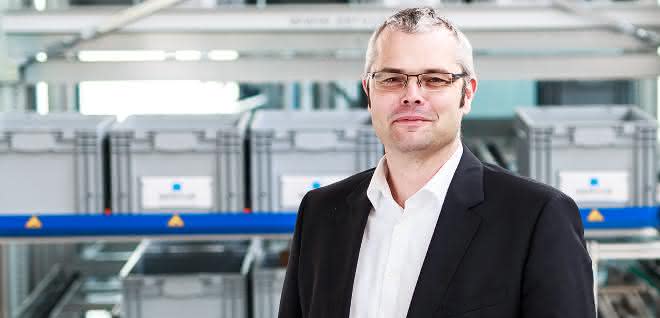
handling: Prof. Schneider, you have published two new books and both have the term "Industry 4.0" in the title. Is this publishing marketing or is the concept behind it still relevant for business?
Of course, Industry 4.0 and digitalization are still relevant for industry. These topics have not yet reached many companies, or only to a limited extent. I see companies as socio-technical systems with the dimensions of process/organization, technology and people. However, Industry 4.0 focuses exclusively on technology. Technology is only an enabler. A system like a company cannot function without including the other two dimensions. Nevertheless, Industry 4.0 provides us with many technical solution modules to speed up our processes, manage with reduced personnel or improve (data) quality.
handling: What opposing or complementary trends do you see in production systems based on cyber-physical systems and the Internet of Things?
Cyber-physical systems certainly help to make processes even faster and more efficient. Information can be transmitted virtually in real time and production systems can be made much more responsive. This is an important factor that helps us to remain competitive. A countervailing problem is that we want to create robust and fault-tolerant processes. All this technology and every additional system increases the probability of failure. So we need a lot of new backup processes. The extensive networking also poses a problem. If one system fails, will others fail too? Or if someone has penetrated our system from outside, what can be spied on or paralyzed? This also harbors considerable risks. A healthy balance must surely be struck here between opportunities and risks.
handling: In your book, you argue in favor of combining lean factory design and Industry 4.0, but preferring the former. Can you briefly explain this?
Yes, my credo is: Lean before Industry 4.0! Lean offers us a large toolbox of methods and principles which, when applied with the appropriate mindset and the necessary understanding of the system, offers one of the very few functioning solutions for a buyer's market. By "lean factory design" I mean the holistic design of a factory, including the supply chain, according to lean criteria. Only when your processes are tidy and "lean" should they be supported and automated through the use of technology. Because a bad process that you automate remains a bad automated process.
handling: What can production companies do to attract qualified young talent?
Well, there are usually several ways to tackle a problem. In this case, the problem of a shortage of skilled workers can be tackled from the supply side or from the demand side. Industry 4.0 offers a number of technical measures to reduce the need for personnel, such as driverless transportation systems.
The shortage of highly qualified personnel can also be reduced with Industry 4.0 technologies. For example, we have developed an assistance system for tactical logistics planning as part of a dissertation. Employees with in-depth know-how in the field of logistics process design are a bottleneck on the market. Our system enables the highly qualified planner to prepare the many planning steps that require the know-how and creativity of a person in one system. Assigning the many thousands of components to the processes, which takes up the majority of the time, can then be taken over or even (partially) automated by far less qualified personnel.
handling: At what points do factories need to change in order to be able to work profitably even in a more difficult economic environment?
This is precisely the weakness of extensive automation. With automation, companies convert variable costs for personnel into fixed costs for technology. The high initial investment for automation pushes the break-even point very far into the future. As long as you achieve the planned output, the calculation works out, but woe betide you if you don't. Especially in combination with increasingly volatile buyer markets, an automation strategy leads to considerable risks for companies.
The aim of companies should be to achieve scalability of production with corresponding adjustment of cost structures. With the "Shoshinka" principle, for example, Lean suggests buying several small systems instead of one large one. This significantly reduces the risk and the number can be adapted to the product life cycle. Another approach we are currently researching is to consider system concepts that are easier to scale.
handling: "Batch size 1": Is this more of an opportunity or a risk for Germany as a production location?
I see batch size 1 unreservedly as an opportunity for Germany. We haven't had a chance in the area of low-cost mass production for decades. We are switching to individualized and high-end products. This is also known as "trading up". If we can react quickly to our customers' wishes here on site, with short distances and an "ear to the customer", this only opens up opportunities for us. Of course, we will have to question our way of producing in many areas. Many companies then tell me that batch size 1 is not possible because their machines have set-up times. My answer is regularly: they confuse cause and effect. If the customer demands batch size 1 and their machine can't do it, then they have the wrong machine - quite simply. The market is always right and we have to adapt our production methods and technology. Otherwise we will disappear from the market. dsc


You might also be interested in
Robotics and autonomous order picking
Locus Robotics acquires Nexera Robotics and expands autonomous warehouse logistics
Locus Robotics takes over Nexera Robotics and may have taken a decisive step towards truly universal warehouse automation. A new gripping technology should now make possible what was previously considered difficult to automate.
 read more...
How bridging steps, stairs and catwalks are changing processes in production and logistics
At Logimat 2026, Munk Günzburger Steigtechnik will be showcasing modular bridging steps, stairs, platform and walkway systems for production, warehousing and logistics. With online configurators, distances can be efficiently shortened, processes...
read more...Highly automated warehouse for...
SSI Schaefer implements highly automated warehouse for CERP in France
SSI Schaefer and CERP are building a highly automated logistics center for pharmaceutical logistics in Wissous with shuttle storage, A-Frame, robotics and WAMAS software.
read more...Start of construction for new production hall
Mayr Antriebstechnik invests in its home base and internationally
Mayr Antriebstechnik strengthens location and international logistics: Construction of a new hall in Mauerstetten - parallel expansion of the plant in Poland as a logistics hub.
read more...Conveyor systems that adapt
Modern conveyor systems must reliably transport different product sizes, shapes and materials. The new modular product system from Kipp offers flexible, modular solutions for this: Adjustable side guides ensure precise alignment and gentle...
read more...Focus on sustainability and AI at the trade fair
With more than 120,000 square meters of exhibition space, LogiMAT 2025 will once again occupy all ten halls of the Stuttgart exhibition grounds. From March 11 to 13, global players, medium-sized companies and start-ups will provide an overview of...
read more...Workstation system for shipping and logistics
With Sintro Packing, Karl is launching a workstation system that is designed to meet the specific requirements of shipping and logistics. It is characterized by modular adaptability and ergonomic efficiency.
read more...Deutsche Messe announces Robotics Award
On the occasion of Hannover Messe 2025, Deutsche Messe is once again presenting the Robotics Award after a break of several years. Prizes will be awarded for robot-supported automation and logistics solutions. Companies and institutions from Germany...
read more...Micro motors as the driving force behind intralogistics
Suitable transport structures in intralogistics are a prerequisite in all industries in order to withstand competitive pressure in the future. The basis for this is comprehensive automation, which would be inconceivable without an armada of powerful...
read more...