
Artificial intelligence
ABB takes over Sevensense
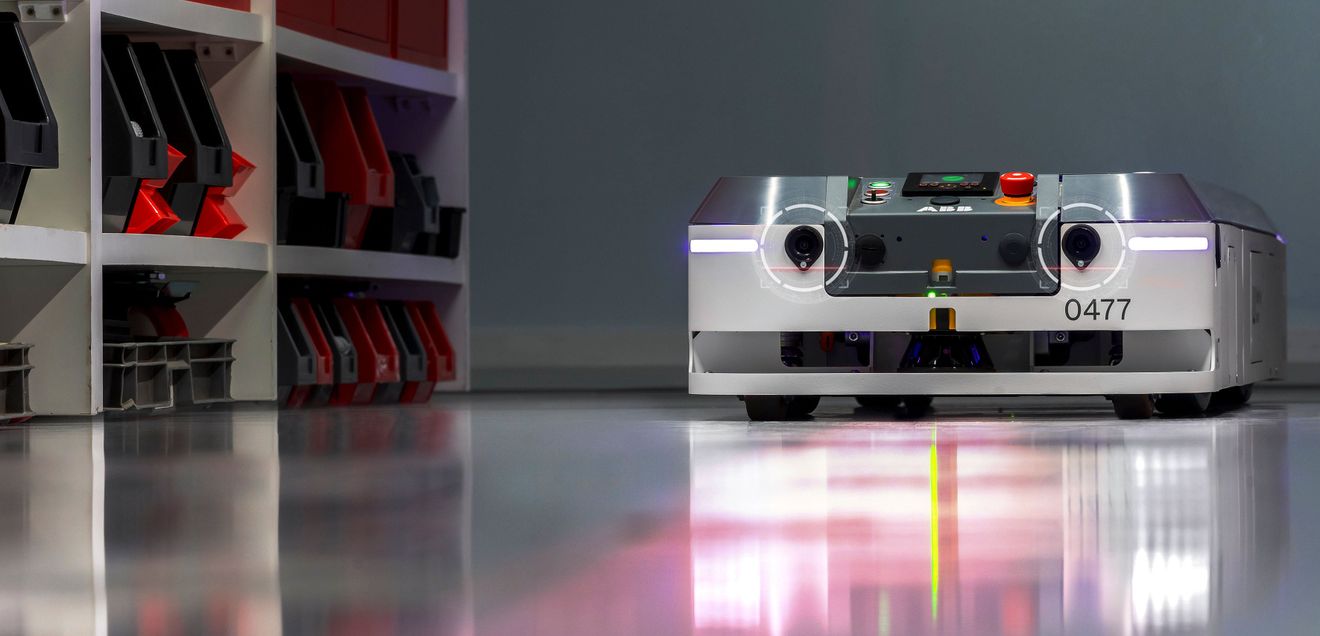
ABB today announced the acquisition of Swiss startup Sevensense, a provider of AI-powered 3D vision navigation technology for autonomous mobile robots (AMR). Sevensense was founded in 2018 as a spin-off from ETH Zurich in Switzerland.
"The transaction is an important step towards our vision of a working environment where AI-powered robots support people. We are responding to our customers' increasing demands for more flexibility and intelligence in times of acute skills shortages," said Sami Atiya, Head of ABB's Robotics & Factory Automation business unit.
"Equipped with image processing technology and AI, each mobile robot scans a specific part of the building. The fields of view of all the robots are combined to form a complete map so that the AMRs can work autonomously even in rapidly changing environments."
Existing innovation partnership
The acquisition follows ABB's purchase of a minority stake in Sevensense, after the two companies had already entered into an innovation partnership in 2021. In the same year, ABB also acquired ASTI Mobile Robotics. Financial details of the transaction were not disclosed. Following pilot projects with customers in the automotive and logistics industries, ABB will integrate Sevensense's technology into its AMR portfolio.
The market for mobile robots is expected to grow at a compound annual growth rate (CAGR) of 20 percent from USD 5.5 billion to USD 9.5 billion by 2026. ABB's AI-supported 3D vision technology plays a leading role here.
Sevensense's innovative navigation technology combines AI and 3D image processing. This enables AMR to make intelligent decisions and differentiate between fixed and moving objects in dynamic environments. After one-time manual guidance, mobile robots use Visual Simultaneous Localization and Mapping (Visual SLAM) technology to create a map that enables them to operate independently, reducing commissioning time from weeks to days and allowing AMRs to navigate in highly complex, dynamic environments where people are also present. The maps are continuously updated and shared across the fleet, enabling instant scalability without interrupting operations and greater flexibility compared to other navigation technologies.


You might also be interested in
Advanced material retrieval system
Steute shows nexy wireless network with extended connectivity
Steute's Leantec division is presenting an enhanced version of the nexy wireless network with improved connectivity and additional cybersecurity functions. The background to the further development is the increasing use of automated guided vehicles...
 read more...
Modular solutions avoid downtime
Driverless transport systems are becoming increasingly important in intralogistics as automation increases. This increases the demands on their flexibility, availability and future viability. Melkus Mechatronic is responding to this development with...
read more...Outdoor AGV networks production and logistics
An international company in the plastics industry is automating its intralogistics at its German site with a solution from ek robotics. A specially developed vehicle model from the Out Move series, an outdoor AGV, is being used.
read more...AGVs: advantages simply explained
Automated guided vehicles (AGVs) are already an integral part of intralogistics. The future of in-house transportation is automated, sustainable and flexible. Find out now how you can meet these requirements today with the support of modular AGV...
read more...Adapted to driverless transport systems
Travel and steering drives from SPN Schwaben Präzision offer high flexibility and quality and are tailored to the requirements of manufacturers of driverless transport systems.
read more...Affordable AGVs thanks to modern plastics technology
Mobile robotic systems are being used in more and more areas of work. However, their widespread use on the market is often prohibitively expensive for small and medium-sized companies. Igus wants to change this with new low-cost robotics products...
read more...Transport robots in production automation
FFT, the global system provider of turnkey production systems, is expanding its solution expertise in the field of automated material transport with the new driverless transport system.
read more...Supplement to holistic AGV integration
A gateway for automated guided vehicles
At this year's Logimat, K.Hartwall presented its new multi-connective gateway "A-Gate" for its automated guided vehicle systems (AGVs) for the first time.
read more...Transport system with swarm intelligence
The Agilox Omnidirectional Platform Shuttle (OPS) is an Autonomous Mobile Robot (AMR) for loads of up to 1,500 kilograms. Four omnidirectional drive units and a slim design enable easy and safe navigation in narrow aisles and confined spaces.
read more...