

Selection factors
Mechanics under harsh conditions
Just as electromechanical actuators and other mechanical drive components are becoming increasingly suitable for applications with high loads, their ability to withstand harsh conditions is also increasing. Extreme temperatures, high particle loads, high-pressure cleaning, vibrations and shocks, radiation and electromagnetic interference are among the threats to reliable drives today. System designers can minimize these hazards when selecting control components for such applications by considering the following five design factors that contribute to robust operation: material selection, coatings, sealing methods, vibration/shock resistance and ease of maintenance.
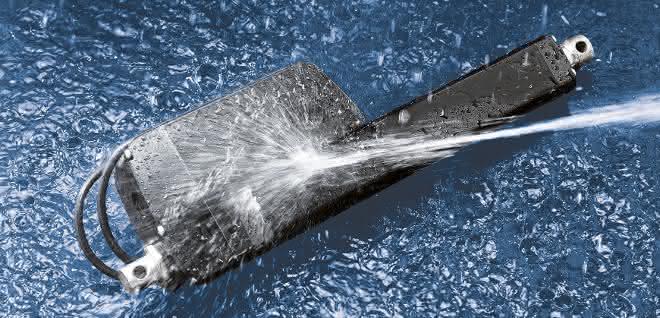
Factor 1: Material selection
Selecting the right materials is the first protective measure against harsh environmental conditions. Materials research is constantly evolving, providing new alloys and hybrid materials that can withstand extreme temperatures as well as chemicals or highly abrasive materials, frequent wet cleaning and other external influences. Stainless steel, hard-anodized aluminium and resistant polymers are among the most common materials used to reinforce drive components.
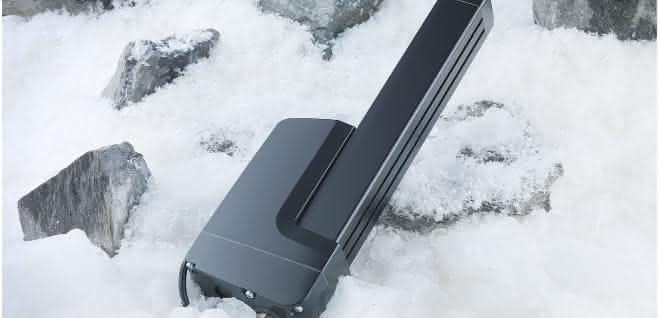
An unfavorable choice of materials leads to premature failure, costly maintenance and repair work on site and a loss of productivity. Maximum robustness, on the other hand, is achieved when all drive components - from the actuator housing to the smallest bearing - have been selected with the most adverse operating scenarios in mind.
Factor 2: Coatings
Drive components that are used in corrosive environments - for example when exposed to hydrocarbons, uric acid and fertilizers - should also be coated with high-quality materials. This precautionary measure improves operational safety and reduces downtime, especially in environments where corrosive chemicals, salt spray or submersion of the device require extended protection. The right combination of coating and material can extend the service life of a component by a factor of 200.
Testing chemical resistance
The most widely used standard for chemical resistance is ISO 15003. It specifies design requirements and recommendations for manufacturers of electrical components used in mobile machinery in agriculture, forestry, gardening and landscaping. The standard also contains test protocols for specific application scenarios and defines severity levels for extreme environmental conditions that can occur in typical operating situations. For example, the chemical resistance test includes the ability to operate continuously for three days at the following chemical concentrations: Diesel fuel - 100 percent, hydraulic oil - 100 percent, brake fluid - 100 percent, ethylene glycol - 50 percent aqueous solution, urea nitrogen - saturated solution NPK fertilizer*9 (7.5 percent each N, P, K) - saturated solution. Other standards relating to corrosion resistance, in particular for diesel emission fluids (DEF), are DIN 70070-05, AUS 32 and ISO 22241-1.
Factor 3: Sealing strategies
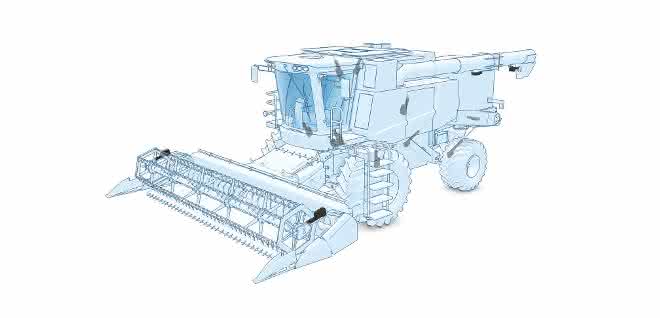
After the materials and coatings, the next focus is on the sealing strategy against harsh environments. If a component is not adequately sealed, chemicals and particles can get into the internal mechanics, causing damage, deposits and blockages, as well as creating a fertile ground for bacteria and other germs. Using a drive technology without adequate sealing in harsh operating conditions will inevitably result in higher housing and maintenance costs - and possibly shorter maintenance cycles.
Every component, including the engine mounting, should therefore be sealed. Wipers as well as piston and flat gaskets must interlock perfectly: The wipers retain dirt particles on the push tube and prevent water ingress. The piston seals complement the wipers to provide complete protection. Flat gaskets ensure tight connections between housing parts, cover pipes, motors and add-on components.
A particularly reliable indicator of an effectively sealed system is its IP marking. This IP protection class (for Ingress Protection) is a globally applicable standard that indicates the extent to which a component is protected against the ingress of foreign bodies and liquids. The IP protection class thus indicates the degree of protection of an enclosure against the ingress of impurities that could be detrimental to the function of a device.
Factor 4: Vibration and shock resistance
Materials, coatings and seals can be damaged by shocks and vibrations. Components must be robust enough to withstand the extremes of machines operating in harsh environments. This often means that the components are subjected to heavy loads or strong vibrations - sometimes continuously. These constant forces of rotation and movement can weaken a component in the long term and eventually cause it to fail. Design measures that take high vibration or shock loads into account mean that manufacturers do not need to make subsequent product adjustments.
Planetary gearboxes offer a higher shock load capacity than parallel gearboxes. In addition, the rigidity can be further increased by milling one of the internal teeth directly into the output-side housing. The use of a one-piece housing in conjunction with a ring gear thus prevents the risk of a slipping gear and therefore offers a higher peak torque. The absence of bushings in rolling elements can also contribute to the load resistance of systems, as can case-hardened or through-hardened shafts. The optimum coordination of all components is just as crucial for shock resistance.
Testing impact resistance
Compliance with industry standards is one of the best criteria to ensure that you really get the required impact resistance. The three most common standards applied to drive components are MIL- S -901, EN60068-2-27 and EN60068-2-32.
Vibration resistance testing
To ensure that expected vibration profiles do not cause damage to the product, test protocols (usually OEM-specific) are carried out on several components at different levels. These include protocols for testing housings, screw connections and contained circuit boards/sensors. The tests are carried out with the unit switched off and mounted on a vibration plate. The device to be tested is brought to half its maximum extension length and tested for 24 hours on three axes at right angles to each other.
Factor 5: Ease of maintenance
Harsh environments pose a variety of safety risks for people: from extreme temperatures, toxic/aggressive chemicals or inhalation hazards - to radioactive radiation in extreme cases. Apart from production losses and downtime, all maintenance work carries a risk of injury or illness - especially if carried out frequently. Components that require little or no maintenance therefore increase employee safety, minimize the risk of accidents at work and reduce costs.
One of the key maintenance factors for linear drive components is lubrication. Smooth, reliable movements are the hallmark of an optimally designed system. One of the prerequisites for this is correct lubrication of the moving parts. Products that use oil for lubrication require regular maintenance and are susceptible to leaks. In contrast, pre-lubricated or self-lubricating components can significantly reduce or even eliminate the need for maintenance.
Thomson solutions for harsh environments
Drive component manufacturer Thomson offers a range of products that have been specially designed for use in harsh environmental conditions. The Max Jac heavy-duty electric linear actuators, for example, are made of stainless steel, hard anodized aluminium or highly resistant polymer. All seals are made of materials that are resistant to organic and inorganic chemicals and highly abrasive materials. They are designed for operation in a wide temperature range from minus 40 to plus 85 degrees Celsius. They also have an IP66/IP69K degree of protection.
Another member of Thomson's electromechanical linear actuator range is the Electrak HD. Its materials such as stainless steel, electro-coated zinc and anodized aluminum provide protection in harsh environments. In addition, the Electrak HD has a new type of sealing technology with the added benefit of IP66 dynamic protection so that nothing can reach the built-in components. The built-in components themselves are protected against drops, impacts and interference from other power sources.
The Thomson PC series of precision linear actuators is also suitable for use in harsh environmental conditions. These actuators are IP65 rated, including motor mounting, while the components are made from stainless steel. This model is proven to be stronger, faster and has up to four times the stroke of other actuators on the market.
Thomson Movopart is a belt-driven, prism-guided linear system with optional equipment for wet applications. Its prismatic guides are made of special polymer and run directly on the extruded profile. These special bearings are predestined for applications that are subject to impact loads, need to operate quietly or are exposed to wet applications with water jets or corrosive substances.
The Thomson WH is a linear system with belt drive and roller guide for which, just like the Movopart, an optional splash-proof configuration is available. All housing and guide elements are made of stainless steel, while the aluminium parts are anodized.
Thomson ball screws are suitable for a temperature range of minus 40 to plus 110 degrees Celsius. For use under extreme conditions, Thomson offers special equipment on request in the form of additional, specially designed wipers on the ball screw nuts. They prevent the ingress of various types of foreign bodies.
Thomson Aquatrue gearboxes have IP66, IP67 and IP69K protection ratings, are made entirely of stainless steel, have no external seams and can withstand high-pressure water jets from all directions. These features can save a medium-sized customer more than 50,000 euros per year by eliminating additional costs for components such as housings, reinforcement or rods for mechanical power transmission.
In addition, Thomson offers web-based sizing and selection tools that make it much easier to choose the appropriate component materials for load, speed, life, etc. The same applies to specific environmental requirements such as water/chemical spray/fog, low to high dust particle levels, high pressure/high temperature water jets and water/chemical splash or clean room conditions. The program then recommends equipment features for the linear unit - such as chrome-plated surfaces, stainless steel components or polymer plain bearings - to take account of the environmental conditions. as


You might also be interested in
Protection against electrostatic discharge
StoFloor ESD KU 614 from StoCretec: dissipative flooring with the latest technology meets all ESD standards, is economical, extremely durable, mechanically and chemically resistant. The surface can be adjusted to be slip-resistant. The system is...
 read more...
Cables and wires from Helukabel
Food cultivation on a new level
Vertical farming - cultivation in multi-storey greenhouses - is considered one of the most exciting trends in food production. One of the pioneers in this field is the Romanian start-up Ultragreens. The company relies on solutions from Helukabel to...
read more...Further training for specialists to become security experts
With the "CESA - Certified Expert for Security in Automation" qualification, automation expert Pilz offers a two-day expert course designed to provide participants with compact security knowledge in line with the latest standards.
read more...Meaningful data on the service life of the seal
Seals prevent substances from penetrating or entering technical components. The intelligent seals from Freudenberg Sealing Technologies can significantly expand this core task in the future: the seal itself is also a sensor and becomes a "smart...
read more...Online stud configurator according to drawing
For standard bolts, with head, thread or hole
For standard bolts, with head, thread, bore or as a version with recess, mbo Osswald configurators map the standard specifications, are very easy to use, take a lot of work off the user's hands and save a lot of time.
read more...Safe palletizing with the Cobot
Verla-Pharm's medicinal products and food supplements have been available for decades. Ever-increasing throughputs result in ever-increasing logistics costs, whereby optimum utilization of the available production space is necessary.
read more...The tiger among processors
Since the move towards the Industrial Internet of Things (IIoT) and Industry 4.0 has picked up speed, processor boards and modules must be able to process exponentially growing amounts of data.
read more...VDWF publishes "Sustainability Compendium"
Nowadays, nobody can avoid "sustainability": In addition to a far-reaching presence in the media, it is also becoming increasingly important for companies in the tool and mold making industry to develop and implement appropriate concepts.
read more...More transparency and synergies with QM software
Weber, manufacturer of wood and metal sanding machines and extruders, has reorganized its quality management with ConSense IMS Professional. The software solution enables transparent documentation and more efficient processes.
read more...