

Faulhaber motors
From the moon landing to everyday life in space
50 years ago, precision ball bearings from Faulhaber subsidiary MPS were in the astronauts' watches when they took their first step on the moon. A lot has happened since then.
It is now fifty years since Apollo 11 landed on the moon and the first human set foot on the Earth's satellite. In the meantime, space has become a workplace and living space for humans and topics such as space tourism, a permanent moon station or a manned mission to Mars are topical. The technical progress of recent decades has made this development possible and drive technology has also contributed to it. Lightweight and compact Faulhaber miniature drives have proven their reliability and positioning accuracy time and again in many space and research projects under harsh space conditions. The actuators are vacuum-compatible and can withstand mechanical loads. Their components are matched to each other and thus achieve a high level of efficiency.
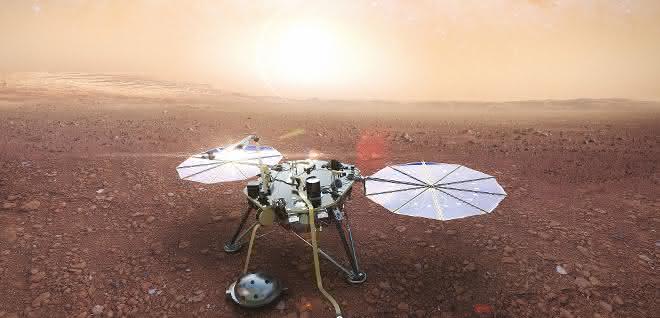
For example, six stepper motors with planetary gears are currently in use on Mars in the most sensitive seismometer ever built (SEIS), trying to find out whether the red planet is shaking. They have two tasks in the seismological measurements: They bring the measuring mechanism into balance and compensate for stress forces that arise due to strong seasonal temperature fluctuations.
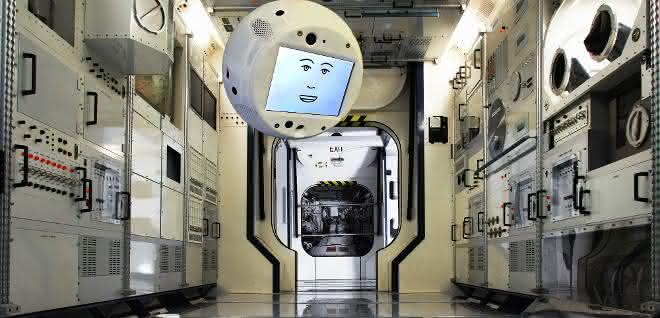
The small drives from Schönaich can also be found on board the International Space Station (ISS). Brushless DC motors allow Cimon, an artificial assistant for astronauts, to move freely on board.
Stepper motors will be installed in high-resolution camera systems for the next Mars mission in 2020. The small drives with a diameter of just ten millimetres position the lenses for razor-sharp images of the surface of Mars. The compact miniature drives will continue to contribute to the further development of space research and space travel in the future.
One way to keep the costs of commercial rocket launches within limits is to optimize fuel combustion and thus consumption. A specially developed fuel trim valve guarantees optimum performance. It is driven by Faulhaber servomotors. The demand for space-qualified drive systems, which above all have to be reliable, durable, small and light, is therefore constantly increasing. as


You might also be interested in
Basler acquires 76% of Indian image processor
Basler, supplier of image processing components for computer vision solutions, has acquired 76% of the Indian sales partner Alpha TechSys Automation.
 read more...
Process monitoring and fault detection
Cameras ensure quality during laser melting
Powder bed-based laser melting (PBF-LB/M) opens up new possibilities in additive manufacturing. Modern camera systems provide crucial process data to further increase quality and efficiency.
read more...Vision Sensor is three times faster than its predecessor
The 'CS-62' vision sensor from di-soric is around three times faster than its predecessor, the 'CS-60'. In combination with the 'nVision-i 25.1' software, it enables image processing solutions that were previously reserved for smart cameras.
read more...Thermal imaging cameras for quality control
Automated thermal imaging cameras are often suitable for quality control applications where temperature plays a role. However, while there are various solutions on the market for slow processes, it is challenging to select a camera that reliably...
read more...Easy entry into industrial VGA thermography
Reliable temperature measurement is a prerequisite for the success of many industrial processes. Berlin-based manufacturer Optris presents the Xi 640 infrared camera, a new member of its Compact Line, which enables non-contact temperature...
read more...Powder bed-based laser melting optimized
Aconity3D has set itself the goal of optimizing the stability of the manufacturing method of powder bed-based laser melting and thereby promoting its use in a wide range of industries. By using high-speed industrial cameras from SVS-Vistek, the...
read more...INDUSTRIAL Production Products of the year...
2nd place, category handling, assembly and production logistics: SICK
safeVisionary2 is the first 3D time-of-flight camera with Performance Level c safety certification. It enables safe three-dimensional environmental detection and won 2nd place in the competition for Product of the Year 2024 in the handling, assembly...
read more...Nomination Products of the Year 2024
SICK: Camera systems safeVisionary2
safeVisionary2 is the first 3D time-of-flight camera with Performance Level c safety certification. It enables safe three-dimensional environmental detection and has been nominated in the 2024 Product of the Year competition in the handling,...
read more...AI vision brings additional opportunities
The seamless integration of AI into the consumer sector has helped to improve our quality of life and make interactions with technology more efficient. In industry, AI vision with machine learning opens up new possibilities that are not covered by...
read more...