

Electron Beam
Welding with electrons
In many cases, electron beam welding is a viable alternative to conventional welding techniques. The process is fast, precise and flexible. It is particularly suitable for components with large dimensions.
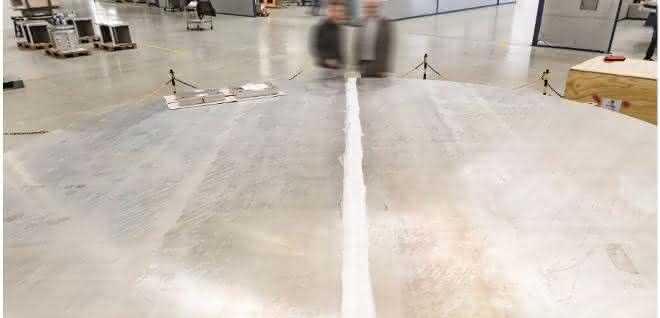
There are around twenty steps in an engine start from cold and dark to operational readiness. External power on, battery check, flight control on, fuel pumps on - then kerosene shoots at high pressure through the fuel lines to the turbines. This is a critical moment in which every component of the fuel line is subjected to high stress. Absolute tightness and safety are essential here. This applies to both aerospace and automotive engineering. And it applies to a similar extent to components for a wide range of industrial applications, for example when two hollow components made of die-cast aluminum have to be joined together securely, tightly and permanently. Welding tasks can therefore be very different and can involve a wide range of components and materials, from featherweight components with welding depths of 0.1 mm to several tons in weight with 200 mm deep seams. The choice of the right technology is crucial for the successful joining of the seam.
Conventional processes often require an entire day shift to weld a seam of around one meter and a depth of 100 mm. This is an enormously long time for industries that rely on high productivity. This is why technologies such as laser welding quickly reach their limits with very deep weld seams or materials that are difficult to join. Laser-welded components also require large quantities of shielding gas and often need to be reworked.
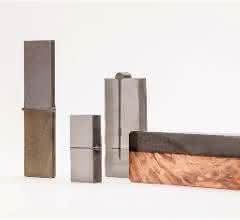
One technology that can implement such tasks more quickly and easily is the electron beam (e-beam). The decades-old process is still often perceived as too complex or cumbersome. However, it has evolved into a state-of-the-art technology in recent years as part of the digitalization process. Thanks to comprehensive innovations in the software and CNC area, a wide range of welding tasks can now be realized - more precisely, more productively and more economically. The aerospace industry, large-scale research projects and the automotive industry already rely on electron beam welding. For example, for joining turbines, gear wheels or steel boilers weighing several tons. In general, the process is particularly worthwhile for industries that rely on high productivity. Nevertheless, with electron beam welding, unlike arc welding, the task always determines the process - the possible welding tasks are therefore extremely varied. But what makes electron beam welding so interesting?
The advantages at a glance
Welding with the electron beam is advantageous when production has to take place within tight tolerances, the component must not become too hot or very large welding depths are required. If a component requires a high degree of dimensional accuracy, the electron beam also proves its worth. This is because the low heat development means that distortion is minimal. The mechanical and technological properties of the material are virtually retained. In addition, the deep welding effect results in deep, narrow and parallel weld seams. As a result, the range of applications is very broad and extends from welding the smallest components to joining components weighing several tons.
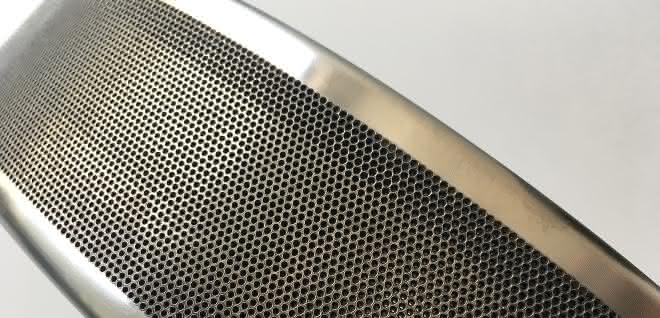
As many workpieces are joined from individual parts, the process enables the use of more cost-effective materials. An intelligent design can also eliminate the need for expensive machining or erosion work. In general, electron beam welding offers high speed and is considered very reliable. For example, the electron beam welds a one meter long seam with a depth of 100 mm in less than a minute. After the joining process, the components are ready for installation and do not have to be laboriously reworked. These are the main reasons why companies with high productivity benefit most from joining technology. However, companies that want to join materials that are considered difficult to weld, such as mixed compounds, aluminum, copper, titanium, duplex steel or nickel-based materials, can also take advantage of the technology. The welding process also works with rough surfaces and can take place at any stage of the production chain - even at the very end, as it does not interfere with other processes such as mechanical finishing, surface finishing or the assembly of components. Electron beam welding is also suitable for components with sensitive inner workings, such as sensors. Low heat transfer to the surrounding material or to the underlying electronics is extremely important in the manufacture of pressure sensors, for example, in order to maintain their full functionality. However, the Electron Beam is not only suitable for welding. It is also ideal for drilling several thousand holes per second. Particularly small hole diameters, high hole counts and deep holes can be easily achieved with the process.
How does electron beam welding work?
In electron beam welding, a heated cathode initially generates a cloud of free electrons. As a rule, electrons are firmly bound to atoms, but they can be released from the lattice structure of the solid when energy is applied. The electrons are then accelerated to the anode by an electric field. Electromagnetic lenses form a focused beam from the free electrons. They reach a speed of between one and two thirds of the speed of light. As the electron beam can be deflected magnetically, it can be precisely controlled and is capable of performing even complex welding tasks.
The entire welding process takes place in a vacuum. When the electrons hit the material, they emit heat with pinpoint accuracy, while the surrounding material remains largely cold. At energy densities of over 107 W/cm2 , the molten substance in the center finallyevaporates . This creates a capillary of vapor surrounded by liquid material.
Vacuum enables the processing of refractory metals such as titanium, zirconium or niobium and is even more cost-effective than the use of shielding gases. In general, working under vacuum results in clean workpieces and a better quality weld seam - compared to conventional processes. Intelligent airlock concepts prevent the generation of vacuum at the expense of production time.
Chamber systems and airlock shuttle systems
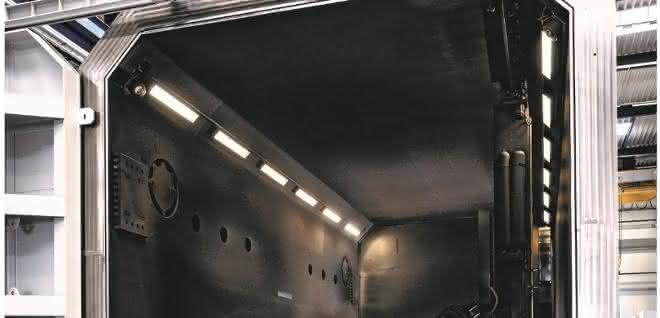
Electron beam welding systems are available in two different versions: Chamber systems and lock shuttle systems. Pro-beam, one of the leading companies in the field of electron beam welding, has the world's largest welding chamber in the civil sector. The K 6000 has a volume of 700m3, operates via an internal generator and has been specially developed for welding very large and heavy components. The system can join components measuring up to 7 m x 7 m x 14 m and weighing up to 100 tons with an evacuation time of less than 35 minutes.

Small components that only require a short preparation time can be processed in systems that build up and release the vacuum in an airlock. In this way, no time is lost during production for evacuating the chamber and it can be used continuously. In Pro-beam systems, the main chamber is preceded by an airlock, which prevents the high vacuum in the working chamber from being impaired and allows three work processes to run in parallel: loading and unloading of the workpieces on the pre-bed, evacuation and ventilation in the airlock and electron beam treatment in the working chamber. Systems based on such a system can also be integrated into a fully automated production process and optimized for Industry 4.0 environments.
Dr. Thorsten Löwer, Chief Development and Systems Engineering Officer, Pro-beam Group / am


You might also be interested in
Friction stir welding as a key technology for future industrial joining solutions?
At the DMG MORI in-house exhibition, Hufschmied Zerspanungssysteme presented friction stir welding with process-optimized tools and series production potential for the industry.
 read more...
Tox Pressotechnik at the Blechexpo
Connecting sheet metal and electrically conductive components safely
Joining sheets of different thicknesses easily and reliably without additional elements - Tox Pressotechnik will be demonstrating how this can be achieved at Blechexpo with its clinching and eClinch technology.
read more...Production, machine tools and robots
High-precision welding for perfect sawing
Stihl uses Nimak's portal projection welding systems to manufacture guide rails for chainsaws.
read more...Tox servo press for clean room
The coast is clear here now
In sensitive sectors such as medical technology, the optical industry or electronics, cleanroom-compatible components are required for all processes. This also includes drives. With the servo presses from the Electricdrive Core series, Tox...
read more...Air purity class 5 according to ISO achieved
Tox has servo press certified for the cleanroom
In sensitive sectors such as medical technology, the optical industry or electronics, cleanroom-compatible components are required for all processes. This also includes drives. With the servo presses from the Electricdrive Core series, Tox...
read more...Manufacture of metal bellows couplings
Joining instead of gluing
When manufacturing metal bellows couplings, the connections between the bellows and hub are a critical point. The flared press-fit process can be used here.
read more...ArtiMinds presents automation solutions at automatica
ArtiMinds Robotics is presenting automation solutions from the field of advanced robotics at Automatica in Munich. The applications were programmed using the in-house software solutions ArtiMinds Robot Programming Suite (RPS) and ArtiMinds Learning...
read more...Plug-and-produce with smart subsystem
The mechanical engineering company KMS Automation standardizes pressing and joining applications with the Smart Function Kit from Bosch Rexroth. The mechatronic subsystem simplifies machine design, increases process quality and shortens...
read more...Integrated ERP system for watertight processes
Rubber-based seals are used in window frames and escalators. They are also a must in tunnel projects to prevent water damage. Sealable, a specialist in sealing and insulation solutions, relies on an ERP system from Pro Alpha, which covers everything...
read more...