RFID (radio-frequency identification)
RFID technology
RFID technology (radio-frequency identification) uses electromagnetic fields to enable the automatic remote identification and location of products and objects. RFID systems consist of a small, flat transponder in or on the object and a read-out unit. In industrial identification technology, RFID technology is an alternative to barcode technology, among other things.
RFID transponder
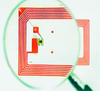
Basically, RFID transponders consist of a microchip, antenna, carrier or housing and energy source (battery). These elements also determine the dimensions of the transponder. The antenna shape and size depend on the frequency and wavelength. Information is transmitted by alternating magnetic fields generated by the reader at short ranges or by high-frequency radio waves. This transmits data and supplies the transponder with energy. Older RFID transponders transmit in plain text in accordance with ISO 18000; newer models can also transmit encrypted data.
RFID transponders differ in shape, size and protection class depending on the transmission frequency, provider and area of application. The clearest distinguishing feature is the type of energy supply.
Energy supply for RFID transponders
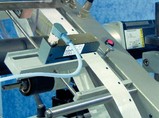
Passive RFID transponders get their energy from the radio signals of the interrogator. The low power limits the range. Typical applications for such transponders are the labeling of products or the identification of documents.
RFID transponders with their own power supply (battery) allow greater ranges and a wider range of functions. They are therefore more likely to be used when the objects to be identified or tracked are of high value and expensive. There are two types of powered RFID transponders: Active transponders, which use their energy source to power the microchip and generate the return signal (long range), and semi-active/semi-passive transponders. The latter are cost-effective, but achieve shorter ranges.
Use for RFID
The main application for RFID is currently logistics in the broadest sense. Applications here include vehicle identification, banknote marking, personal identification, medication security, goods and inventory management, the marking of printed circuit boards, the marking of textiles, container tracking and the chip card industry in general (time and access systems, etc.) as well as the positioning of driverless transport systems and waste disposal.
The main application for RFID is currently logistics in the broadest sense. Applications include vehicle identification, banknote marking, personal identification, medication security, goods and inventory management, marking printed circuit boards, marking textiles, container tracking and the chip card industry in general (time and access systems, etc.) as well as determining the position of driverless transport systems and waste disposal.
Problematic aspects of the use of RFID technology currently include tamper protection, environmentally friendly disposal and data protection.