

Smart sensors
Basis for numerous Industry 4.0 applications
So-called smart factory and smart shipping applications can only be realized with intelligent sensors in which the immense amounts of data are already pre-processed and compressed.
Rapid technical development has taken place in recent years, making numerous new applications possible in mechanical engineering and automation technology. Robots now work side by side with humans as cobots without a protective cage. Highly sensitive sensors detect every movement in the robot's work area, preventing the cobot from colliding with its flesh-and-blood colleagues. Thanks to artificial intelligence, the compact robots are also becoming increasingly easy to program and even train themselves to perform new movements independently.
Sensors also form the basis of a new generation of machines that virtually monitor themselves and notify the operating personnel when individual components need to be replaced.
Virtual planning of new machines
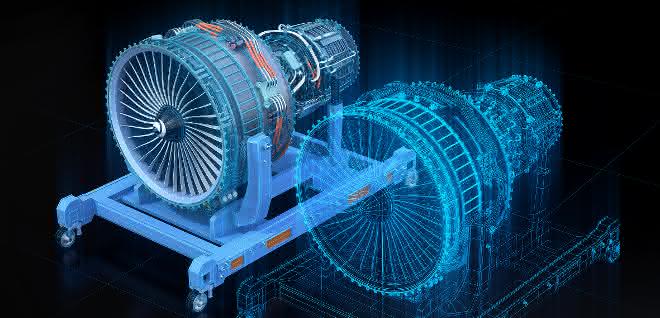
One example of the enormous importance of sensors in manufacturing and automation technology is the digital twin. This term refers to a concept in which products, machines and their components are modeled in cyberspace using digital tools. This allows designers to create, simulate and test complete plants and systems in a virtual environment. This saves machine and plant manufacturers from having to create expensive prototypes and shortens their planning times. Sensors play a key role in the creation of digital twins: they record a large amount of relevant data in the real world, which is then used to model and functionally simulate the virtual machine.
A large number of sensors are also used in shipping technology. Human error is the cause of more than 75 percent of collisions in shipping. Engineers are therefore working on the development of highly automated ships (smart shipping), which will be safer than manned vessels. In order to be able to steer the ships precisely from a distance, their position must be recorded continuously and with high accuracy using sensors. As larger ships in particular are very sluggish, corrective measures must be taken at an early stage. This is the only way to prevent collisions.
No Industry 4.0 without smart sensor technology
The applications mentioned can only be realized with smart sensor technology. The main difference between smart sensors and conventional versions is their ability to process data independently. Sensors generate large amounts of data, the evaluation of which is necessary for intelligent applications such as machine learning or smart shipping. As the transmission capacity between the sensor technology and data acquisition and evaluation is usually the bottleneck for processing the data, this can hardly be handled without prior preparation on the sensor.
Sensor specialist ASC has therefore developed a range of smart sensors specifically for Industry 4.0 applications. They not only pre-process the measurement data, such as A/D conversion and filtering, but can also evaluate and assess the pre-processed data thanks to the integrated computing technology. This eliminates the need for time-consuming external data acquisition and processing. Another special feature of smart sensors is the type of signal output: while conventional sensors send a large amount of raw data to peripheral devices, smart sensors often only transmit status information. In the case of predictive maintenance applications, this would be
for example, a message that a machine component should be replaced soon.
Significant increase in efficiency possible
Smart sensors can also transmit their signals wirelessly, eliminating the need for costly and time-consuming cabling. Especially for more complex test bench applications with a large number of degrees of freedom and parallel measurements, this significantly reduces the number of peripherals required. The sensors can also be easily integrated into networks or clouds. "In this way, users can greatly reduce their engineering, time and cost expenditure," says Dipl.-Ing. Markus Nowack from ASC.
The smart sensors therefore form the basis for highly complex applications in the Industrial Internet of Things (IIoT). They enable the efficient, secure processing of large volumes of data and make work easier for operating personnel by providing pure status information. The advantages of smart sensor technology are therefore obvious: "It enables companies to increase their operational efficiency and, for example, to implement new production technologies quickly and easily," says Dr. Robert Diemer, Technical Director of ASC.
Analog sensors for a wide range of measured values
In addition to smart sensors, ASC also has high-precision analog and digital sensors in its product portfolio. They are suitable for demanding test and measurement applications as well as for regular use in harsh environments. Analog sensors allow the user to process the full spectrum of measured values with the help of data acquisition and corresponding software. "These sensors are particularly suitable for customers who want to incorporate their own expertise into data processing," says Markus Nowack. Analog sensors provide a wider range of information than sensors with a digital output signal.
Digital sensors are used, among other things, when data needs to be transmitted over long distances. These sensors have an integrated A/D conversion, with which an initial data reduction is achieved by means of filtering. They therefore provide fewer measured values than analog sensors, but also more than a pure status signal, as is the case with smart sensors. Due to their integrated data reduction, digital sensors can be used with much more compact external data acquisition systems than analog sensors. They are therefore often found in applications where relatively little installation space is available - such as on test benches. Here, the space requirement is significantly reduced by using digital sensors. Thanks to the digital interface, the effort required for system integration is also significantly lower than with analog sensors.
Individual advice guarantees the best possible solution
All inertial sensors from ASC record physical variables (acceleration and angular velocity) with high precision and in analog form - at first glance, the only difference between them is the signal output. In contrast to the conventional versions, however, the smart sensors do far more than just record data, as the intelligence in the sensor also performs the complete signal processing and status evaluation for the respective application. With the market launch of smart sensors, ASC is therefore evolving from a pure component manufacturer to a solution provider. In combination with intensive individual consultation, the sensor specialists deliver a complete package that is unique on the market in this form.


You might also be interested in
ESTIA aims to strengthen Europe's cloud
New tech alliance for EU sovereignty
Twelve companies, including Dassault Systèmes, are founding the European Sovereign Tech Industry Alliance (ESTIA). The initiative aims to strengthen Europe's technological independence and define requirements for sovereign cloud services. The start...
 read more...
Deutsche Telekom and Nvidia launch one of Europe's largest AI factories
With the Industrial AI Cloud in Munich, Deutsche Telekom and NVIDIA are creating one of the largest AI factories in Europe. Companies can train AI models, carry out simulations and access 10,000 GPUs.
read more...Leveraging data potential with AI and streaming
Huge data treasures are still lying dormant in many manufacturing companies. And yet it is high time that these treasures were unlocked. There is often a lack of resources and capacity to make data usable in real time. Streaming production data can...
read more...More awareness of noise
Dematic offers solutions that are tailored to different cloud environments and reduce environmental impact through reduced material consumption and improved energy efficiency.
read more...Generative AI in the automation environment
The mechanical engineering and automation industry is undergoing profound change. This transformation is being driven by more volatile global trade, geopolitical crises and increasing market pressure, which demands greater agility, technological...
read more...Rigid data structures have had their day
The traditional data center is no longer the center of data. A hybrid cloud storage approach enables manufacturing companies to both meet the current requirements of data-intensive processes and future-proof their infrastructure.
read more...Software as a service in three stages
CIM Database Cloud is a new out-of-the-box solution from Contact for end-to-end digital product development.
read more...How production can benefit from AI
Together with AI technology, IIoT networking makes it possible to better control machine parameters and optimize quality with predictive quality. Downtimes and set-up times can also be further minimized. Cloud platforms also make these technologies...
read more...More expertise for digital engineering
Altair, a computational science and artificial intelligence (AI) company, has acquired OmniV, a technology from Michigan, USA-based software company XLDyn.
read more...