

Interview with Dr. Albert Schmidt
"Finding the optimal economic solution"
Cameras are playing an increasingly important role in production and quality control. They relieve the burden on people and expand the possibilities of visual inspection. They are part of entire networks of components. In order to cope with the large amounts of data, the industry relies on "intelligent" cameras that not only provide data, but also deliver results. But what must the camera be able to do, what makes it intelligent? Dr. Albert Schmidt, Managing Director of Baumer's Vision Competence Center, provides answers.
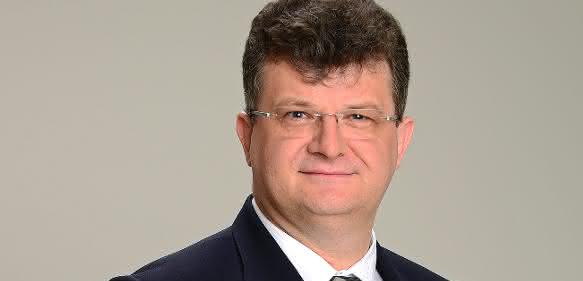
SCOPE: The smart factory needs sensors and cameras. Have the demands on systems changed as a result of the digital transformation? What do your products need to have in order to survive in the production of tomorrow?
Dr. Albert Schmidt: The increased use of sensors and cameras and the use of the resulting big data are among the key features of the digital transformation. Baumer offers a wide range of industrial cameras, vision, position and process sensors as well as encoders that provide this data. Our system providers are already using them to support customers in monitoring and optimizing their processes. To do this, the sensors need to exchange data with the process controllers. We are therefore investing in new products with digital interfaces and protocols based on them, such as Profinet, Ethernet/IP or I/O-Link. OPC-UA is favored in Europe as an Ethernet-based communication protocol for machine-to-machine communication in the context of Industry 4.0. We are working on the companion specification for image processing in the VDMA. In addition to digital interfaces, we equip many of our products with integrated computing power "at the edge". The aim is to make applications simpler, more economical and more flexible. Flexibility is particularly important for fast product changes with small batch sizes. One example is our VeriSens vision sensors, which can be reconfigured with just one command when a product is changed, or the LX VisualApplets cameras, which enable image data to be processed in the camera and only the information or result relevant to the application to be output. Of course, human-machine interaction also plays an important role, as the usability of the products is an important aspect for their acceptance.
SCOPE: Especially in the area of quality assurance, image-based inspection means an enormous relief for humans. Can the human eye really be completely replaced by a camera?
Schmidt: Cameras are able to record more information from their surroundings than the human eye. They are available in a wide variety of specifications, each for specific areas of application. In addition to cameras for the visible range, there are also models for detecting radiation in the X-ray range through to the infrared range. Special cameras can even distinguish between different polarizations like bees. Hyperspectral cameras, on the other hand, make it possible to distinguish between materials that look the same to us. High-speed cameras, on the other hand, take
1,000 images per second - impossible for the eye to capture.
With the help of image processing algorithms, characteristics can then be calculated from the sensor data obtained and the test objects classified, typically as "meets requirements" or "does not meet requirements". Finding the characteristics and
classification based on good and bad patterns is a challenging task. The use of machine learning, especially deep learning, can automate this classification. With the methods of unsupervised learning - i.e. without good and bad patterns - there are initial approaches for automated classification and detecting outliers in the images. Humans must then decide whether the classification is useful for the requirement and whether the outlier is relevant.
SCOPE: Where do optical sensors and cameras reach their limits?
Schmidt: The technology used utilizes electromagnetic radiation, which is only a limited part of the available information. A part that is also not relevant for every issue. Another aspect is the resolution and measurement accuracy. Both depend on the pixel size, among other things. This limits how small errors can be that you want to find at a certain distance. But the optics also show limitations. The ratio of focal length to aperture determines the resolution in 2D and 3D. With classic optics, systems cannot be built as small as desired.
We have certainly not reached the end of the road in the field of electronics. New paths can also be taken with optics. Cameras or sensors provide data that machines evaluate with the help of software. There is actually no reason to use imaging optics to create images for the human observer. If this condition is removed, then new paths are also possible in optics.
SCOPE: How do cameras become intelligent or smart?
Schmidt: Terms such as intelligent or smart camera and vision sensor are not clearly defined. Essentially, however, they all have integrated processors or computers that process the data before it is forwarded. VeriSens vision sensors, for example, provide ready-to-use inspection tools that only need to be parameterized and are therefore ready for use in just a few minutes. The results can be output to the digital I/Os for an immediate pass/fail decision or transmitted to the controller via Industrial Ethernet. LX VisualApplets cameras, on the other hand, provide the user with FPGA, memory and I/O resources. They can use these to implement their own image processing. No special prior knowledge of hardware programming is required, but image processing experience is. The result is increased throughput, a simplified system structure and reduced system costs.
system structure or reduced system costs.
SCOPE: Will these intelligent cameras become a real competitor to PC-based image processing systems?
Schmidt: Both product categories still have their areas of application with their strengths, as it is always a question of finding the optimum economic solution for a specific application. On the one hand, the integrated computing power of intelligent cameras is increasing, while on the other, the trend towards higher-resolution cameras and speeds continues unabated and their data must be processed - a clear strength of PC-based industrial cameras. And in between there is the broad field of embedded vision.
Control, Hall 3, Stand 3509


You might also be interested in
High data transparency for production and logistics
Leuze SmartID-Edge controls a network of identification systems and sensors for track-and-trace requirements in production and in the supply chain. Secure communication between 1D scanners or 2D camera systems takes place at edge level using OPC UA...
 read more...
OPC UA Robotics Companion Specification published
Industrial robots are central elements of digital and networked production. It is therefore important that robots can communicate smoothly with each other and with other systems, regardless of the manufacturer. The VDMA OPC Robotics Initiative has...
read more...MVTec presents machine vision portfolio
MVTec Software is presenting its comprehensive machine vision portfolio at this year's automatica in Munich. From June 27 to 30, 2023, the company will be demonstrating the importance of machine vision as a key technology in automation.
read more...Via REST to DataSpaces and Metaverse
In recent years, the OPC Foundation has positioned OPC UA over MQTT as a standardized implementation of edge/cloud communication up to IoT providers such as AWS and Azure.
read more...Plug-and-produce with smart subsystem
The mechanical engineering company KMS Automation standardizes pressing and joining applications with the Smart Function Kit from Bosch Rexroth. The mechatronic subsystem simplifies machine design, increases process quality and shortens...
read more...Bosch Rexroth launches high-performance bundle
Manufacturers of CNC laser and plasma cutting systems are aiming for significantly shorter development times and faster time-to-market. The MTX CNC system from Bosch Rexroth supports this, for example with functions for simple engineering.
read more...Controllers with OPC UA server
Baumüller relies on OPC UA as an interface for the transfer of data between different participants, such as visualization or edge controllers, and has developed the ProDataX software tool for communication via the control technology to the drive...
read more...Controllers with OPC UA server
Baumüller has implemented the areas of data access, security and methods within the standardized OPC UA interface and provides an OPC UA server for its controllers with the ProDataX software tool.
read more...MES solutions in mechanical engineering
A medium-sized machine tool manufacturer successfully networked its production facilities with the company software.
read more...