

Image processing
Hyperspectral imaging creates new markets
Hyperspectral image processing is one of the most innovative fields of development in image processing. Systems based on this technology open up new applications for image processing that could not previously be solved with traditional systems. Exhibitors will be presenting products and solutions from this field at Vision from November 6 to 8, 2018.
Machine vision is one of the fastest growing sectors in the German and European mechanical engineering industry. According to the latest VDMA figures, companies in this sector generated 18% more turnover in Germany in 2017 than in the previous year. The increase was also significantly higher than the average increase in turnover in the mechanical engineering sector across Europe. One growth segment is hyperspectral imaging. This relatively young discipline, also known as hyperspectral imaging (HSI), is said to have enormous potential for the future.
Markus Burgstaller, CEO of Perception Park, describes the main difference to traditional vision systems as follows: "Compared to conventional image processing systems, hyperspectral systems offer a spectrum per object pixel instead of a monochrome or color value. Depending on the wavelength range and spectroscopic processing, high-precision color coordinates, chemical material properties and even layer thickness information can be derived from the spectral data. The output information of such a camera has a significantly higher degree of complexity, but also enables a much higher diversity and selectivity with regard to solvable applications." "While conventional RGB cameras only image the colors red, green and blue, hyperspectral cameras allow the differentiation of more than a hundred colors," confirms Dr. Jan Makowski, Managing Director of Luxflux. "This type of high-precision colour measurement can be used to examine the properties of substances and make chemistry visible."
Diverse fields of application
Tim Huylebrouck, Product Manager at Stemmer, hints at the possible applications behind this method: "Objects that supposedly look the same can - when excited with a broadband illumination source - reflect completely different light spectra due to their chemical properties. These can then be distinguished from one another using hyperspectral systems. No other image processing solution can do this in this form."
Dr. Georg Meissner, Managing Director of Specim, cites an exemplary application: "Zenrobotics is a leading global supplier of robotic waste sorting systems. As the building rubble that is sorted in such plants often contains hazardous materials such as asbestos, an important requirement is to identify such materials safely and reliably. Zenrobotics therefore relies on Specim's hyperspectral cameras, which offer the necessary detection reliability, sensitivity and speed for this task."
Gion-Pitschen Gross, Product Manager at Allied Vision, also sees the recycling and sorting of plastics as an important field of application for hyperspectral systems: "HSI enables the automatic separation of plastic parts, for example made of polyethylene and polypropylene, which can be identified and separated based on their chemical composition. In addition to the existing color sorting, materials can be differentiated according to their molecular composition. This significantly improves the quality of the sorting process." According to Gross, the inspection of food also holds great potential for HSI technology: "Meat, fat and bones have differences in their molecular properties that can be clearly recognized in an HSI image. This also applies to other materials that hardly show any differences in the real image, such as sugar, salt and citric acid, which appear almost identical." It is also difficult for cameras in the visible spectral range to recognize physical changes to objects. This plays a major role in the food sector, for example, when fruit or vegetables are to be inspected for their degree of ripeness or possible mold infestation. This is where HSI systems offer suitable solutions, which Allied Vision addresses with its hyperspectral cameras from the Goldeye series, among others.
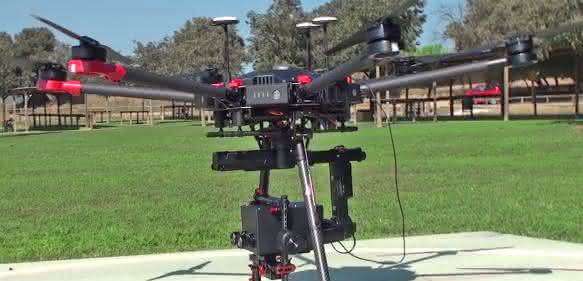
Daniel Hofmann, CEO of Spanish Photonfocus subsidiary Solpi, expects a breakthrough in HSI applications with mobile carrier systems such as precision farming with the help of UAVs (Unmanned Aerial Vehicles) in the future: "Camera systems can be mounted on a drone to enable photogrammetry or inspection applications. Such a camera system can consist of several hyperspectral cameras, a GPS system, an embedded computer and much more. The captured images are provided with precise GPS data to simplify subsequent image processing." Solpi offers a camera system that allows the use of multiple hyperspectral cameras in a stand-alone grabbing solution.
Challenges for HSI image processing
Despite these and other promising application examples, hyperspectral imaging is currently still one of the exotic disciplines in image processing. One reason for this is a number of challenges that still need to be overcome before the technology can be used across the board. The still relatively high price of hyperspectral technology is one of the main barriers to entry. In addition, the entire technology is not easy to understand and often requires in-depth specialist knowledge in the field of spectroscopy.
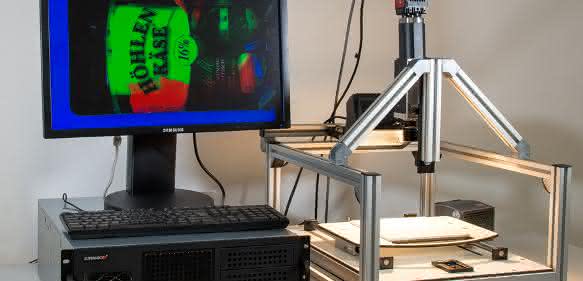
Stemmer Imaging product manager Huylebrouck cites lighting as a further challenge: "Hyperspectral image processing does not work with the LED lighting commonly used in image processing, but only with halogen lamps that emit a broad wavelength spectrum. There is still a need for suitable lighting here."
Trends and further developments
Nevertheless, the possibilities of the technology are prompting many companies to work on further developments in this area. "We are observing a trend towards downsizing systems, although care must be taken to ensure that this does not come at the expense of performance. The future will show what limits are set here," says Hilmar Krüger, Head of Sales at inno-spec.
Perception Park CEO Markus Burgstaller lists some other current directions: "As with other image processing technologies, the trend for hyperspectral image processing is also moving towards embedded. The cameras are becoming increasingly smaller and cheaper and, in combination with new image acquisition technologies, will allow them to be used in hand-held devices such as future smartphones in the foreseeable future."
Burgstaller believes that the combination with approaches from artificial intelligence and especially the topic of deep learning will also significantly advance the technology: "In future, HSI systems will learn on the basis of a lot of characteristic chemical and physical information and thus significantly simplify the application of hyperspectral image processing systems." Gion-Pitschen Gross from Allied Vision confirms this assessment: "In the future, it should be possible to recognize materials based on their spectral signature alone, without the need for training."
For Specim Managing Director Dr. Georg Meissner, hyperspectral imaging is increasingly developing into a widespread, established segment of image processing and quality control due to these numerous trends. "The technical advances in this area will certainly soon lead to higher image capture rates and probably also to broader spectral ranges and more compact camera sizes."
For Florian Niethammer, Team Leader Vision at Messe Stuttgart, hyperspectral imaging is one of the most exciting topics at Vision 2018 for these reasons: "HSI systems are extremely innovative and open up new applications for image processing that could not previously be solved with traditional systems. The topic will therefore play a key role at this year's Vision from November 6 to 8, 2018 in Stuttgart. In addition to numerous exhibitors who will be presenting their HSI products and solutions, a number of presentations as part of the "Industrial Vision Days" will also offer interested visitors the opportunity to find out more about this technology and generate ideas for potential applications." as


You might also be interested in
Basler acquires 76% of Indian image processor
Basler, supplier of image processing components for computer vision solutions, has acquired 76% of the Indian sales partner Alpha TechSys Automation.
 read more...
Process monitoring and fault detection
Cameras ensure quality during laser melting
Powder bed-based laser melting (PBF-LB/M) opens up new possibilities in additive manufacturing. Modern camera systems provide crucial process data to further increase quality and efficiency.
read more...Vision Sensor is three times faster than its predecessor
The 'CS-62' vision sensor from di-soric is around three times faster than its predecessor, the 'CS-60'. In combination with the 'nVision-i 25.1' software, it enables image processing solutions that were previously reserved for smart cameras.
read more...Thermal imaging cameras for quality control
Automated thermal imaging cameras are often suitable for quality control applications where temperature plays a role. However, while there are various solutions on the market for slow processes, it is challenging to select a camera that reliably...
read more...Easy entry into industrial VGA thermography
Reliable temperature measurement is a prerequisite for the success of many industrial processes. Berlin-based manufacturer Optris presents the Xi 640 infrared camera, a new member of its Compact Line, which enables non-contact temperature...
read more...Powder bed-based laser melting optimized
Aconity3D has set itself the goal of optimizing the stability of the manufacturing method of powder bed-based laser melting and thereby promoting its use in a wide range of industries. By using high-speed industrial cameras from SVS-Vistek, the...
read more...INDUSTRIAL Production Products of the year...
2nd place, category handling, assembly and production logistics: SICK
safeVisionary2 is the first 3D time-of-flight camera with Performance Level c safety certification. It enables safe three-dimensional environmental detection and won 2nd place in the competition for Product of the Year 2024 in the handling, assembly...
read more...Nomination Products of the Year 2024
SICK: Camera systems safeVisionary2
safeVisionary2 is the first 3D time-of-flight camera with Performance Level c safety certification. It enables safe three-dimensional environmental detection and has been nominated in the 2024 Product of the Year competition in the handling,...
read more...AI vision brings additional opportunities
The seamless integration of AI into the consumer sector has helped to improve our quality of life and make interactions with technology more efficient. In industry, AI vision with machine learning opens up new possibilities that are not covered by...
read more...