Safety clutches
About the term safety clutches
Overload or safety clutches are ready-to-install mechanical connecting elements that are used to protect machines and systems. The aim is to reliably and, above all, quickly disconnect the drive and output sides as soon as the torque exceeds a permissible limit. Safety clutches are offered in a broad portfolio with different functional principles and torques.
Areas of application for safety clutches
Safety clutches are used in machine tools, for example, in NC milling machines, woodworking machines, automation systems, industrial robots, sheet metal working machines and printing and textile machines.
Functional types of safety clutches
Typical functional types are spring-loaded ball detent and slip clutches, electromagnetic and pneumatic clutches as well as magnetic permanent slip clutches. Safety clutches that work according to the spring-preloaded ball detent method are backlash-free, wear-free and maintenance-free and are usually set to the desired disengagement torque at the factory. Nevertheless, it is easy to change this parameter on site, even when installed. This is also the great advantage of this design. The operator can set the maximum permissible torque and thus optimize the performance of the machine or system. With spring preloaded clutches, for example, the tolerance is significantly greater.
The ball detent clutch
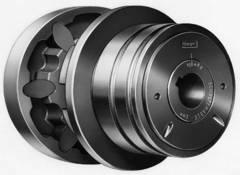
One of the central elements of a ball detent clutch is the adjusting nut. The force on the disk springs and thus the disengagement torque can be precisely adjusted within a precisely defined range using a fine thread. The permissible torque range is usually engraved radially. The disk springs themselves are high-performance components with precisely defined characteristic curves. For automatic re-engagement after an overload, the operator is offered three versions depending on the requirements. These are the angle-synchronous, the latching and the locked version.
The angle-synchronous variant of the safety clutches
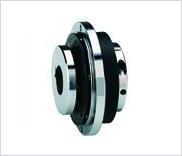
The angle-synchronous version is characterized by the fact that re-engagement takes place at exactly 360° due to special holes. This ensures synchronization with the drive train. This means that the input and output always have the same position in relation to each other. Time-consuming readjustment is therefore not necessary. The disengaging clutch, on the other hand, is designed so that the spherical caps are symmetrically distributed and re-engagement typically takes place after 30°, 45°, 60°, 90° or 120°. However, other angles are also possible on a customer-specific basis. One possible application with 180°, for example, is a swivel movement. With the locked solution, the balls are pressed out of the spherical caps, but cannot pass freely on the base body. In this case, the two coupling parts are only minimally twisted against each other and re-engage after the fault has been rectified. This coupling is usually used when load safety must be guaranteed, such as in lifting systems. Here, for example, monitoring with an inductive switch is also possible.
The disengaging version of the safety clutches
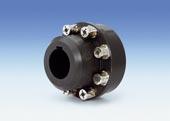
Another variant works without engagement points. In this so-called disengaging version, there is a permanent, contact-free separation of input and output and the flywheels, which are usually present on both sides, can run freely. For further operation, the clutch must be re-engaged manually. In the disengaged version, a spring jumps over completely and pulls the shift ring away from the balls. The clutch then runs freely without any connection between the input and output sides. Here too, re-engagement must be carried out manually.
Safety clutches and SCOPE
The industry magazine SCOPE and its internet portal SCOPE-ONLINE regularly report on various aspects of safety couplings and their use in mechanical and plant engineering and drive technology.